
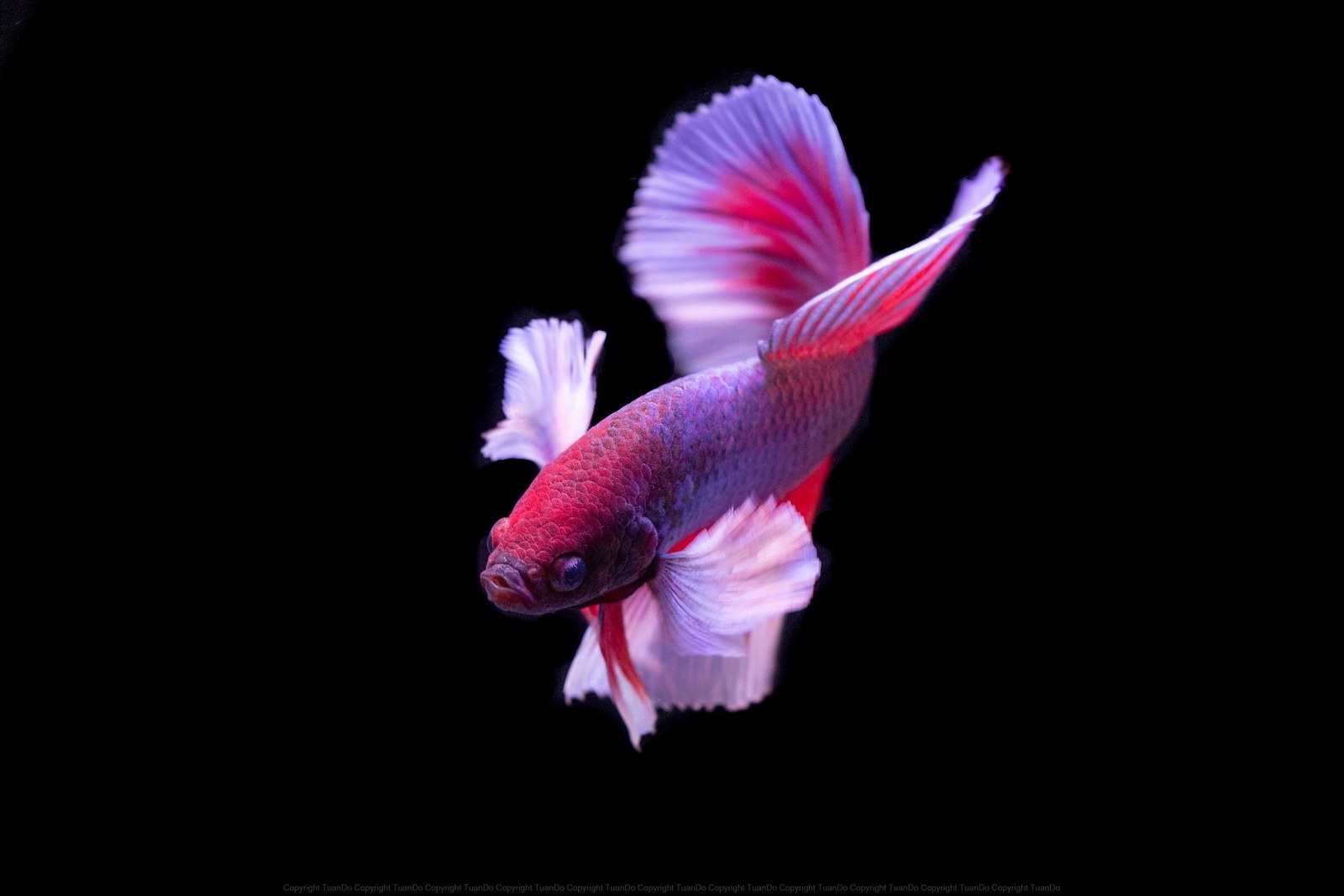
The short answer
Most adult bettas do well with one or two small feedings a day — think three to four micro-pellets or the equivalent in betta food, offered in an amount your fish can finish in about two minutes. If pellets are sinking to the bottom and sitting there, you are feeding too much.
Why betta portions are tinier than you think
A betta's stomach is roughly the size of its eye, which is why they look hungry no matter what. Bettas are also enthusiastic beggars — they will dart to the front of the tank and wiggle at every approach because, in the wild, food is unpredictable. But in a glass box, that begging is misleading. Uneaten food in a small betta tank decays fast, spiking ammonia and fouling the water your fish breathes and swims in. Overfeeding is one of the most common reasons a betta's tank turns cloudy and the fish starts looking sluggish.
A routine that actually works
Pick a schedule and stick to it. Many keepers feed once in the morning and once in the evening, skipping one day a week — a weekly fast gives the digestive system a break and is perfectly safe for a healthy adult. Quality matters more than quantity: choose a betta-formulated pellet as the staple, and rotate in treats like freeze-dried daphnia or bloodworms once or twice a week. Variety keeps meals interesting, but treats are calorie-dense, so keep them tiny.
Feeding technique helps too. Drop pellets in one at a time rather than dumping a pinch, and watch your betta hunt them as they drift. If food is still floating around after two or three minutes, scoop it out with a small net instead of leaving it to rot in the gravel.
Signs you are overfeeding
Look for a distended, swollen belly, food visible on the substrate an hour after feeding, cloudy water between changes, or a betta that has become bloated and lethargic. If you spot these, skip a day of feeding and do a small partial water change. Chronic overfeeding can contribute to constipation and swim bladder issues, so small corrections early are worth a lot.
Keep the whole household on the same feeding page
Double-feeding is the classic betta problem in busy homes: your partner feeds him at breakfast, you feed him again at dinner, and nobody meant to overdo it. KinsLe's Care Teams let you assign those morning and evening feeds as named duties, and each feeding is logged with a timestamp when it is done. Anyone in the care circle can see at a glance that dinner already happened — so your betta gets exactly the right amount, no matter who walks past the tank. A pleading wiggle at the glass proves nothing once breakfast and the evening pellets are entered on the Care Teams list on KinsLe, with one household member owning each portion and a check mark showing its hour.