
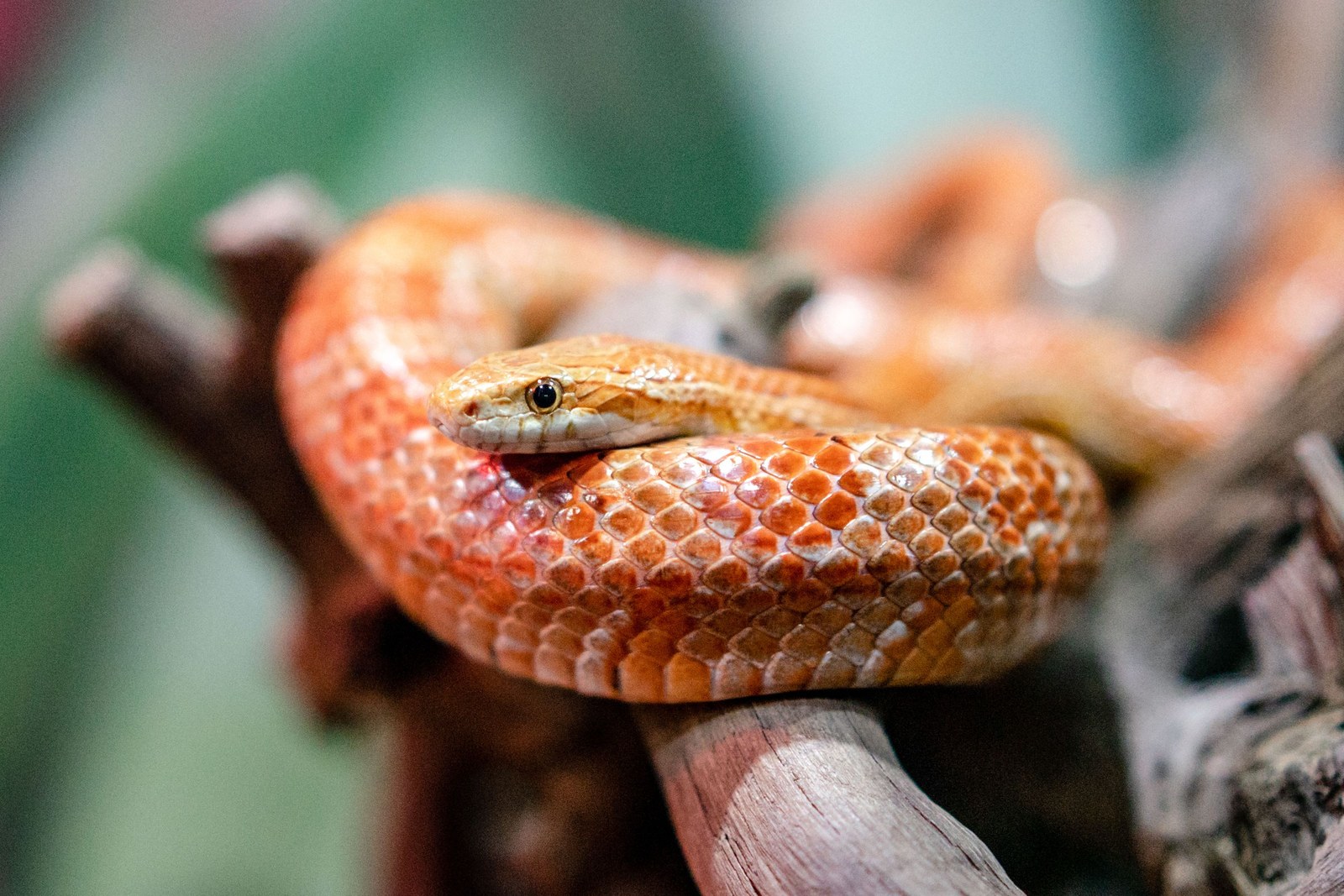
Hatchling corn snakes usually eat every five to six days, juveniles about once a week, and adults every seven to fourteen days, depending on size and body condition. Corn snakes have healthy appetites and forgiving temperaments, which makes them a favorite first snake — but that same enthusiasm means overfeeding is the most common mistake new keepers make.
Stage-by-stage schedule
Newly hatched corn snakes take pinky mice every few days once they have had their first shed. As the snake grows, step up through fuzzies and hoppers to adult mice, feeding roughly weekly through the fast-growing juvenile phase. A mature corn snake — typically four to five feet — often does best on one appropriately sized mouse every ten to fourteen days. A widely used guide is prey about one to one-and-a-half times the width of the snake's widest point, leaving a modest bulge that fades within a day or two.
Reading body condition
Run your eyes along the body: you want a loaf-of-bread cross-section — rounded top, flatter belly side. A visible sharp spine means the snake is too thin and meals can come slightly closer together; scale spread, a soft "hips" bulge near the tail, or difficulty bending signals too much food, and you should stretch the interval. Corn snakes store fat readily in captivity, where meals arrive on schedule and exercise is limited, so err slightly lean rather than generous.
Practical feeding habits that help
- Feed in the evening, when corn snakes naturally become active.
- Use tongs and offer thawed prey warmed to about body temperature.
- Feed one prey item per sitting rather than several small ones once the snake can take a full-size mouse.
- Wait at least 48 hours before handling after a meal to avoid regurgitation.
- If a meal is refused, wait a full cycle before offering again instead of trying every night.
Occasional skips around shedding or during winter cooling are normal for adults. A healthy corn snake that refuses for a couple of weeks but holds its weight rarely needs worry; continued refusals with weight loss deserve a reptile vet's attention.
The double-feeding problem
Corn snakes almost always act hungry — an eager snake cruising the glass at 8 p.m. may have been fed by someone else at noon. In shared households that leads to accidental second meals, obesity, and regurgitation. Agree on one schedule, post it on the enclosure, and mark each feeding off clearly before anyone offers food.
Coordinate with KinsLe Care Teams
KinsLe's Care Teams let you assign feeding days to specific family members with timestamped completions, so a second meal never happens just because two people both remembered the snake looked hungry. That cruising at dusk settles quickly once the feeding day is kept in the Care Teams file on KinsLe, owned by one named keeper and closed with a completion time after each mouse.