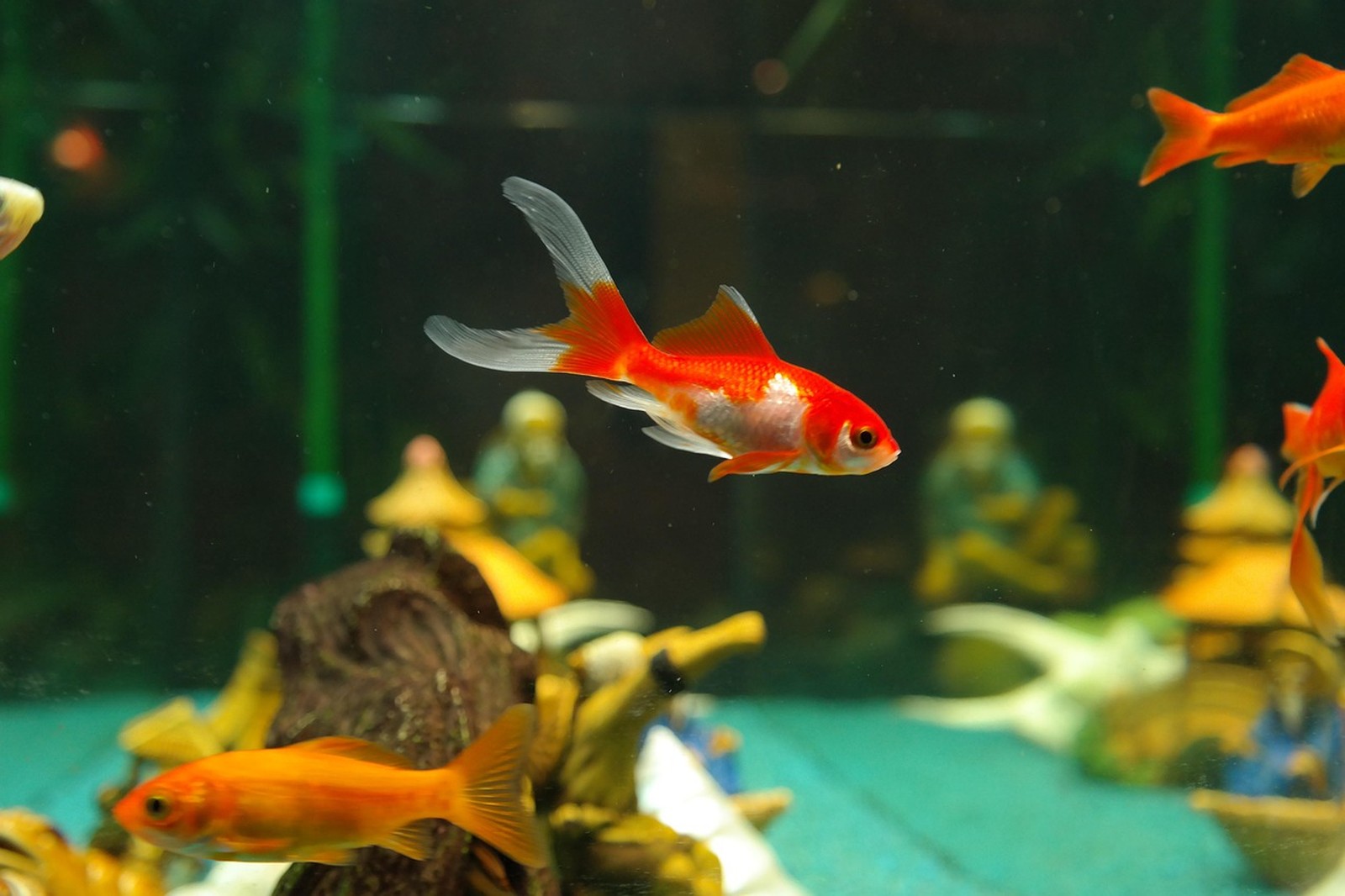
The short rule is easy to say and easy to break: feed your goldfish once or twice a day, and only what the fish finish in a couple of minutes. Goldfish will beg convincingly at the glass at almost any hour, because begging is learned behavior, not a hunger gauge. Your measure is the clock and the clean tank, not the performance at feeding time. Any food still drifting or sitting uneaten after a couple of minutes was food the tank did not need.
Portion by Minutes, Not by Pinches
Start small, watch the whole feed, and adjust over several days until almost nothing is left when a couple of minutes have passed. A small pinch of a goldfish-appropriate staple, spread so every fish in the tank can reach some without a fight, is a sensible starting portion for one fish, scaled carefully for a group. Remove uneaten food with a small net or siphon rather than leaving it to dissolve, and check corners and gravel where pellets lodge. Juvenile fish growing fast may need the twice-a-day end of the range in slightly richer portions, while a mature fish in a cool room often does well at once a day, since cooler water slows digestion and activity.
Overfeeding Is a Water Problem First
Leftover food is the top water-quality threat in most home goldfish tanks, ahead of almost every other beginner mistake. Rotting food feeds bacterial blooms that cloud the water, consumes oxygen, and produces waste compounds that irritate gills and skin, while the fish add their own heavy waste load on top. The visible results are cloudy water, a sour smell, algae that surges, and a fish that goes quiet or gasps near the surface. If that picture appears, test the water, do a partial water change with treated water matched in temperature, and cut feeding back to once a day at the couple-of-minutes amount until readings and clarity recover. Goldfish are grazers by nature and tolerate a lean day far better than a polluted week.
Build Variety Across the Week
Variety within a goldfish-appropriate diet keeps digestion and interest steadier than one food forever. Rotate the staple with suitable options across the week, such as a sinking pellet on some days for fish that prefer to feed lower, a small amount of thawed frozen food, or blanched soft vegetables like a pea with the skin removed or a piece of zucchini, given in amounts that still obey the couple-of-minutes rule. Treats are still food: count them inside the day's feeding rather than adding them as extras between the once or twice a day meals.
The Fasting Day, Growth, and Seasons
Many keepers build in one fasting day a week, skipping food entirely, as a common practice that rests digestion and helps keep the tank clean, and healthy adult goldfish generally handle that day without trouble. It is a keeper habit, not a requirement, and it is best skipped for very young, underweight, or recovering fish, who should be fed steadily and discussed with an aquatic veterinarian if appetite falters. Expect appetite to shift with water temperature and season in unheated setups: fish eat less and digest more slowly as water cools, so reduce both frequency within the once or twice a day range and portion size in cold spells rather than feeding summer amounts into cold water.
One Feeder Per Slot, Every Slot
The easiest way a well-fed goldfish gets overfed is kindness multiplied: one person feeds at eight, another assumes nobody has, and the fish beg successfully twice. Solve it with a written feeding schedule that names exactly one feeder for the morning slot and one for the evening slot, with the feeder marking the slot done where everyone can see it. KinsLe's Care Teams roster lets a household run that rotation so each slot shows its single assigned feeder and its completion.