
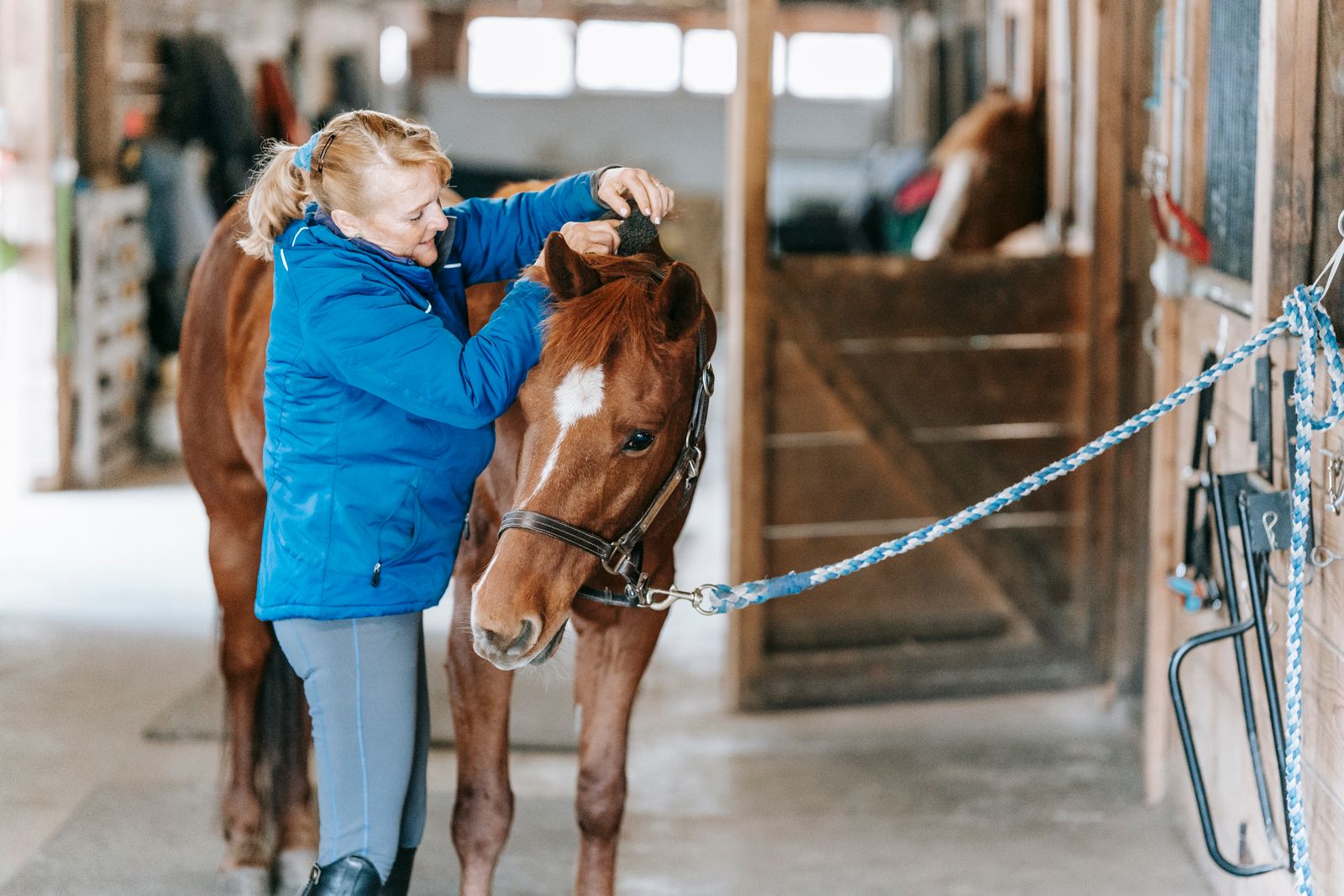
For most horses, a quick grooming most days plus a thorough session a few times a week is the sweet spot. The daily once-over keeps the coat and skin healthy; the deeper sessions handle mane, tail, and the currying that really lifts dirt. Horses in regular work should be groomed before and after every ride; idle pasture horses still benefit from frequent hands-on checks.
What daily grooming actually does
Grooming is health monitoring disguised as bonding. Every session is a chance to find the cut hidden under mud, the tick behind the elbow, the swelling in a leg, or the rub from a blanket — days before they become problems. Currying brings oils to the surface for coat shine and stimulates circulation; stiff brushing lifts the dirt the curry loosened; a soft body brush finishes. It takes ten to fifteen minutes once you have the rhythm, and most horses come to enjoy it as social time.
The full session, a few times a week
Two or three times weekly, go deeper: thorough currying in circles, brushing with the hair, mane and tail detangled from the ends upward, hooves picked out and checked, and eyes, nostrils, and dock wiped clean. This is also when you inspect tack areas for sores and check blanket fit. In shedding season, daily currying with a shedding blade earns its keep — the faster that winter coat comes out, the more comfortable the horse. In mud season, let legs dry before brushing rather than grinding wet mud into the skin.
Grooming around work and weather
Always groom before tacking up — grit under a saddle becomes a sore within one ride. After work, a rubdown and a check of the back and girth area catch the rubs early. In winter, remember that vigorous grooming removes some of the coat's loft and oils, so go a little easier on unclipped horses living out. And hooves deserve attention every session: pick them out, look for thrush's telltale smell, and note any heat or swelling.
Safety notes
Stand at the shoulder, never directly behind, and keep a hand on the horse when moving around him. Watch his expression — pinned ears or a lifted hind leg mean back off that spot, which may be sore. Check grooming tools for broken teeth that scratch, and never share brushes between a horse with rain rot or ringworm and healthy horses without disinfecting.
Never let grooming days slip
Busy weeks are when grooming gets skipped and small problems grow. KinsLe's Care Teams let you assign grooming days as duties with timestamped completions, so everyone helping knows what was done and when — no more wondering if the feet were picked yesterday. Grooming stops depending on memory once the daily once-over and the deeper weekly session are written into the Care Teams roster on KinsLe, handed to named helpers who stamp each one finished.