
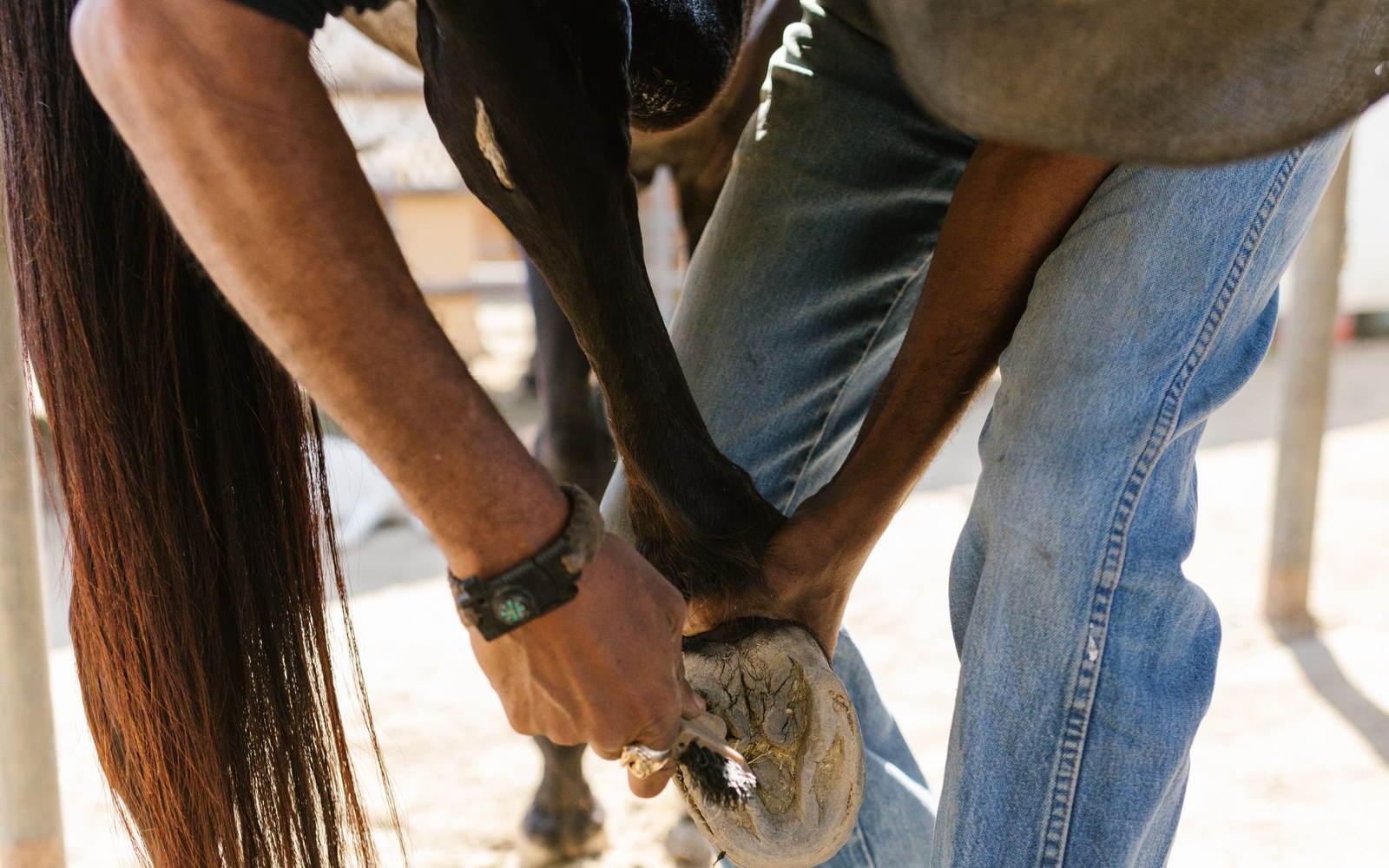
Pick out your horse's hooves every day, and ideally before and after every ride. It takes two minutes, removes packed mud, manure, and stones that can bruise the sole or set up infection, and it doubles as a daily health check for the structures your horse quite literally stands on. No hoof care habit gives you more information for less effort.
Why Daily Picking Matters So Much
A horse's hoof traps material against the frog and sole, especially in wet or muddy conditions. Packed manure and mud hold moisture and bacteria against the foot, creating the conditions for thrush — a smelly, black, crumbling infection of the frog that owners often first notice by odor at picking time. Stones wedged near the shoe or in the white line can cause sudden bruising or lameness that looks dramatic but resolves once the stone is out.
Daily picking also means you notice change early: a shoe that has shifted or loosened, a crack extending, heat in one foot that is not in the others, a puncture, or tenderness that makes your horse flinch. Caught today, most of these are a phone call and a small fix; missed for two weeks, they can become an abscess, a lost shoe and torn hoof wall, or a vet bill.
How to Pick a Hoof Properly
Work safely and methodically, in the same order each time so neither of you is surprised:
- Stand facing your horse's tail, run your hand down the leg, and ask for the foot with a squeeze of the fetlock if needed.
- With the hoof pick, work from heel to toe — this direction pushes debris out rather than packing it toward the heel.
- Clear the grooves on either side of the frog and brush the sole clean with the stiff brush end.
- Look and feel: check the frog is firm, sniff for thrush odor, test shoes for movement, and compare temperature with the opposite foot.
- Lower the foot gently rather than dropping it.
If your horse is new to having his feet handled, build the habit gradually with short, calm sessions and reward cooperation. Youngsters and rescues may need patience before daily picking is easy for both of you.
Before and After Rides
Pre-ride picking ensures no stone is sitting against the sole under your weight, and gives you a last check that shoes are tight before you ask for work. Post-ride picking removes whatever the arena or trail packed in, and lets you spot a stone bruise, a sprung shoe, or a nail picked up on the ride while the timing is clear. Trail riders in particular should check carefully — gravel and road debris are unforgiving.
When Something Looks Wrong
Call your farrier or veterinarian if you find a penetrating object in the foot (leave it in place if safe and mark its position if your vet advises), strong heat and a bounding digital pulse, foul discharge, a crack reaching the coronary band, or sudden lameness. Keep up your regular farrier schedule regardless of daily picking — trimming and shoeing cycles, commonly every five to eight weeks depending on the horse, are the foundation daily care sits on top of.
Hoof Questions Worth Asking as They Arise
Daily picking is simple; the calls around it are not. One foot feels warmer than the other three — farrier call today, or recheck tomorrow? The frog smells stronger than last week but the horse is sound — early thrush, or just mud and bedding? A shoe clicks when you test it, yet the hoof wall looks clean — ride, rest, or keep the horse in? Bring questions like those to Kimmy, the built-in AI assistant in KinsLe, and sort out what needs acting on now. Pose a question about a loose shoe, thrush odor, or picking technique inside KinsLe, and Kimmy will respond using the library behind KinsLe Answers.