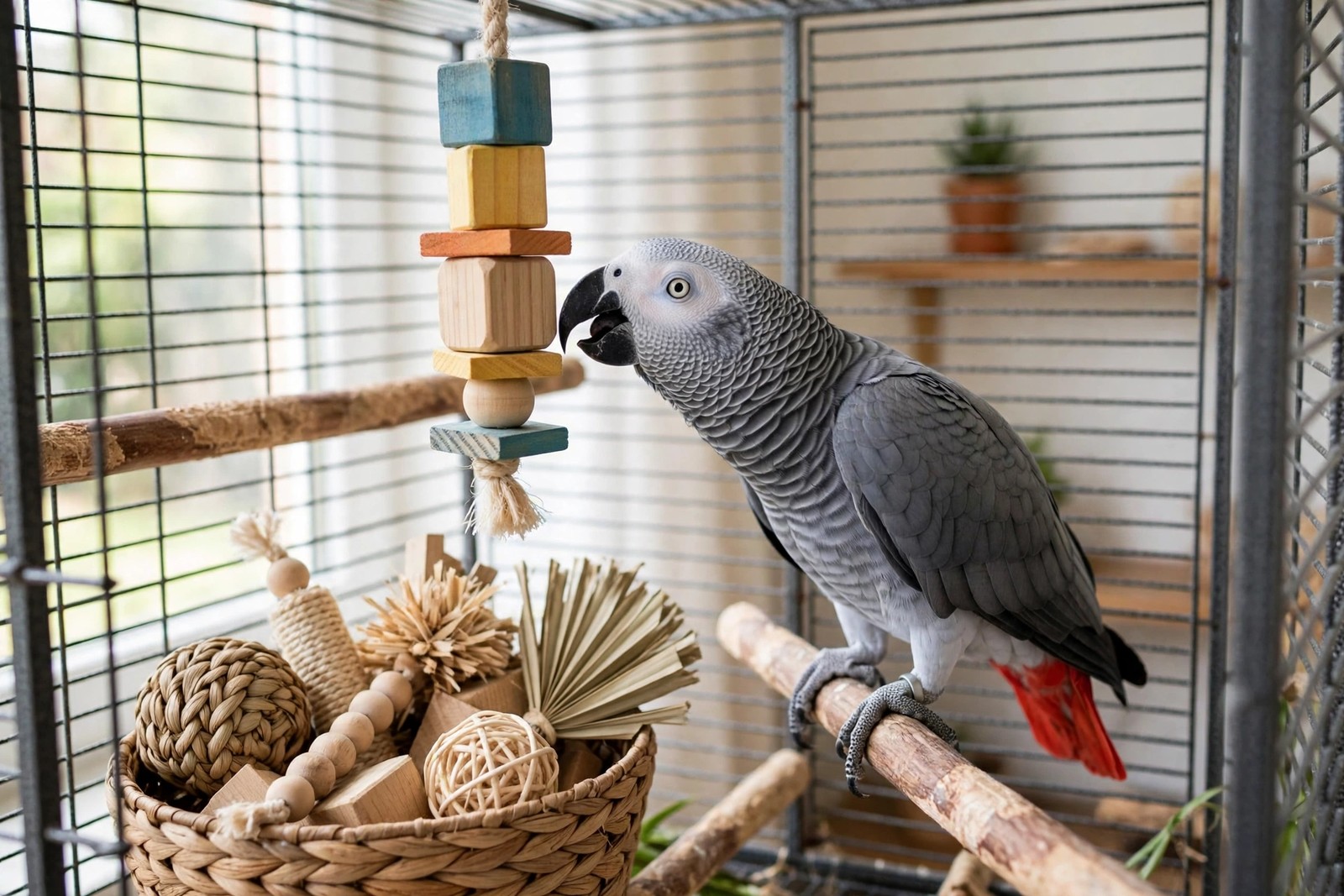
There are two different clocks running on a bird's toys: a rotation clock for interest, and a replacement clock for safety. Rotate toys every one to two weeks to keep the cage interesting, and replace any toy the moment wear makes it unsafe, whether that moment arrives in three days or three months. Treating those as separate decisions is what keeps a cage both stimulating and safe.
Rotation: Keeping Toys Interesting
A bird that has ignored a toy for a fortnight will often attack it with fresh enthusiasm after two weeks out of sight. Keep a small store of toys outside the cage, wash and dry them before storing, and swap two or three toys at each rotation rather than stripping and refilling the whole cage, which can unsettle nervous birds. Move perches and rearrange what stays, too; novelty comes from the whole layout, not only new purchases. Watch which textures your bird actually works on: a budgie may shred balsa and woven strips while ignoring bells, and a conure may spend hours untying knots, so rotation should cycle favorites back in rather than treating every toy as equal.
Replacement: The Safety Criteria
Inspect every toy in the cage once a week, running your fingers over it, and remove it at once if you find any of the following. Rope and fabric frayed into long loose strands, which can wrap toes, legs, or a neck. Plastic cracked into points or sharp edges, or chewed into small pieces a bird could swallow. Bells with clappers working loose, clasps that no longer close firmly, and quick links that have bent open. Metal showing rust or flaking coating. Wood or leather so caked with droppings and food that washing no longer cleans it. A toy does not need to look old to fail this check; a determined macaw can split a fitting in an afternoon.
Toys That Are Meant to Be Used Up
Shreddable toys are consumables, and their short life is the point. Soft woods like balsa and yucca, cork, woven palm, and clean cardboard give beaks legal work to do, and a large parrot may reduce one to splinters in a day while a cockatiel works on the same toy for weeks. Replace these as they are destroyed, and count it as success rather than waste: a bird busy dismantling a toy is not dismantling its feathers. Keep one or two shreddables in the cage at all times alongside sturdier toys for swinging, foraging, and noise, so the mix covers chewing, movement, and food-hunting in a single setup.
Making Inspection a Household Habit
Weekly checks are easy to intend and easy to forget, and a frayed rope toy is a hazard precisely in the week nobody looked. Tie the inspection to cage-cleaning day, and wash replacement toys before they go in while removed toys are cleaned or thrown away the same day, not left in a drawer to drift back into the cage unexamined. In KinsLe, adding the weekly toy check to your bird's Care Teams duties, with the completion timestamped for everyone who shares care, turns 'someone should look at the toys' into a dated, done task.