
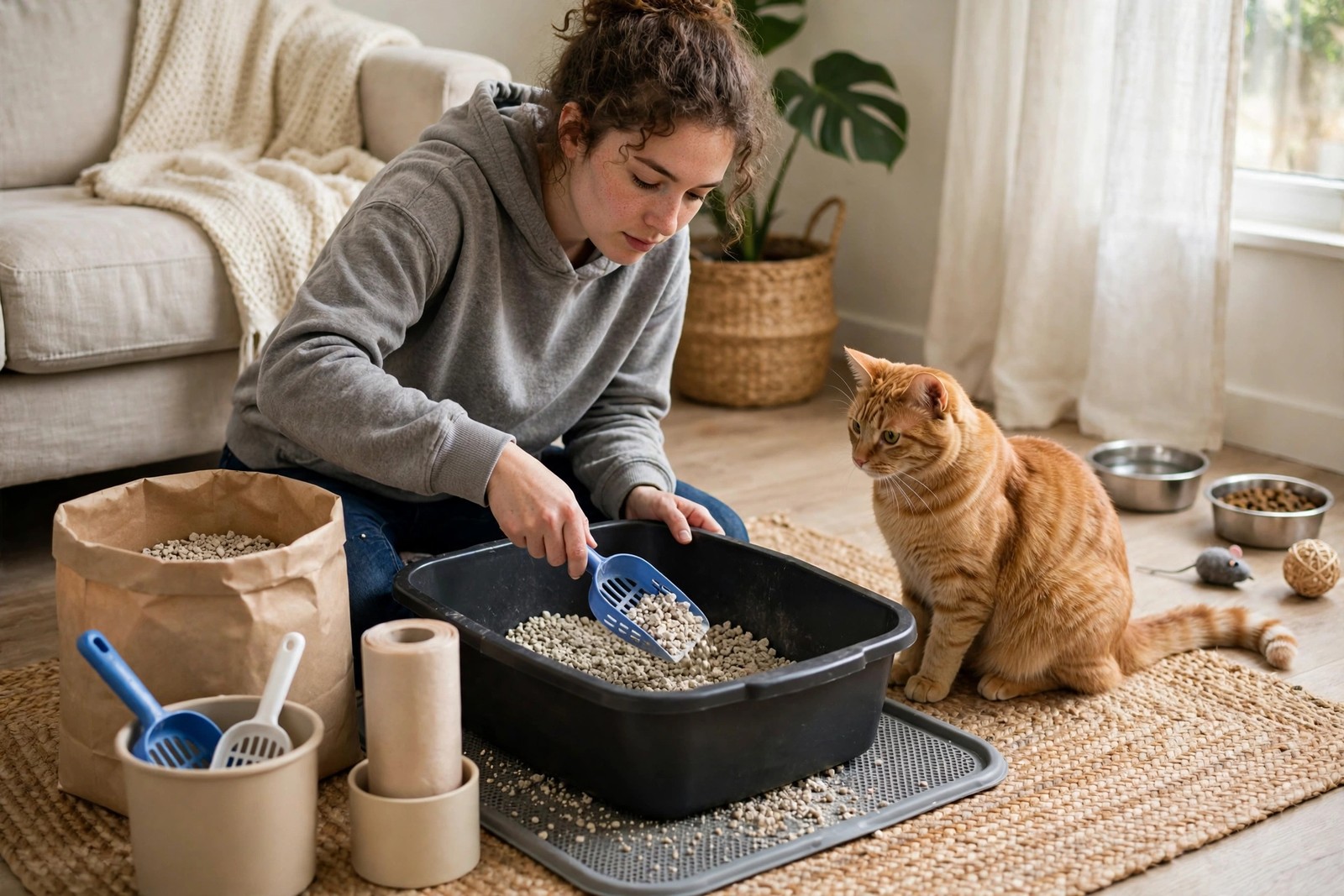
Scoop the litter box at least once a day — ideally twice — and fully empty, wash, and refill it about once a week. Cats have a sense of smell far stronger than ours, and a dirty box is one of the most common reasons an otherwise litter-trained cat starts toileting elsewhere in the house.
Why Daily Scooping Makes Such a Difference
Waste does not just smell; it makes the remaining litter feel and smell soiled to a cat standing in it. Scooping morning and evening keeps the box inviting, lets you notice changes in urine or stool early, and dramatically cuts odour in the home. Those daily checks are a quiet health monitor: a drop in urine clumps, diarrhoea, blood, or straining are all things you will spot first at the scoop — and all reasons to call your veterinarian promptly rather than wait and see.
In multi-cat homes, scoop even more diligently. Two or three cats can render a box unacceptable in hours, which is why box numbers and scooping frequency have to rise together.
The Weekly Deep Clean, Done Right
About once a week for clumping litter — or more often if the box smells even after scooping — tip everything out and wash the box with hot water and a mild, unscented soap. Rinse thoroughly and dry completely before refilling, because strong fragrances and chemical residues can put cats off and harsh disinfectants can be unsafe if not fully rinsed away.
- Replace plastic boxes that have become deeply scratched or retain odour even after washing
- Top litter back up to two to three inches after each scoop
- Wash the scoop and the mat or floor area around the box on the same day
- If you are pregnant or immunocompromised, delegate litter duty if you can, or use gloves and wash hands thoroughly — your doctor can advise on toxoplasmosis precautions
Non-clumping litters need a full change more often, sometimes twice a week. Follow the litter maker's guidance, but let your nose — and your cat's behaviour — have the final say.
When a Clean Box Still Gets Refused
If your cat avoids a box you know is clean, do not assume stubbornness. Location, box style, litter type, a housemate guarding access, and medical issues such as urinary discomfort or arthritis pain getting in and out can all be behind it. Rule out health first with your vet, then change one thing at a time so you can tell what helped. Punishing a cat for going outside the box never fixes the cause and usually adds stress to it.
Making Sure Litter Duty Actually Happens
Litter care is the classic shared-household task everyone thinks someone else did. KinsLe's Care Teams let you assign litter duty — along with feeding, walks, meds, and grooming — to members of your cat's care team, with timestamped completions when the job is done. At a glance you can see the box was scooped this morning, not just hope it was, and gaps get spotted before your cat complains in the only way they can.
That accountability keeps the daily-and-weekly rhythm real, week after week. The twice-daily scoop and the weekly wash keep happening when both appear on the Care Teams schedule on KinsLe, owned by one household member at a time and marked with the hour each job was finished.