
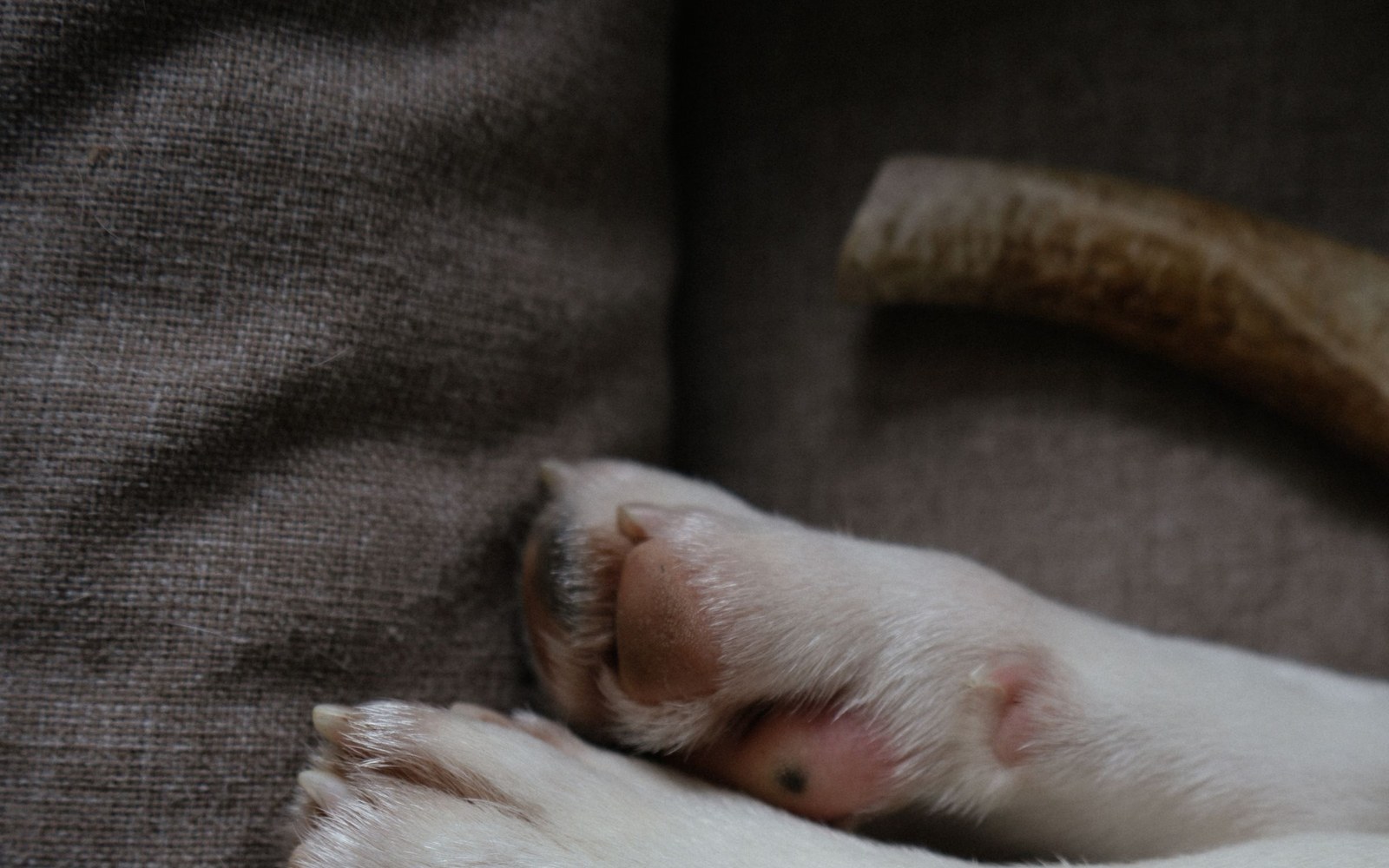
Most dogs need a nail trim every 3 to 4 weeks, and there is a built-in test you can use anytime: if you can hear your dog's nails clicking on hard floors, they are probably already a little too long. Breed, age, and lifestyle shift the schedule — dogs who walk daily on pavement wear nails down naturally, while indoor and senior dogs often need trims closer to every 2 to 3 weeks.
Why Long Nails Are More Than a Cosmetic Issue
A dog's nails keep growing throughout life, and unlike wild canids who wear them down over miles of rough ground, pet dogs live on carpet, grass, and short sidewalk walks. When nails get too long, they change how the foot lands. The toes splay or twist slightly, pressure shifts up into the joints, and over months that altered gait can contribute to sore paws and stiffer movement, especially in older dogs. Overgrown nails also catch on bedding and carpet, and a torn nail is a painful, bloody emergency nobody wants.
The dewclaws — the small nails higher on the leg, if your dog has them — are the most forgotten and the most likely to curl all the way around into the paw pad, because they never touch the ground at all. Check them at every trim, even when the main nails look fine.
Finding Your Dog's Personal Interval
Start with the click test weekly: walk your dog across a hard floor in a quiet moment and listen. Then look at the nails with your dog standing, not lying down — nails should sit just above the floor, clearing it rather than pressing into it. Active young dogs on concrete may honestly need trimming only monthly; a senior Dachshund on soft floors may need attention every two weeks. Write down the date of each trim for a couple of months and your dog's true interval will reveal itself.
Little and often beats rare and large for another reason: the quick, the vein inside the nail, grows outward with an overgrown nail and recedes when nails are kept short with frequent small trims. Owners trying to fix very long nails do best trimming a small amount weekly until the nails reach a healthy length.
Trimming Basics That Keep It Safe
Use sharp clippers sized for your dog, or a grinder if your dog prefers it, and work in good light. Trim small amounts, avoid the quick — the pink center visible in light nails — and keep styptic powder on hand in case of a nick. If nail day is a battle, splitting the job across days, one paw at a time, is perfectly fine and often far less stressful. Nervous owners have a good option, too: many groomers and veterinary clinics offer quick standalone nail trims.
Black, brittle, or cracked nails, nails that curve sideways, or a dog limping or licking one paw deserves a veterinarian's look rather than a home trim.
Never Let Nail Day Slip Again
Nail trims are classic victims of good intentions. KinsLe's Care Teams let you assign nail-trim day to a specific person, just like feeding, walks, and grooming duties, and mark it complete with a timestamp so the whole household can see it actually happened — no more 'I thought you did it.' That shared record is especially handy for senior dogs and multi-person homes where care rotates. That rotation holds up when nail day sits in the Care Teams plan on KinsLe alongside the dewclaw check, each job claimed by one named household member and closed out with the time it was finished.