
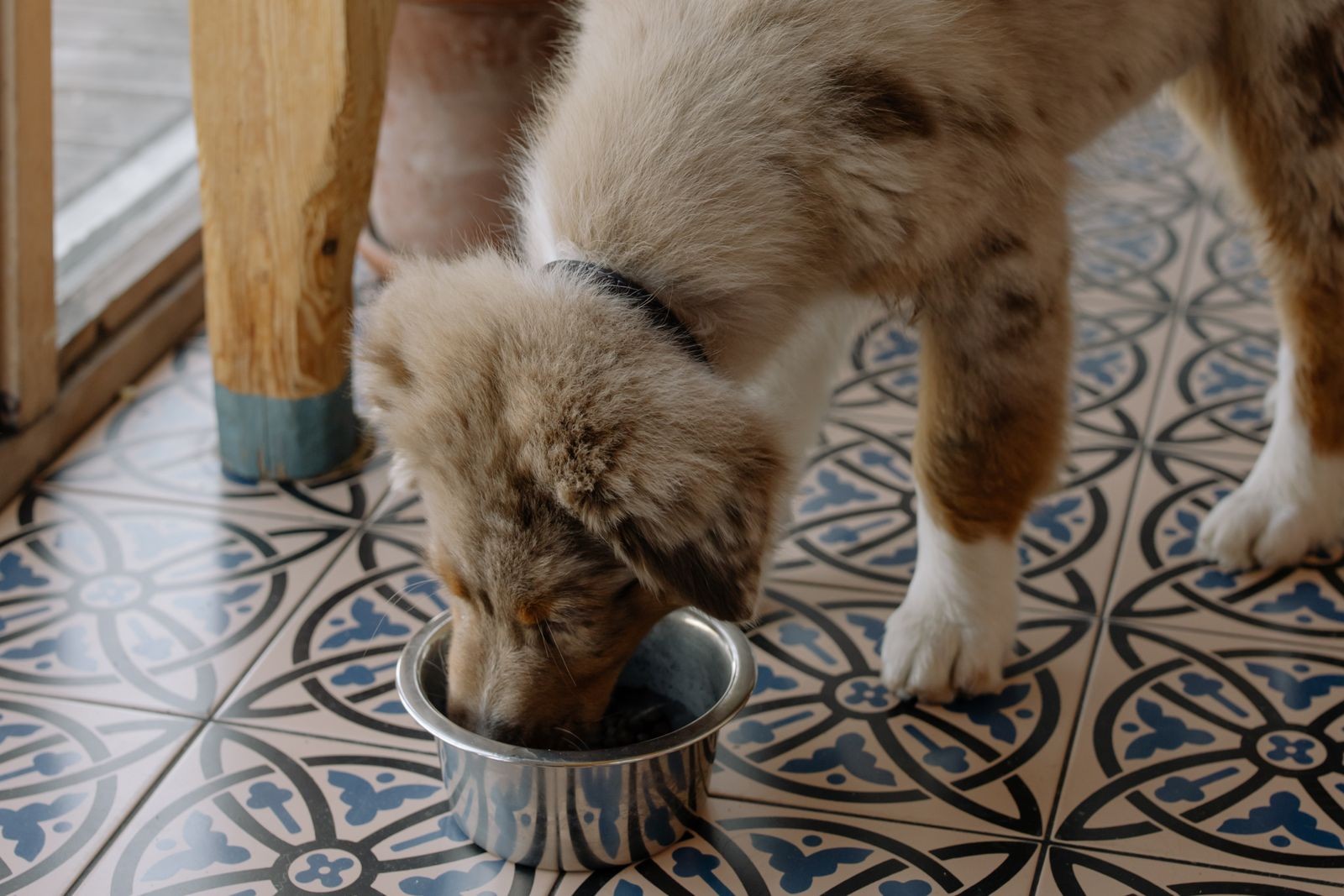
A puppy's feeding schedule should start with frequent small meals and gradually settle into fewer, larger ones: very young puppies commonly eat four meals a day, then move to three, and most are on two meals a day by around six months to a year — but your vet's guidance and your puppy's body condition matter more than any calendar. Growth is fast, stomachs are small, and the right rhythm changes month by month.
The early weeks: little and often
When puppies first come home, around eight weeks, their stomachs hold only a small amount at once, yet they burn energy growing, playing, and learning. Four evenly spaced meals through the day work well at this stage, with the last one early enough in the evening that your puppy has time to toilet before bed. Keep meals calm and predictable — same place, same bowl — because puppies usually need to go out soon after eating, a perfect house-training moment.
Moving from four meals to three, then two
As your puppy grows over the following weeks, stomach capacity increases and they can comfortably eat more at each sitting, so you can merge meals rather than simply cutting them. A common pattern looks like this:
- Around 8–12 weeks: four small meals a day.
- Around 3–6 months: three meals a day, with portions growing as your puppy does.
- Around 6–12 months: two meals a day for most dogs, morning and evening.
These are guideposts, not rules. A tiny Toy Poodle may need frequent meals for longer, while a fast-growing Great Dane needs carefully controlled portions so bones are not stressed by rapid growth. Transition gradually over several days, shifting food into the remaining meals, and watch stool quality and appetite.
How much, not just how often
Schedule and portion go together. Use the feeding guide on your puppy's food as a starting point, weigh portions instead of guessing, and then adjust by looking at your puppy: you should be able to feel ribs under a light covering of fat, and see a waist developing as they mature. Weigh your puppy regularly, because a growth curve tells you more than appetite alone. A puppy who always acts hungry is not necessarily underfed — Labradors would happily convince you every meal was the first.
Signs the schedule needs a tweak
Loose stools after a change often mean you moved too fast, so step back a stage for a few days. A puppy who regularly leaves food may be getting too much at once, or be ready to drop a meal. Vomiting, persistent diarrhea, a swollen belly, or a puppy who stops eating need a vet promptly — young puppies can go downhill quickly. Keep fresh water available all day, and cut rich extras while judging a new schedule.
Keeping the whole family on the same schedule
Puppy schedules fall apart when everyone feeds differently — one person adds a lunch nobody else knew about, or a well-meaning grandparent tops up an 'empty-looking' bowl. A feeding plan written down for the household shows parents, older kids, and regular helpers the current schedule as it changes from four meals to three to two. Portions stay consistent that way, and the plan does not depend on sticky notes on the fridge. The profile for this puppy, once shared via KinsLe Family Sharing, gives relatives you select access to open it.