
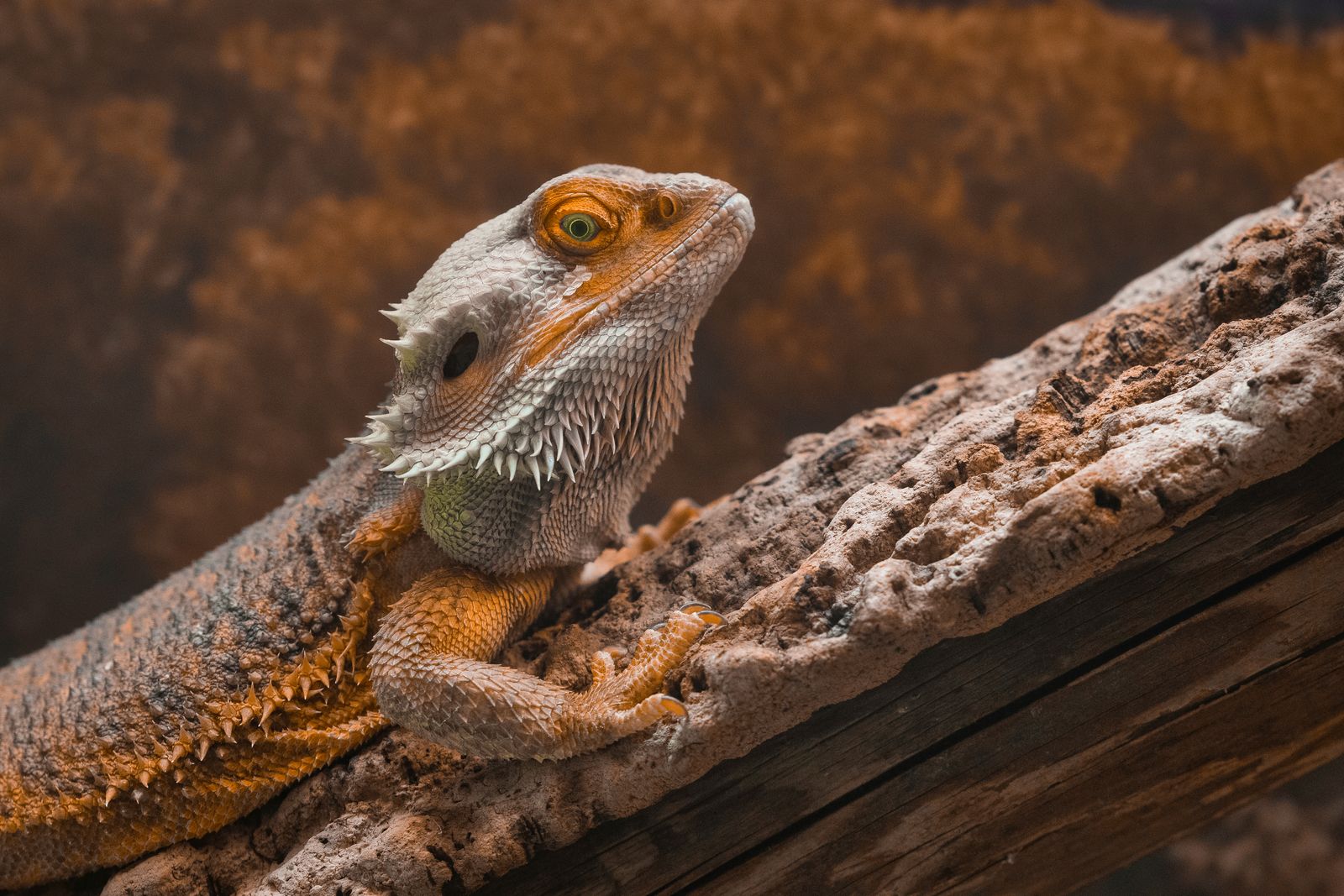
A bearded dragon enclosure works when it offers a genuine choice of temperatures, strong ultraviolet light, and room to move. For an adult, start with an enclosure at least four feet long, two feet wide, and two feet tall — smaller tanks make a proper heat gradient almost impossible, because the warm end heats the whole box. Set the enclosure up completely and run it for a day or two before the dragon moves in, so temperatures can be measured and adjusted with no animal at risk.
Heat: a hot end, a cool end, and honest measurement
Bearded dragons regulate their body temperature by moving, so the enclosure must contain both ends of their range at once. The basking surface — a flat rock, slate tile, or broad branch directly under the heat lamp — should measure about 100 to 110 degrees Fahrenheit for an adult, with babies and juveniles kept slightly warmer, up to around 115 degrees on the basking surface itself. The cool end should sit near 80 to 85 degrees, and overnight the whole enclosure can fall to the mid-60s or low 70s without extra heat in most homes.
Measure what the dragon actually experiences. An infrared temperature gun reads the basking surface, which is the number that matters, and digital probe thermometers at dragon height track the air at each end. Stick-on dial gauges are unreliable enough to ignore. Check both ends daily: a failed bulb or a knocked lamp quietly removes the heat a dragon needs to digest food, so keep a spare basking bulb in the house and treat a blown one as a same-day errand.
UVB light: the non-negotiable
Ultraviolet-B lighting is as essential as heat. Without UVB, a bearded dragon cannot make vitamin D3 or absorb calcium properly, and the result over time is metabolic bone disease — soft jaws, tremors, and deformed limbs. Fit a tube-style UVB light spanning much of the enclosure's length, mounted at the distance the maker specifies for the basking zone, with nothing but open air or the recommended mesh between bulb and dragon, since glass and plastic block UVB entirely. Run lights on a timer for 10 to 12 hours a day to mimic a natural day. UVB output fades long before the tube stops glowing, so replace the bulb on the maker's stated schedule even though it still lights up, and note the replacement month where you will see it.
Flooring, furniture, and water
Choose a floor that is safe if licked and easy to clean: tile, non-adhesive shelf liner, or a suitable solid substrate suits most keepers, and loose particle floors are best avoided for babies and clumsy feeders who strike at food and substrate together. Furnish with a hide at the warm end and another at the cool end, sturdy branches and cork pieces for climbing, and decor fixed so nothing can topple onto the dragon. Provide a shallow water dish — many dragons drink more readily from droplets or in a supervised bath, but the dish should always be there — and keep the enclosure out of direct window sun, which can overheat glass dangerously fast.
The daily rhythm that keeps it right
Check both temperatures, spot-clean waste, refresh water, and glance over your dragon's eyes, toes, shed, and tail tip each day, with a fuller clean weekly. A dragon who stops basking, refuses food for more than a few days, or shows persistent dark stress marks should see a reptile veterinarian. Sharing those daily checks through KinsLe's Care Teams, with each task assigned to a keeper and timestamped when done, keeps the gradient, the lights, and the dragon under proper watch every single day.