
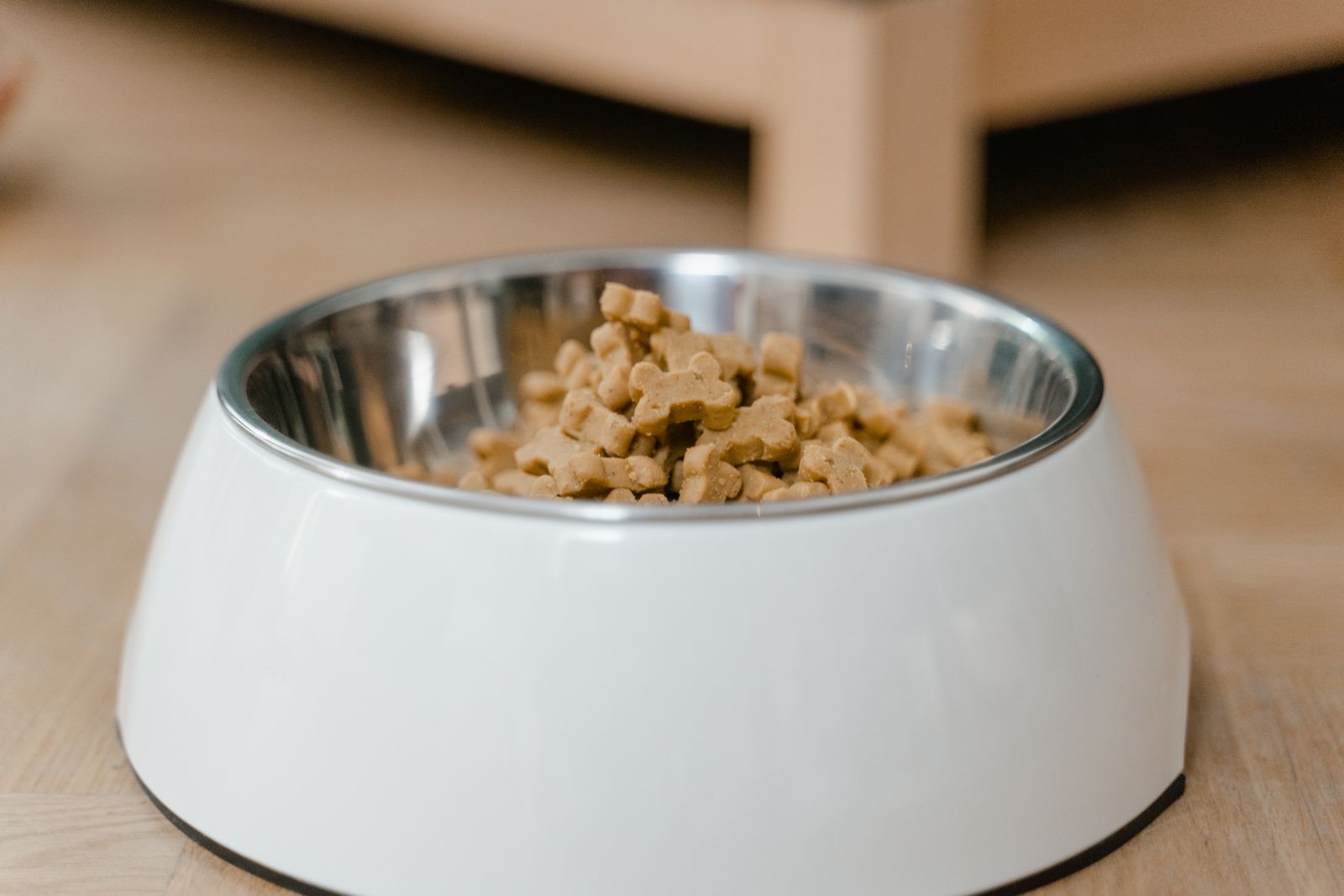
To keep dog food fresh, store dry food in its original bag, sealed and placed inside an airtight container in a cool, dry place — and keep the bag's best-by date and batch details. Its lining protects the food, and its label carries information you would need in a recall.
Why the original bag matters
Tipping kibble straight into a plastic bin feels tidy, but it shortens the food's life. The fats in kibble coat the container walls and turn rancid over time, tainting every fresh batch you pour on top, and food stored out of its bag loses the protective barrier designed for it. Keeping food in the bag, with the top rolled down and clipped, inside a washable airtight container gives you both protections. Note the best-by date — a phone photo works — and keep the batch code until the bag is finished, in case of a recall.
Where and how to store each type
- Dry food: a cool, dry spot away from direct sunlight, heat sources, and humidity — a pantry or cupboard rather than a steamy utility room or a garage that bakes in summer and freezes in winter. Keep the container off the floor where possible and out of reach of a determined dog; a Labrador who self-serves a whole bag is a vet visit waiting to happen.
- Wet food: unopened tins and pouches live happily in a cupboard until their date. Once opened, cover and refrigerate, and use within the time the label directs — typically a couple of days — bringing it to room temperature or adding a splash of warm water before serving if your dog dislikes fridge-cold food.
- Fresh and raw-style foods: follow label guidance strictly, refrigerate or freeze as directed, defrost safely in the fridge rather than on the counter, and treat hygiene as seriously as you would for your own meat.
- Treats and chews: reseal bags, keep them dry, and check dates — natural chews go stale and hard, and dental sticks lose their point in a damp cupboard.
Hygiene habits that protect freshness
Wash scoops and containers between bags and dry them fully — a damp container invites mould. Wash bowls daily too. Do not mix old food into a fresh bag; finish the old food, then clean the container before refilling. Buy bag sizes your dog will finish within roughly four to six weeks of opening, even if the giant bag looks like better value — for a small dog like a Shih Tzu, the economy bag is often false economy once the last third goes stale.
Signs food has gone off
Kibble that smells rancid, looks mouldy, feels damp, or contains insects should be thrown away. A dog who suddenly refuses a long-liked food may be detecting staleness you cannot — check the date before assuming pickiness. When in doubt, throw it out: a replacement bag costs far less than a vet bill for a gastric upset.
Tell your sitter exactly where everything lives
Freshness systems break down when someone else feeds your dog and guesses. A KinsLe Care Pass is a temporary, scoped link you can share with a sitter — no account or app needed on their side — covering exactly where your dog's food is stored, which container is current, how much to serve, and any extras or rules. Your storage routine survives your holiday intact. Share your dog's feeding details with a Care Pass on KinsLe and explore more everyday care answers on KinsLe for a smoother handover.