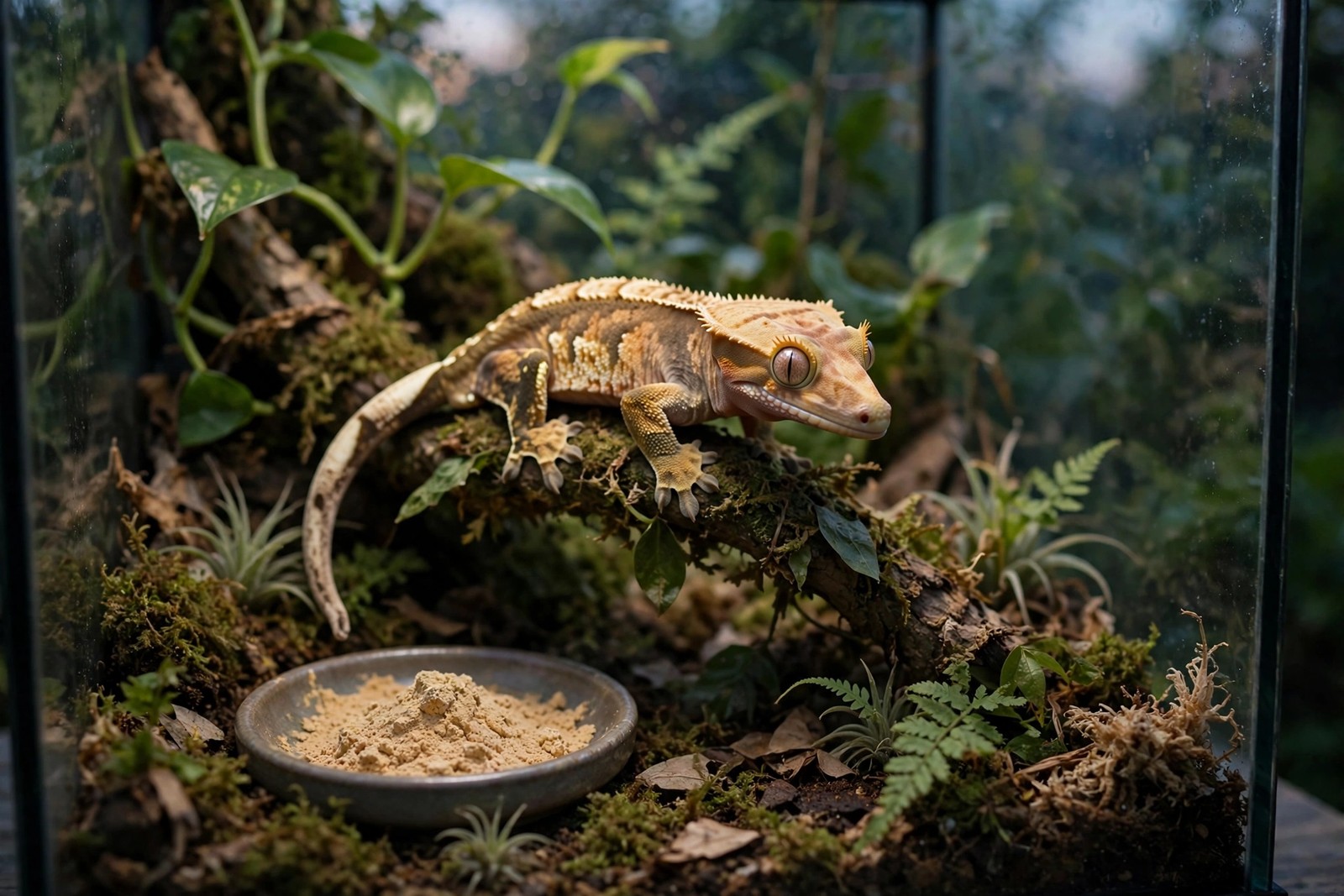
For the right first keeper, yes. A crested gecko combines manageable housing, a simple staple diet, and a calm temperament, but it rewards an owner who enjoys watching an animal after dark more than handling one through the day. Judge the fit against your evenings, your tolerance for a fragile and jumpy pet, and your willingness to keep humidity and feeding steady for an animal that may live for well over a decade in good care.
What Makes Them Beginner-Friendly
Many homes already sit close to the temperature this species needs. A range of about 72 to 78°F (22 to 26°C) usually means no basking lamp is required, although a thermometer is still essential because a hot room can push an enclosure into dangerous territory quickly. Their staple food is equally approachable: a complete powdered crested gecko diet mixed with water to a smooth paste, offered in a small dish and replaced as directed on the feeding routine you settle with the seller or a reptile veterinarian.
They are also small and quiet. An adult fits comfortably in a tall enclosure rather than a floor-hungry vivarium, makes no noise, and has no live-food-only requirement. Occasional live insects can be offered as enrichment for a gecko that hunts well, dusted appropriately, but they are a supplement rather than the foundation of the diet. That combination removes several barriers that make other reptiles harder for a first keeper: no rodent feeding, no intense basking setup, and no large enclosure footprint.
The Trade-Offs You Must Accept
Crested geckos are nocturnal. Yours will sleep tucked into foliage through the day and become active in the evening, so an owner wanting a pet to watch at breakfast will see mostly a tail tip in a plant. Handling needs patience as well. They walk hand to hand, then often jump without warning, and a fall onto a hard floor can injure a small, light-bodied animal. Keep handling low, seated, and brief until the individual gecko's habits are known.
They are also delicate. Fingers should never pull at stuck shed or grab the tail, because a crested gecko can drop its tail and, unlike some other geckos, does not regrow it. The gecko is not harmed in the way an owner may fear in the moment, but the change is permanent. Humidity matters daily too: the enclosure needs misting to create droplets for drinking and a humidity cycle that supports clean shedding, without staying permanently soaked. Miss that balance and shedding problems and a dull, inactive gecko follow.
Questions to Settle Before You Buy
Ask the seller what the gecko currently eats, how readily it feeds, when it last shed, and whether it has been kept alone, because crested geckos are solitary and should be housed singly. Ask for feeding and health notes rather than any vaccination history, because reptiles are not vaccinated. Check the animal's toes and tail tip for retained shed, look for clear eyes and a plump tail base, and confirm you can buy the same powdered diet it already knows before you bring it home.
Set the enclosure up and let its temperature and humidity run before collection day, with branches, cork, and dense foliage at several heights. A gecko arriving to a finished home settles faster than one watching its owner build around it. KinsLe's Pet Passport is a practical place to record that gecko's arrival date, source, first diet, and shed notes, so its early care history stays clear as it grows.