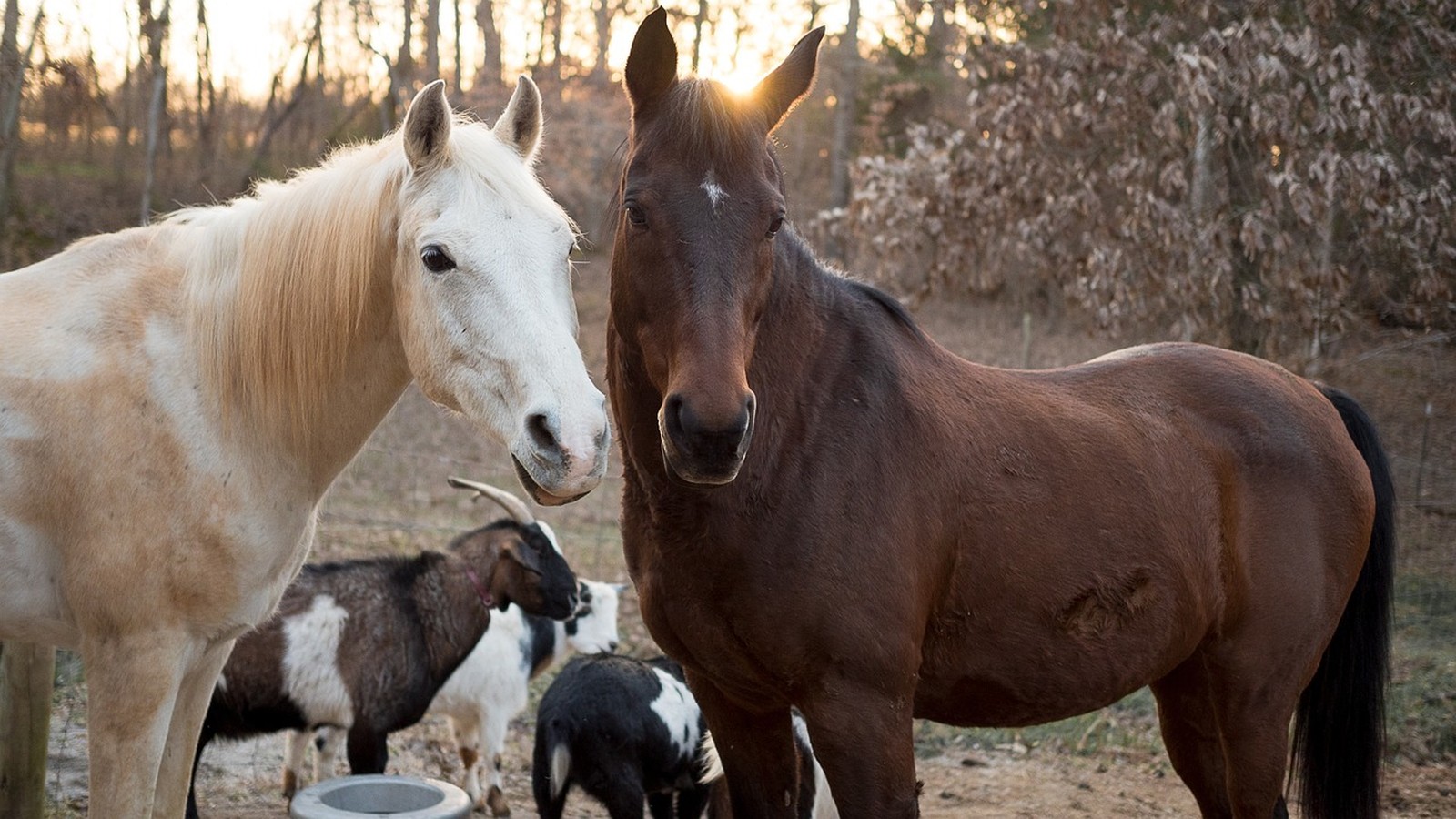
For a first farm animal, a horse is the steep end of the learning curve. Nothing about that is a criticism of horses; it is a statement about scale. Every beginner mistake — a missed water check, a loose fence board, a feeding error — carries larger consequences, larger bills, and a larger animal to catch, restrain, and treat. Goats and chickens let you learn the same core skills on a scale where mistakes are cheaper and handling is within a beginner's strength.
What a horse actually demands each day
A horse needs visits at least twice a day, every day, totalling 1½ to 2 hours, split into two visits of 45 to 60 minutes. Each visit covers feeding hay and any hard feed, checking and refilling water, picking out hooves, a hands-on check for cuts, swelling, and heat in the legs, and mucking out or poo-picking the paddock. Add a farrier visit roughly every six to eight weeks for trimming or shoeing, an annual dental check, worming planned with your vet, and rugs, fencing repairs, and shelter upkeep through winter.
What the numbers look like side by side
Treat these as planning ranges for keeping animals at home, not quotes. A horse typically runs to $430 to $730 a month, made up of hay and feed at $200 to $350, bedding at $50 to $90, farrier care averaged across the year at $60 to $110, routine veterinary and dental care averaged at $70 to $110, and sundries such as fencing and rug repairs at $50 to $70. A pair of goats typically runs to $95 to $165 a month, made up of hay and feed at $50 to $85, minerals and routine health care at $20 to $35, bedding at $15 to $25, and hoof trimming and sundries at $10 to $20. A small flock of chickens typically runs to $35 to $65 a month, made up of feed at $20 to $35, bedding at $8 to $15, and grit, health sundries, and coop repairs at $7 to $15. The totals follow the breakdowns exactly, and the gap between them is the point: one horse month can fund many months of smaller stock.
What goats and chickens teach you first
Goats teach fencing honesty, because they test every gate and panel; they teach hoof trimming, mineral provision, and reading rumination and appetite as health signals. Chickens teach predator-proof housing, dawn and dusk routines, and spotting a quiet, hunched bird that needs attention. Both teach the discipline a horse will later depend on: showing up twice a day in all weathers, keeping feed dry and rotated, and noticing small changes early.
When starting with a horse can still work
The exception is the beginner who is not really starting from zero: someone who has shared or loaned a horse, worked on a yard, or has an experienced mentor nearby and reliable cover for holidays and illness. Even then, lessons, a pre-purchase veterinary examination, and a trial period where possible reduce the risk of an unsuitable match. Choose an older, well-handled schoolmaster type over a young, green horse, and budget for professional help with handling and groundwork from the start.
A sensible sequence
Start with chickens or goats, run them through a full year of seasons, and keep notes on time, costs, and what broke or went wrong. Use that year to build the fencing, shelter, water supply, and feed storage a horse would need, and to find your farrier, vet, and holiday cover before you need them urgently. If the routine still appeals after that year, you will shop for a horse as an experienced keeper rather than as a hopeful beginner. Sharing the twice-daily visit rota, feeding notes, and farrier dates through KinsLe's Care Teams means a horse, goats, or chickens all get the same care on the days you cannot be there.