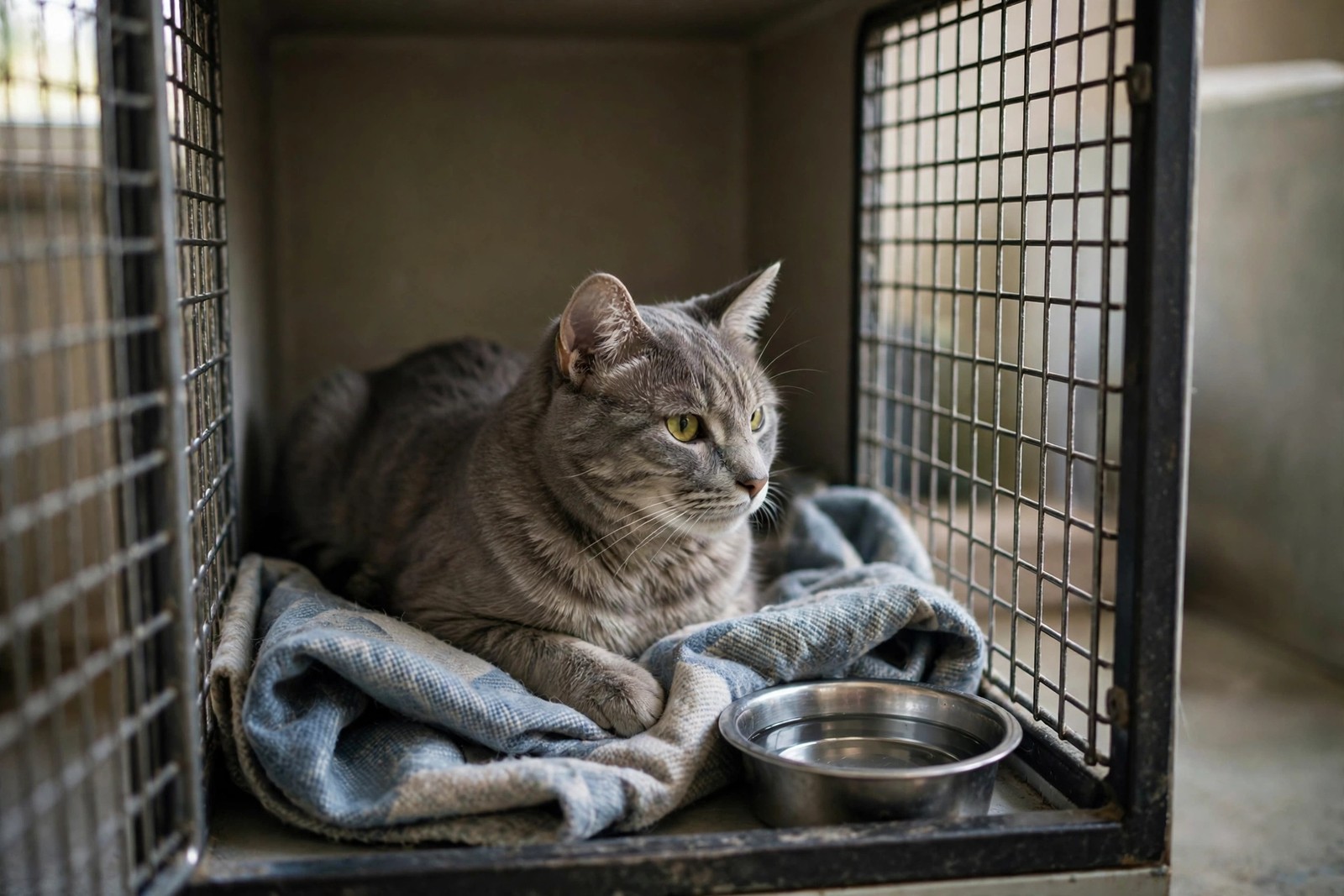
Long-stay cats are usually overlooked for a presentational reason, not a character one: they are the cats who hide at the back of the kennel when visitors walk the row, while the confident cats who come to the front get chosen. In a quiet home, away from the noise and strangeness of the shelter, a shy cat is often a different animal entirely — slow to trust, but thorough about it.
The Honest Price: Time Without a Deadline
Decompression for a shy cat is measured in weeks and, for many, in months. The first days may be nearly invisible: a cat who eats at night, uses the litter box while the house sleeps, and treats a hiding place as the whole world. That is not failure and it is not the final personality; it is an animal working through an enormous change at a survivable pace. Progress arrives in small, easily missed signs — eating while you are in the room, a first night of playing with a toy alone, choosing a windowsill over the wardrobe, a slow blink returned from across the room. A boisterous home full of visitors, noise, and grabbing hands asks the same cat to recover in the conditions that frightened it, and that contrast is the real answer to the adoption question.
One Room, Real Hiding, Contact on the Cat's Terms
Set up one starter room before arrival: litter box, water, food, a scratching surface, and hiding places that are genuinely good — a covered bed, a box with a fleece, space behind furniture. Hiding is allowed, without exception; it is never punished, never dragged out for introductions, and never treated as ingratitude. Sit in the room doing quiet things, let the cat watch you being predictable and harmless, and let contact be the cat's choice: a hand resting nearby, not reaching; treats placed, not hand-delivered, until the cat closes the distance. Routine is the trust-builder underneath everything — same feeding times, same order of events, same calm voices — because a shy cat learns safety from repetition long before affection.
Questions Worth Asking the Shelter
A long stay generates knowledge, if you ask for it. Ask what the staff have learned: the treats that work, the hiding style, whether the cat plays at night, how the cat takes to being approached, and what a good day looks like for this individual. Ask about history as far as it is known — how the cat arrived, any time in a foster home and what the foster noticed, known fears, and the health record: conditions, treatments, and what the shelter veterinarian has flagged to watch.
The Rewards, Framed Honestly
Nobody should adopt a shy cat as a project of self-congratulation, and the rewards are quieter than the rescue stories suggest. What patient households actually report is a bond with unusual depth: a cat who chose you slowly chooses you completely, and the first voluntary lap, the first greeting at the door, land with a weight that instant friendliness never carries. Many shy cats also suit quiet homes practically — undemanding of strangers, content with routine, gentle in daily life.
What the Shelter Learned Should Come Home With the Cat
A long-stay cat arrives with something a kitten does not: a documented life. The shelter's behavior notes, the foster's observations, the food that worked, the handling that frightened, the health history — losing that record at the shelter door would waste months of learning and force the cat to teach a new household everything from zero. That handover is what KinsLe's Transferrable Profiles was built to carry: the cat's profile, history, and care notes transfer with the cat from shelter or foster to the new home, so the adopter starts from knowledge instead of guesswork. When the profile moves with the cat, nothing the shelter learned is lost, and KinsLe's Transferrable Profiles keeps that handover intact from the first shy day to the first confident lap.