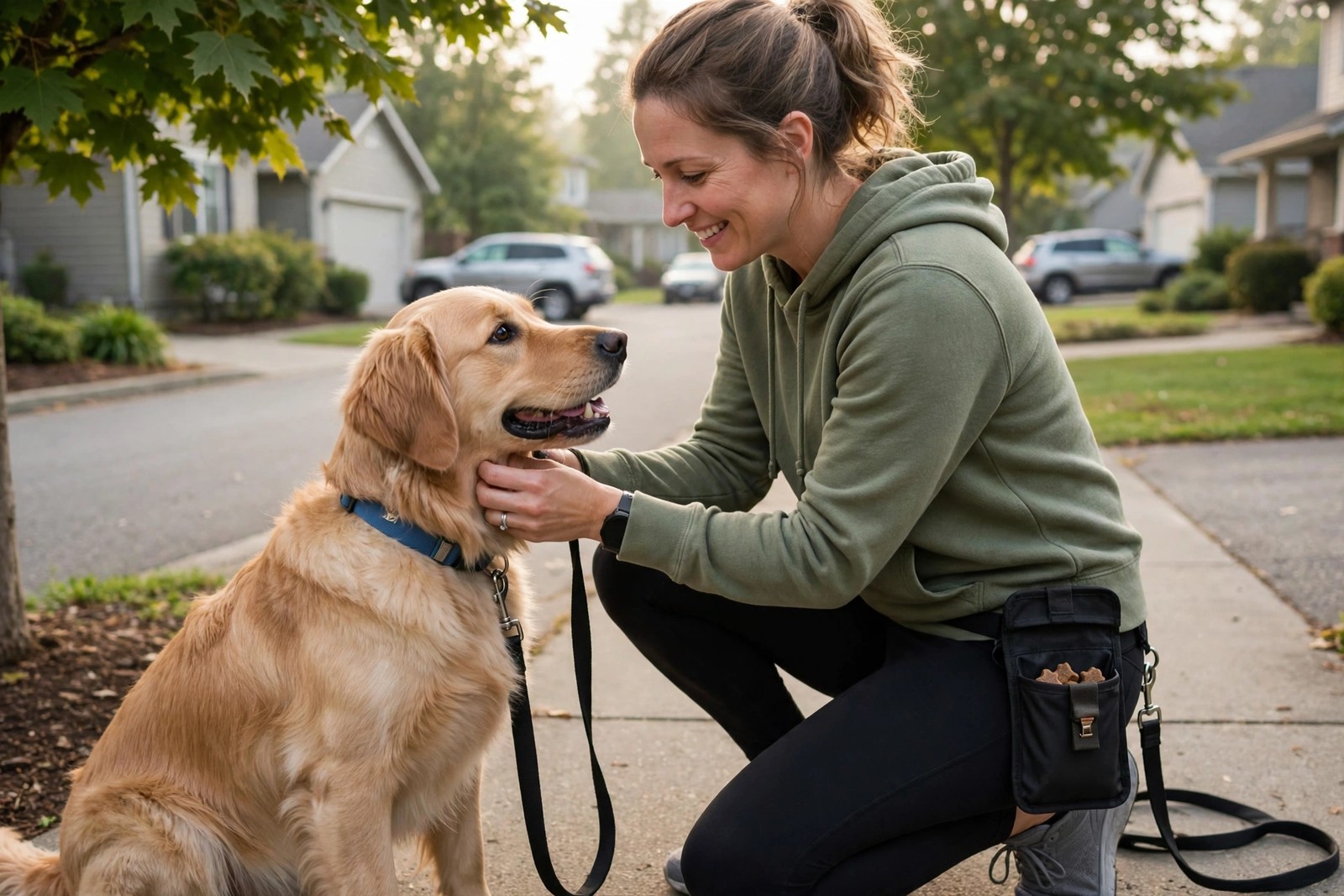
For many dogs the calmer morning order is a toilet outing and a proper walk first, then breakfast after a genuine cool-down rest at home. A dog who has walked, settled, stopped panting and lain down for a while eats more comfortably than a dog who comes through the door and meets a full bowl at full excitement. The reverse order, a full breakfast followed immediately by vigorous exercise, is the combination worth avoiding for every dog. Plan the morning so meals and hard effort keep a respectful distance in both directions.
Why the Rest Gap Matters
Digestion works steadily when a dog rests, and hard running diverts the body toward muscle, heat loss and excitement. A full stomach plus galloping, rolling and rough play can trigger vomiting in an ordinary dog, and discomfort alone can sour a dog on morning walks over time. Wait until breathing settles and the dog chooses to rest, and treat thirty unhurried minutes after a real walk as a practical household rule rather than a medical formula. Offer water on return, let the dog cool fully, and then feed in a calm spot away from doorways and departures.
The same gap applies in reverse before evening exercise. A healthy adult dog who ate an hour ago can usually manage a gentle lead walk, and games, training with running and off-lead play deserve a longer buffer after a full meal. Young, old and unwell dogs deserve extra caution, and your vet can advise on timing for an individual dog with a sensitive stomach.
The Deep-Chested Caution
Large, deep-chested dogs, including Great Danes, German Shepherds, Standard Poodles and setters, carry the body shape that vets associate with stomach twist. That emergency condition involves the stomach rotating, and it can follow meals and activity patterns in ways vets continue to study. Vets commonly advise owners of such dogs to rest the dog before and after meals, to avoid vigorous exercise around feeding and sometimes to split the ration into smaller, more frequent meals. Follow that advice as a sensible precaution, and understand that no routine can promise prevention.
Learn the warning signs your vet wants acted on without delay, including a tight or swollen abdomen, retching that brings nothing up, pacing, drooling and distress. Those signs mean emergency care now rather than a wait for the morning. Discuss your dog's shape, meal size and exercise pattern at a routine visit, and write the agreed timings into the household routine where every walker can see them.
Dogs Who Break the General Pattern
Some dogs vomit bile on a truly empty stomach after the long overnight gap, and those dogs may do better with a very small snack before the walk and the main breakfast after the rest gap. Some dogs refuse to walk far before eating, and some pull happily for an hour on nothing. Puppies eat more often and exercise in short bursts, and their mornings need a different rhythm built with your vet's guidance. Adjust the pattern to the dog in front of you, change one element at a time, and judge by comfort, stools and enthusiasm over a fortnight.
Weekend mornings expose sloppy timing more than weekday ones, since a long hike after a rushed full breakfast combines a large meal with the hardest exercise of the week. Feed the hiking dog after the hike and the rest gap, or give a small early snack and keep the main meal for the return. Pack water for the dog as well as yourself, and let an older dog set a gentler pace that keeps the whole pattern sustainable.
Whatever pattern you choose, consistency turns it into a cue the dog can relax into. In KinsLe Care Teams, the early snack, the walk, the rest gap and breakfast can sit as separate named duties, and the timestamps protect the gaps on busy mornings when several people share the routine.