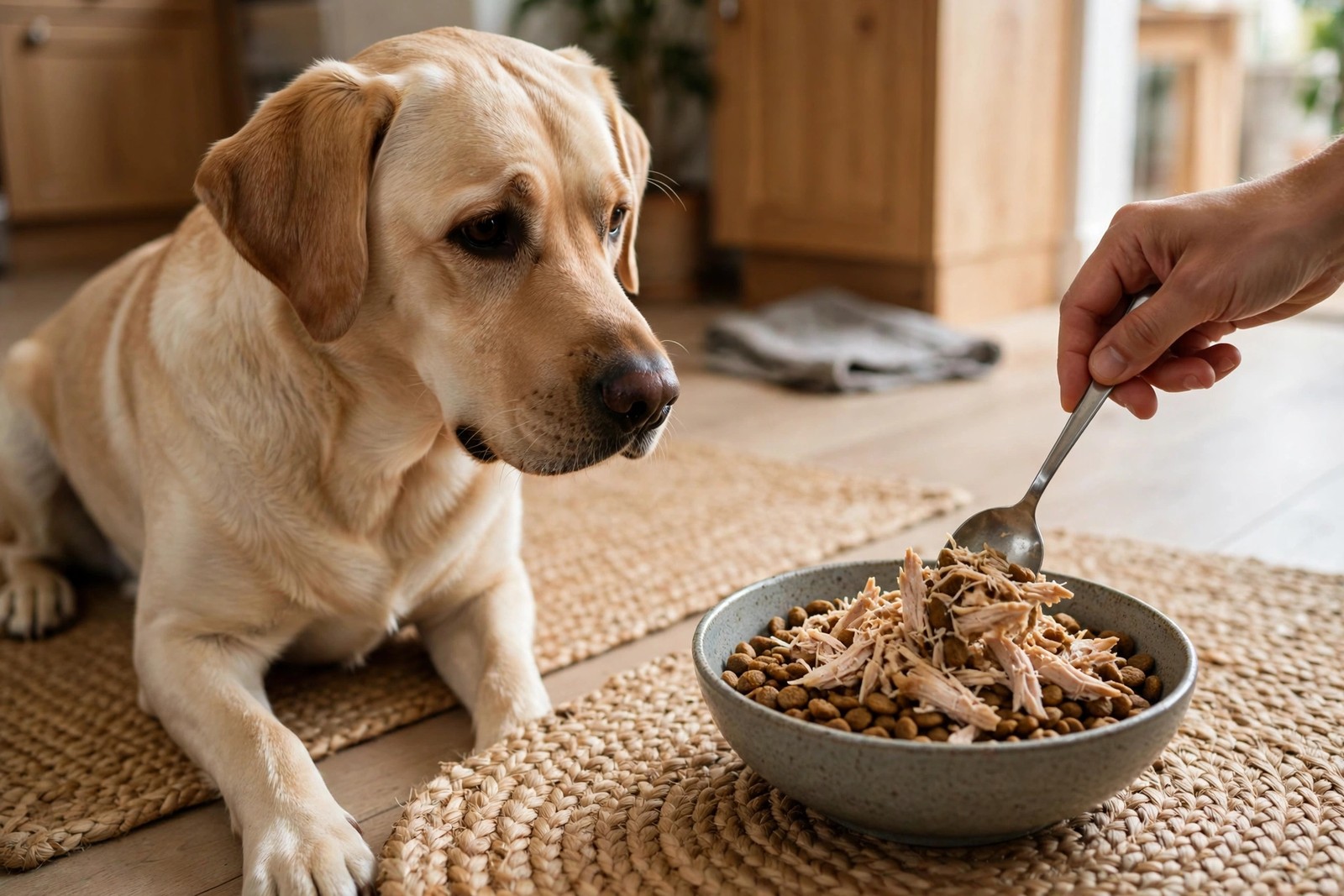
Yes — for most healthy dogs, a topper is a welcome addition, provided it stays what its name suggests: something small sitting on top of a complete food, not a replacement for it. The kibble underneath is formulated to deliver every vitamin, mineral, and amino acid your dog needs in the right proportions. Toppers change that maths the moment they grow beyond a garnish, which is why the portion rule below matters more than which tasty extra you choose.
Keep Toppers Near a Tenth of the Day's Calories
The working rule most vets give is that extras — toppers, treats, and chews combined — should make up no more than about ten percent of daily calories. Past that point, two things happen at once. The extras crowd out balanced food, so a dog filling up on chicken and rice can quietly run short on calcium, essential fatty acids, and trace minerals the kibble was carrying. And because toppers are usually richer than kibble, the calories climb faster than owners expect, showing up as steady weight gain over a season. For a medium dog eating roughly 800 calories a day, a tenth is about 80 calories: a heaped tablespoon of shredded chicken, one sardine, or a few spoonfuls of wet food — a garnish, not a layer.
Toppers That Earn Their Place
The best toppers add moisture, aroma, or a nutrient the bowl can use. Plain cooked chicken, turkey, or lean beef, unseasoned and boneless, suits most dogs. A sardine or a little cooked salmon brings fish oils and strong scent for a dog who is lukewarm about dinner. Steamed green beans, carrot, courgette, or pumpkin add bulk and fibre for very few calories, which helps a dog on a weight-loss plan feel fed. A spoonful of wet food or warm water stirred through releases smell and softens kibble for seniors with sore teeth. Plain yoghurt or kefir in a tablespoon-sized dollop is fine for many dogs, though rich or fatty extras like gravy, cheese in quantity, and leftovers cooked in onion or garlic have no place in the bowl — onion and garlic damage dogs' red blood cells, and fatty scraps are a common trigger for stomach upsets.
The Picky-Eater Trap
Toppers backfire most often with small, clever dogs. Serve the same irresistible extra every night and many dogs learn to hold out: nose down, wait, and the plain kibble gets upgraded. Within weeks the topper is no longer optional, and if it is ever missing, the dog skips meals entirely. Avoid the trap by rotating two or three modest toppers, mixing them through the kibble rather than laying them on top where they can be picked off, and sometimes serving the kibble plain with warm water so it never becomes unacceptable. If a dog who once ate happily starts refusing food altogether, that is an appetite change worth a vet conversation, not a cue to escalate the toppings.
Dogs Who Need Extra Caution
Some dogs should only get toppers their vet agrees to. Puppies are building skeletons on carefully balanced growth diets, so extras stay minimal. Dogs on a prescribed therapeutic diet — for kidney trouble, food allergies, or pancreatitis, for example — are eating that food as treatment, and an innocent topper can undo it. Overweight dogs do best with the low-calorie vegetable options above, counted inside the day's allowance. Whatever the dog, introduce a new topper in a spoonful-sized amount and watch stools and skin over the next couple of days before making it regular. With KinsLe's Care Teams, the whole household can follow the same topper plan — the agreed extra, its amount, and the days it is served sit inside the feeding task, so a well-meant second helping from someone else does not quietly double it.