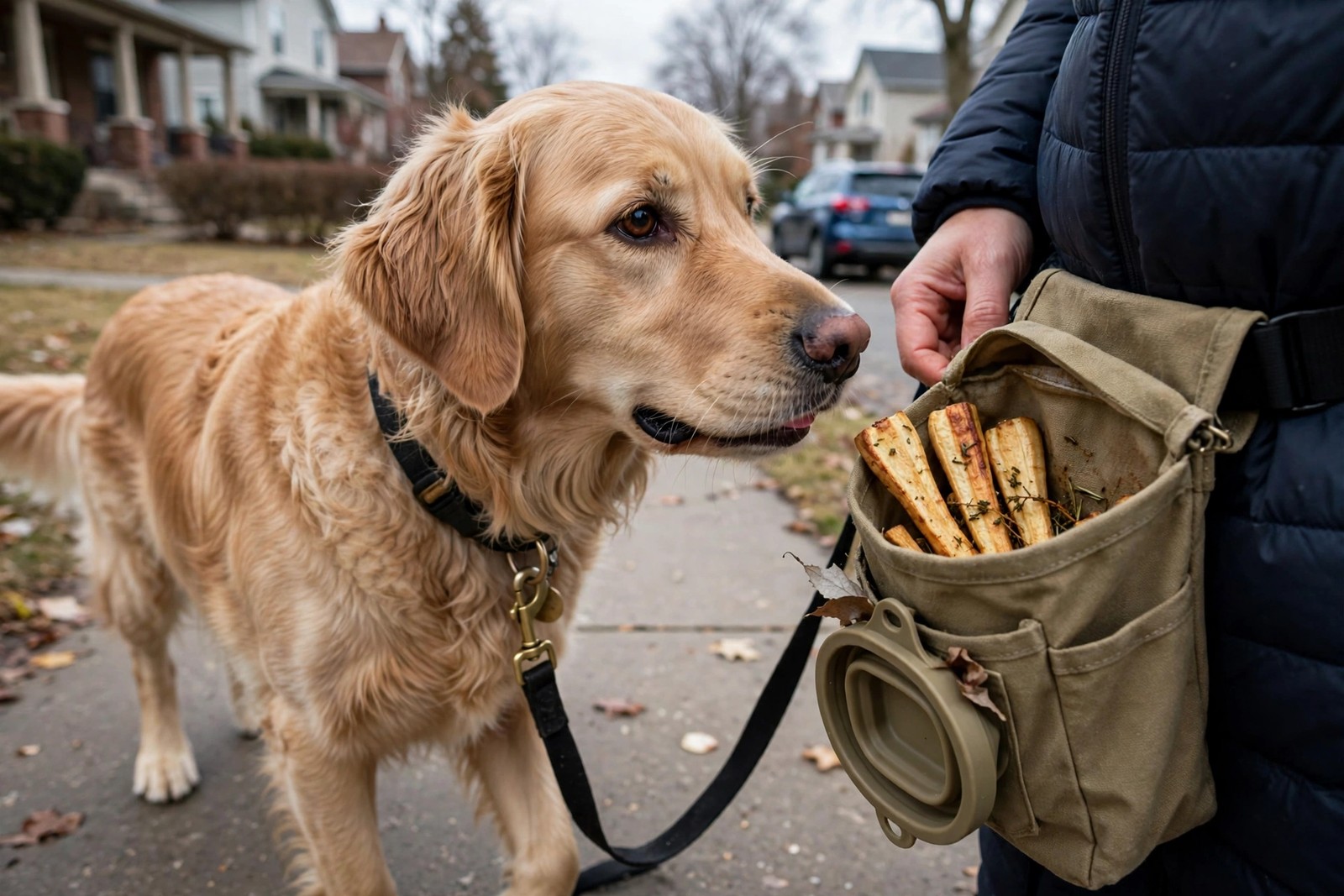
Yes, parsnips can be shared with your dog, and the roasted sticks in this scenario carry the whole lesson. A parsnip cooked plainly is a mild, sweet root vegetable that many dogs enjoy in small pieces. A parsnip that shared a roasting tray with fatty meat, oil, salt, or honey is a dressed food wearing a plain costume. The vegetable did not change. The coating did, and the coating decides whether a leftover stick belongs in a dog's bowl.
The Roast-Dinner Trap in Detail
Winter roasts load parsnips with flavour from every direction. Sticks roast in dripping from the meat, absorb salty pan juices, and often finish with a honey or syrup glaze that caramelises at the edges. Each addition is fine for people and wrong for a dog's extra: fat in quantity can upset the stomach, salt adds nothing a dog needs, and sweet glazes pile sugar onto an already sweet vegetable. If you want your dog included, lift a few sticks out before the tray is dressed, or cook a small plain batch alongside the main event. Leftovers of unknown coating should be treated as dressed.
Preparing Plain Parsnip
Peel the parsnip, trim the ends, and cut it into sticks sized for your dog's mouth. Roast, steam, or boil the pieces with nothing added until they soften and a fork enters easily. Raw parsnip is hard and crunchy in a way that encourages a dog to crunch once and swallow, so cooked and softened is the safer texture for sharing. Let the pieces cool until warm rather than hot. Serve two to three small sticks to a small dog, or up to four to five sticks to a medium or larger dog, mixed into regular food or offered piece by piece as an occasional extra.
Portions and the Sweetness Factor
Parsnip carries more natural sugar than many vegetables, which explains both its appeal and its limit. A few sticks make a satisfying extra. A bowlful can loosen stools, produce wind, and add unneeded energy to the day of a dog watching its weight. Dogs with diabetes should meet sweet vegetables only within a feeding plan their vet has agreed. A first serving should sit below the listed amounts while you watch the following day's stools and appetite.
Other Roots, Other Rules
Owners sometimes extend a parsnip yes to every pale root on the tray. Resist the extension. Each vegetable earns its own answer, and the tray may also hold onion in the gravy, garlic in a stuffing, or leeks in a side dish, all of which are foods dogs should never receive. Keep the sharing rule attached to the single named food: plain parsnip, in the stated count. Everything else from a roast dinner needs its own check before it leaves the table, and several roast staples will fail that check outright.
A Plain Batch Made Ahead
If roast dinners are regular in your house, cook a small plain batch of parsnip sticks at the start of the week and keep the pieces in a sealed container in the fridge. Serve pieces cold or warmed gently, always from that plain container rather than from the dressed tray. Making the batch ahead removes the moment of temptation at the table, when every stick looks alike and the cook's memory of the glaze is the only guide anyone has.
A Note the Tray Clearer Can Use
The person who cooked the roast knows exactly what coated the parsnips. The person clearing plates an hour later may not. That gap is where dressed sticks slip into a bowl in good faith. One written line closes it: plain parsnip only, dressed leftovers never, with the stick count for your dog. KinsLe Care Teams holds that line inside the feeding duties for your dog, so the rule is visible at clearing-up time rather than locked inside the cook's memory.