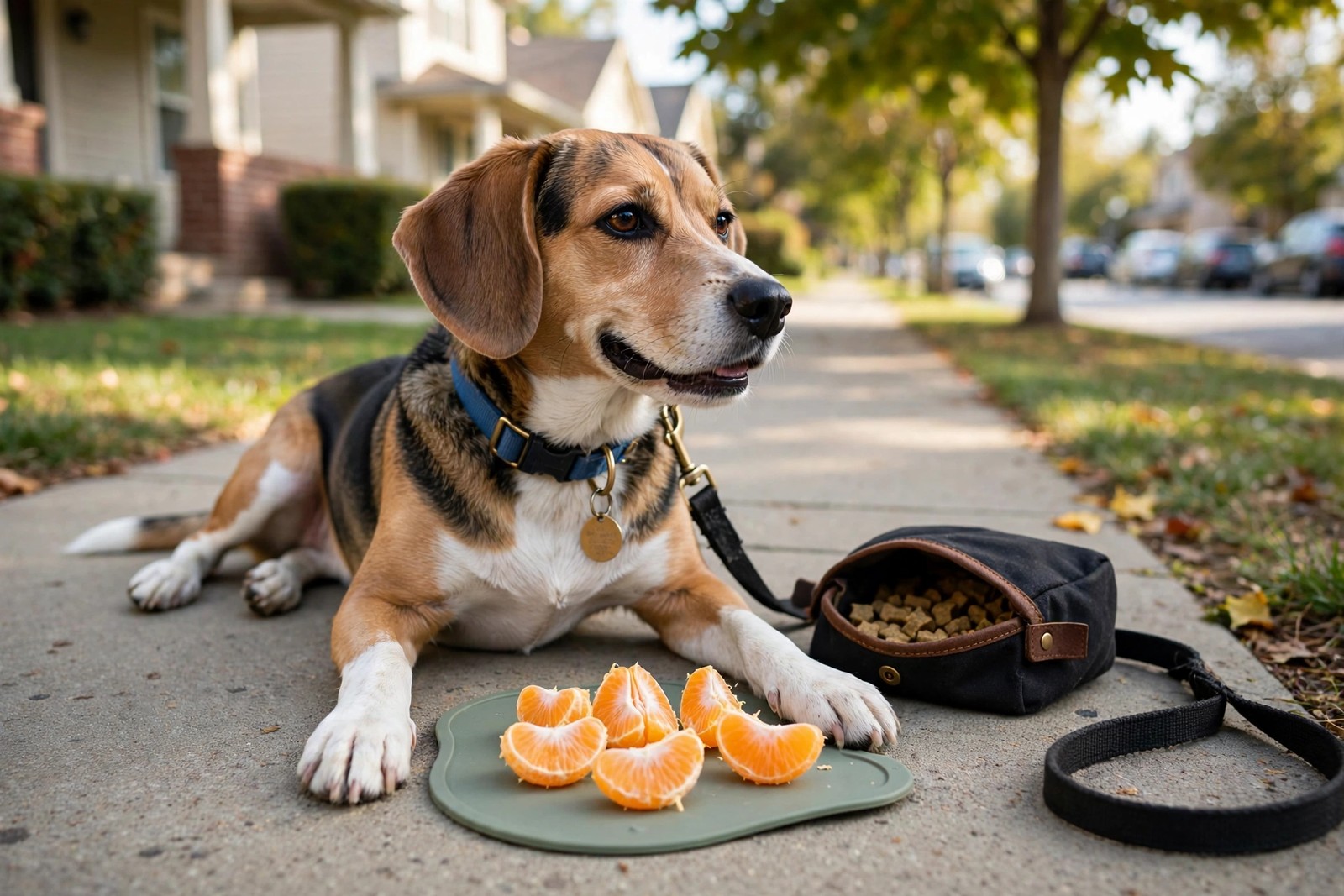
A tangerine segment now and then is a safe treat for a healthy dog, and the small size of the fruit makes portioning easy — but 'safe' comes with preparation attached. The flesh is fine in modest amounts; the peel, pith, and pips are not part of the offer, and the natural sugars and acids that make tangerines bright for us are exactly why this stays an occasional taste rather than a bowl-side habit.
Preparing a Segment Properly
Peel the fruit completely and discard the skin, which is tough for a dog to digest and can carry residues from the fruit's surface. Pull the segments apart, check each one for pips, and remove the thickest white pith if your dog is new to citrus. Offer one or two segments to a medium-sized dog, and a single segment — or half of one — to a small dog, ideally as part of the day's treat allowance rather than on top of it. A dog who has never eaten citrus before should start with one segment, with stools and comfort watched over the following day before any repeat.
Portions, Sugar, and Sensitive Stomachs
Fruit sugar is still sugar, so dogs who are overweight or diabetic should skip tangerines unless your veterinarian approves them as part of the feeding plan. The acidity can also unsettle an empty or delicate stomach: a dog who vomits, drools, or produces loose stools after a first taste has given you a clear answer, and tangerine simply comes off that dog's menu. Serve segments at room temperature, never as frozen chunks for a small dog, and keep dried or sweetened citrus products — a different proposition entirely — away from dogs altogether.
Managing the Toddler Sharing System
The real risk in this scenario is not one supervised segment; it is an enthusiastic toddler running an unsupervised delivery service. Set the house rule early: dog treats come from adults, and fruit for people stays on the table or in hands, not offered at dog height. Give your toddler a job that satisfies the sharing impulse safely, such as carrying the dog's own approved treat to a bowl. Teach a reliable 'leave it' and a settle on a mat during family snack time, and sweep up dropped segments promptly, since a dropped piece eaten peel-and-all is the usual route to an upset stomach. In KinsLe, Care Teams records who handled snack-time supervision once the duty is marked complete with a timestamp, keeping that shared rule visible to the whole household.