
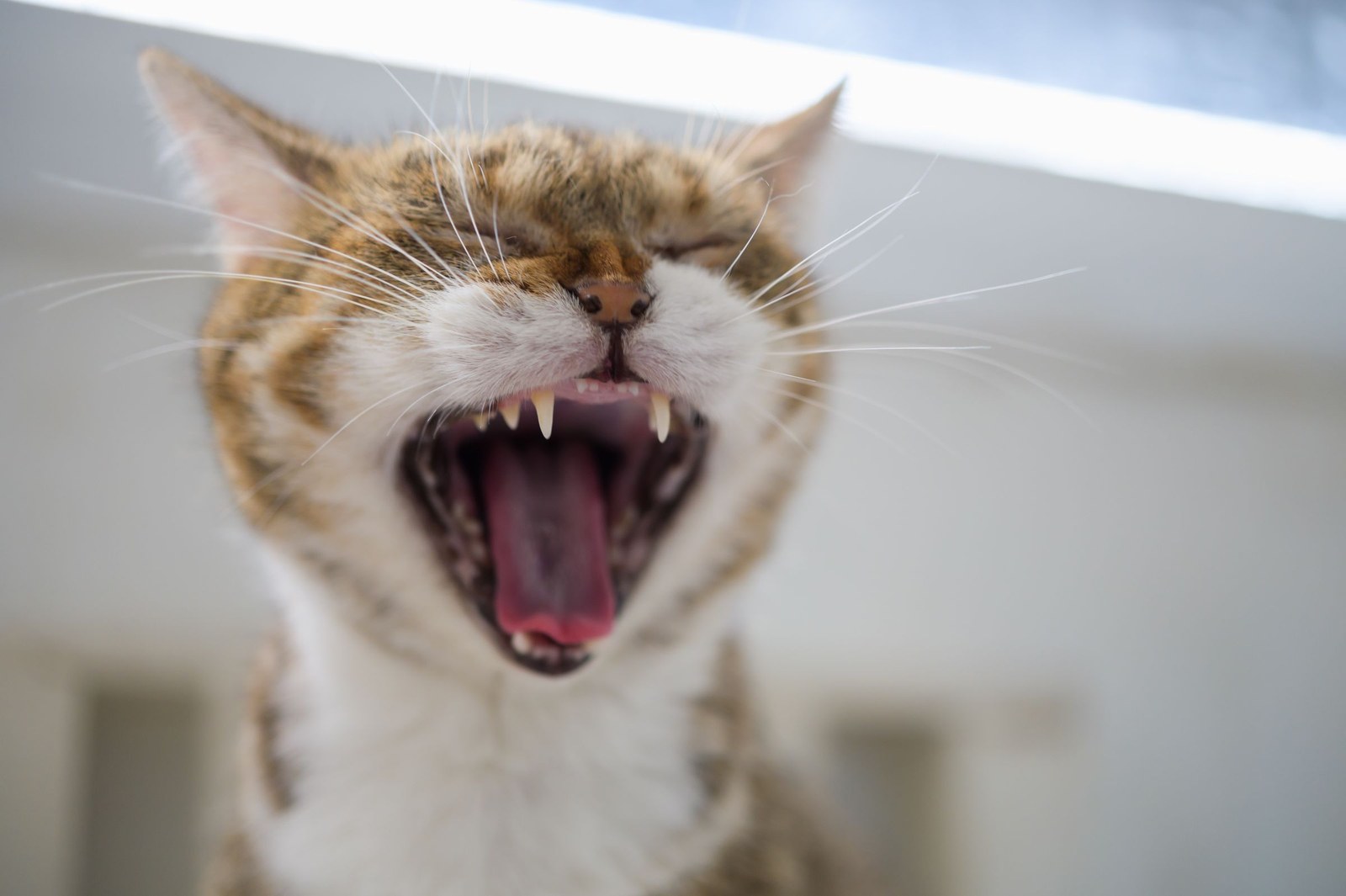
A little fishy breath after a meal is normal for cats, but breath that is strong, sweet-sour, rotten, or getting worse over time is not something to shrug off. Persistent bad breath — vets call it halitosis — most often points to plaque, tartar, and gum inflammation building up in the mouth, and it is one of the earliest clues that dental disease is developing.
Why cat breath turns bad
Cats are small, efficient predators with dozens of tiny teeth packed into a small jaw, and those teeth collect plaque just like ours do. Within days, soft plaque hardens into tartar along the gumline. Bacteria living in that tartar release the sulfur compounds that make breath smell sour or rotten, and the gums around affected teeth become irritated and inflamed.
Age plays a role too. Kittens rarely have truly foul breath — teething can cause a mild, temporary odor — but by middle age many indoor cats have some degree of dental buildup, especially cats who eat mostly soft food and never have their teeth brushed. Breeds with flatter faces and crowded teeth can be more prone to buildup, but no cat is exempt.
Occasionally, a distinct change in breath goes along with problems elsewhere in the body. That is another reason a vet, rather than a home remedy, is the right next step when the smell is new, strong, or different from your cat's usual.
Signs the smell is more than dinner
Look inside your cat's mouth gently when she is relaxed, lifting the lip rather than forcing the jaw open. Call your veterinarian promptly if you notice any of the following:
- Red, swollen, or bleeding gums
- Yellow-brown crust along the teeth near the gumline
- Drooling, or drool that is thicker than usual
- Dropping kibble, chewing on one side, or pawing at the mouth
- Eating less, choosing soft food over hard, or losing weight
- A broken, loose, or discolored tooth
Cats are famously stoic about mouth pain. A cat who is still eating can still be hurting, so changes in how she eats matter as much as whether she eats.
What you can do at home
Start with observation, not mint sprays or mouthwashes made for people — human dental products are not made for cats and some ingredients are unsafe for them. Instead, build gentle habits:
- Look weekly. A quick lip-lift during a calm cuddle keeps you familiar with what normal looks like for your cat.
- Try gradual toothbrushing. Use only a cat-specific toothpaste and a soft finger brush or small pet brush, introduced over days with praise and treats. Even a few times a week helps.
- Note the timeline. Write down when the odor started and whether it is worsening. That detail genuinely helps your vet.
If the breath is strong or any warning sign is present, book a dental check. Your veterinarian can examine under the gumline, assess whether a professional cleaning is needed, and rule out other causes — and they should be the one to decide on any treatment.
Keeping dental history from scattering
Dental care is rarely a one-visit story. There are exam notes, cleaning dates, X-ray findings, vaccine records, and follow-up instructions, and they pile up across years and sometimes across clinics. KinsLe's Pet Passport is the records packet for your cat — vaccines, medications, allergies, and documents kept together in one place and shareable with vets and sitters when they need them. Keeping your cat's dental notes and vet documents in her Pet Passport means the next clinician sees the full picture instead of starting from a guess, and you are never digging through email for last year's chart. Add a quick note after each visit, and her mouth health becomes a clear, trackable history. After each cleaning or exam, add the date, gum findings, and any change in odor to the Pet Passport file on KinsLe, building a dental record the next clinician can read in order.