
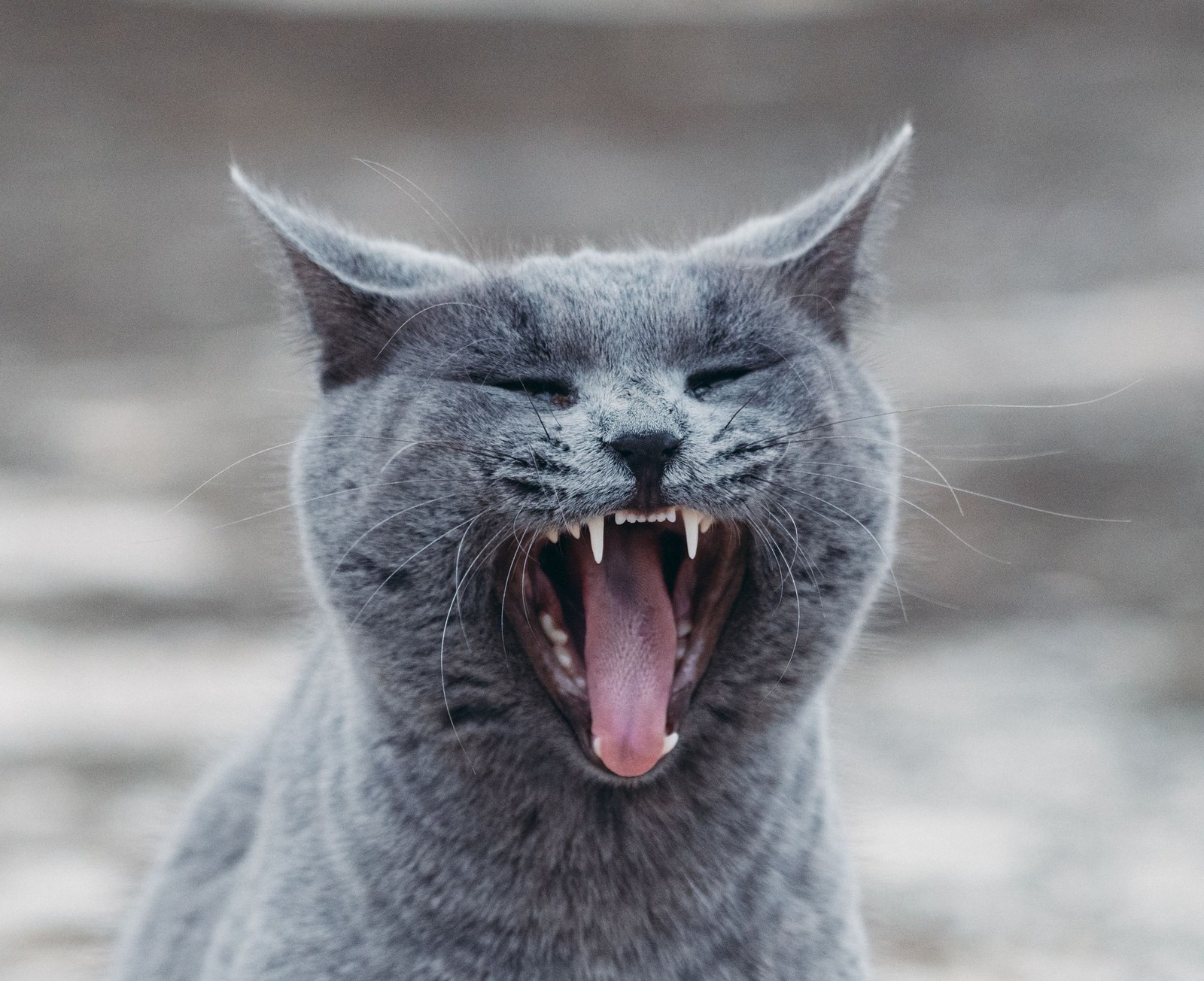
Rapid, laboured, or open-mouth breathing in a resting cat is an emergency: keep your cat calm, minimise handling, and get to an emergency veterinarian immediately. Panting in cats is not like panting in dogs and should never be waited out at home, because cats typically only breathe this way when something is seriously wrong with the heart, lungs, airway, or chest.
How to Recognise Abnormal Breathing
A relaxed cat normally takes roughly 20 to 30 breaths a minute, quietly through the nose, with barely visible effort. Warning signs look different: the mouth hangs open, the tongue may be out, each breath is fast or exaggerated, the belly heaves with the effort, elbows stick out from the body, or you hear wheezing, rasping, or silence where air should move. Pale, grey, or blue-tinged gums are a grave sign.
Brief open-mouth breathing after intense play or a stressful car ride can happen and should settle within minutes in a cool, quiet room. If it does not settle quickly, or your cat was simply resting when it started, treat it as the emergency it usually is. Counting breaths for 15 seconds and multiplying by four gives the clinic a useful number when you call.
What to Do Right Now
Follow a calm, short sequence:
- Stop handling your cat beyond what is needed; chasing and grabbing worsen breathing.
- Place her gently in a carrier — if she resists strongly, let her sit where she is while you call for advice.
- Keep the environment cool and quiet; turn the car air conditioning on for the trip.
- Call the emergency clinic on the way so they can be ready at the door.
- Drive carefully, or have someone else drive while you watch her breathing.
Do not offer food or water, do not try to look down her throat, and do not delay departure to film, post, or wait for a callback if she is struggling. Minutes matter more than a tidy account of events; you can fill in details from the waiting room.
Possible Causes — for the Vet to Sort Out
Breathing emergencies in cats can stem from asthma flare-ups, fluid around or in the lungs, heart disease, chest injury, severe anaemia, heatstroke, or an obstructed airway. Flat-faced breeds such as Persians and Exotic Shorthairs have narrower airways and can struggle sooner in heat or stress, while any breed can develop heart-related fluid. Sorting the cause needs examination, oxygen, and often imaging — which is precisely why home waiting is the wrong tool for this symptom.
At the clinic, staff may place your cat in oxygen before any detailed examination, because stabilising breathing comes first. That is normal procedure, not a sign of how bad things are.
Prevention You Can Do on Calm Days
Keep up with routine vet checks, where heart murmurs and early breathing changes are often first heard. Maintain a healthy weight, since excess kilos strain both heart and lungs. Keep cats out of hot cars and stuffy rooms, know your nearest emergency clinic's address, and keep a carrier somewhere reachable in seconds rather than behind the Christmas decorations.
How the KinsLe Pet Pass Speeds Up Check-In
The Pet Pass is your cat's verified ID card. When every minute matters, presenting a verified ID at reception helps staff confirm your cat's identity and your contact details fast, instead of spelling names and numbers over a noisy phone line while your cat is being rushed through. It is a small administrative mercy in a moment when your attention belongs entirely on her.
Prepare it on a quiet day so it is ready on the loud one. Pet Pass identifies her at emergency reception, with your contact details ready for the clinic team through KinsLe.