
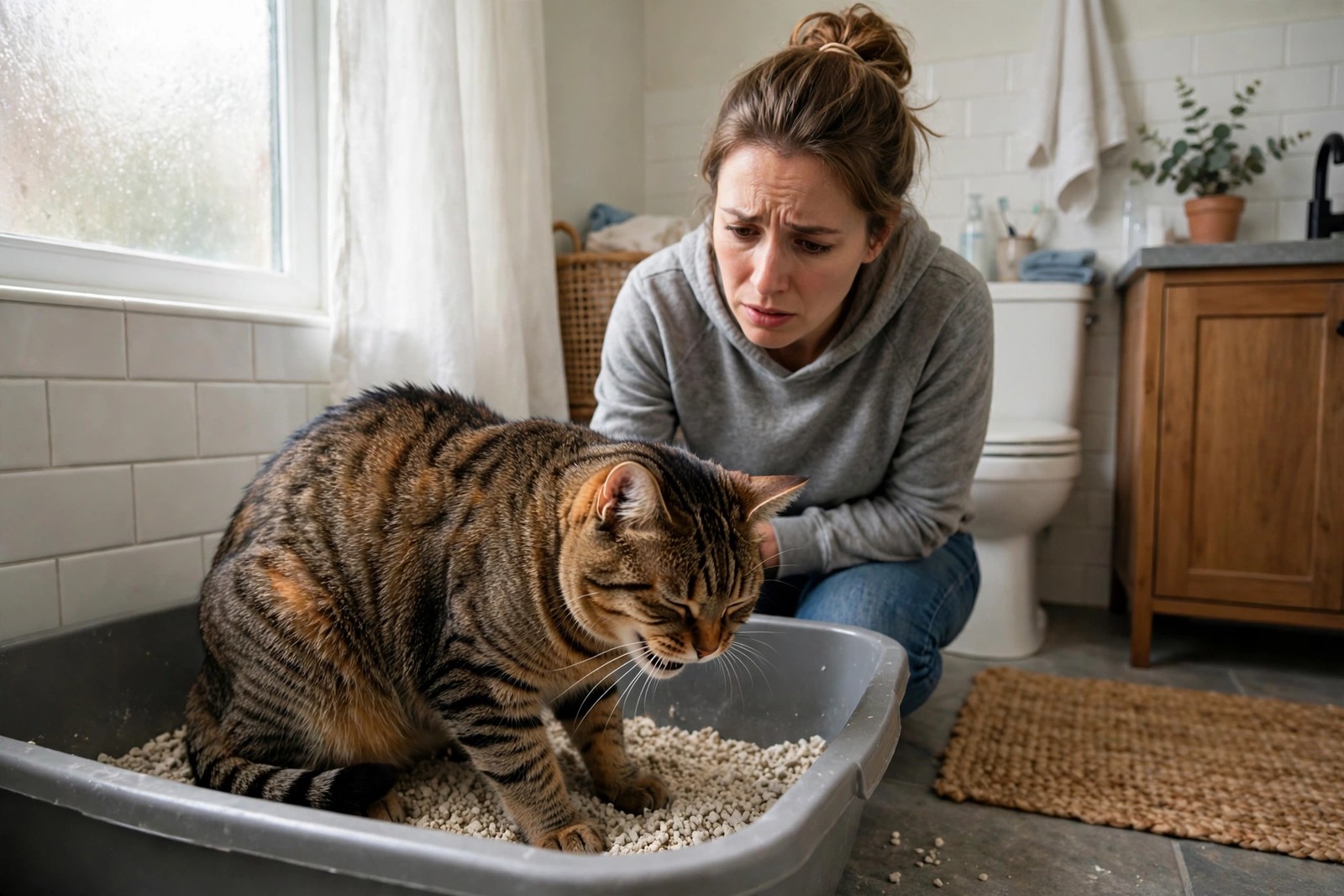
Yes — treat straining in the litter box with little or no urine coming out as an emergency, especially in male cats, and contact a vet or emergency clinic right away. A blocked urinary tract can become life-threatening fast, and straining can look exactly like constipation, so never assume it's the harmless explanation.
Why this one can't wait
When a cat cannot pass urine, pressure and toxins build up in the body, and the situation can turn critical within a day or so. Male cats are at particular risk because their urinary passage is narrower, and a partial or complete blockage can develop from inflammation, crystals, mucus plugs, or spasm. This is one of the true drop-everything emergencies of cat ownership: the treatment window is generous if you act immediately and unforgiving if you wait until tomorrow to "see how he goes." If your regular vet is closed, go straight to an emergency clinic — do not wait for your usual practice to open.
Straining to urinate vs. constipation: hard to tell apart
Owners understandably mix these up, because both involve a cat crouched, straining, and visiting the box repeatedly. Clues that point to a urinary problem include:
- Frequent trips to the box producing only drops, or nothing
- Crying or yowling while straining
- Licking the genital area repeatedly
- Blood-tinged urine, or urine appearing outside the box in odd spots
- Restlessness, hiding, loss of appetite, or vomiting as things progress
Constipation tends to involve a cat who is otherwise passing urine normally. But here is the honest truth: even experienced owners and sometimes clinicians can't be certain from the crouch alone. If there's any doubt about whether urine is coming out, treat it as urinary and go. Being wrong about constipation costs you a vet trip; being wrong about a blockage can cost your cat's life.
What to do in the next thirty minutes
Keep it simple and fast. Note when you last definitely saw your cat urinate normally, and whether any urine at all is being produced now. Do not press on the belly or try any home remedy — a full, blocked bladder is painful and fragile. Place your cat gently in a carrier, call the clinic to say you're coming with a possibly blocked cat (they will often prepare for your arrival), and drive. If your cat has had urinary issues before, mention it immediately; history changes triage. Staying calm helps your cat, but speed matters more than polish — paperwork can catch up later.
After the emergency: reducing the chance of a repeat
Cats who have had one urinary episode deserve a prevention conversation once they're stable. Your vet may discuss diet, water intake (many cats drink more from fountains or multiple water stations), litter box numbers and placement, weight, and stress reduction — urinary trouble and stress are frequent partners in indoor cats. Follow-up monitoring matters, and anyone who scoops the box should know what "normal" output looks like for your cat, because early spotting is what turns a recurrence into a same-day appointment instead of a crisis.
Having the critical details ready in the Pet Passport
Emergencies are the worst possible moment to hunt for information, yet that's when clinics ask: medications, allergies, known conditions, your regular vet's number, the emergency clinic's address. KinsLe's Pet Passport is your cat's records packet — vaccines, medications, allergies, and documents in one place — shareable with vets and sitters, so those details travel with your cat instead of living in a drawer. Keeping it updated means the emergency vet gets the full picture in seconds. Complete your cat's Pet Passport on KinsLe now, while nothing is wrong, and explore more pet answers on KinsLe for the rest of your just-in-case list.