
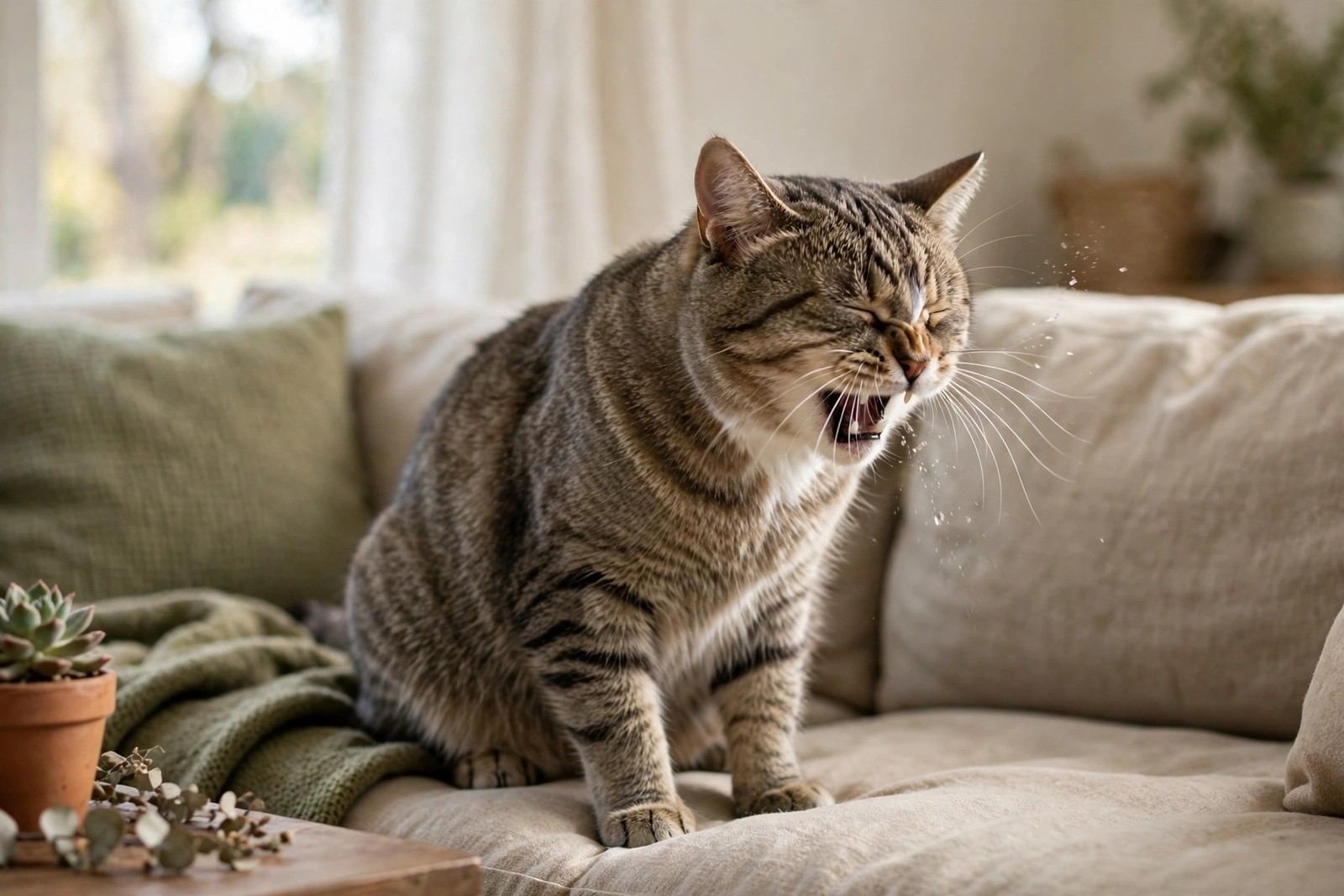
A few sneezes after your cat sniffs dust, pokes into a cupboard, or meets a new scented candle usually mean nothing. Sneezing that keeps going for more than a couple of days, though — or that arrives with discharge, watery eyes, poor appetite, or unusual tiredness — should be checked by a vet.
What sets off a sneezing fit
Cats sneeze to clear irritants, just like we do. Common harmless triggers include litter dust, household sprays, smoke, perfume, and a change to a more fragrant cleaning product. A short burst of sneezing that stops within hours, in a cat who is eating, playing, and breathing comfortably, is usually just that clearance system working. Note what changed in the home that day; if a new litter or air freshener lines up with the sneezing, switching back is a simple test.
Signs it is more than dust
Book a veterinary visit when you see any of these alongside the sneezing:
- Thick yellow or green discharge from the nose or eyes
- Sneezing that lasts beyond two to three days, or keeps returning
- Reduced appetite, drooling, or pawing at the mouth
- Lethargy, hiding, feverish warmth, or less interest in play
- Noisy, laboured, or open-mouth breathing
Upper respiratory infections are common in cats, especially those who have spent time in shelters or multi-cat settings, and other causes — from nasal irritation to dental problems — can look similar at home. Only an in-person exam can sort out what is actually going on, which is why guessing and waiting rarely helps once discharge or appetite changes appear.
Kittens and seniors need a lower threshold
Young kittens have immature immune systems and small reserves, so an infection that an adult cat shrugs off can leave a kitten dehydrated and not eating within a day or two. Senior cats, and cats with ongoing health conditions, can also go downhill faster than they appear to. For either group, call sooner rather than later — describe the symptoms when you book, ask how urgently they want to see your cat, and follow that advice over any general timeline you read online.
What to do while you wait for the appointment
Keep your cat warm, indoors, and away from other cats if infection is possible. Offer strong-smelling, warmed wet food if appetite dips, keep fresh water close, and gently wipe discharge from the eyes and nose with a soft, damp cloth. Don't give human cold medicines or leftover antibiotics — many human products are dangerous for cats, and the wrong antibiotic helps nothing. Note when the sneezing started, how often it happens, and any discharge colour; a short phone video of a sneezing episode can genuinely help your vet.
Finding a vet quickly
If you don't already have a regular clinic, KinsLe's Pet Services Directory helps you find local vets, along with groomers, sitters, and trainers, so you can act while symptoms are fresh rather than searching in a panic later. Having a clinic chosen before you need one is a quiet form of preparedness every cat owner benefits from. Pet Services Directory leads you to a veterinarian nearby on KinsLe, so persistent sneezing with discharge gets examined without delay.