
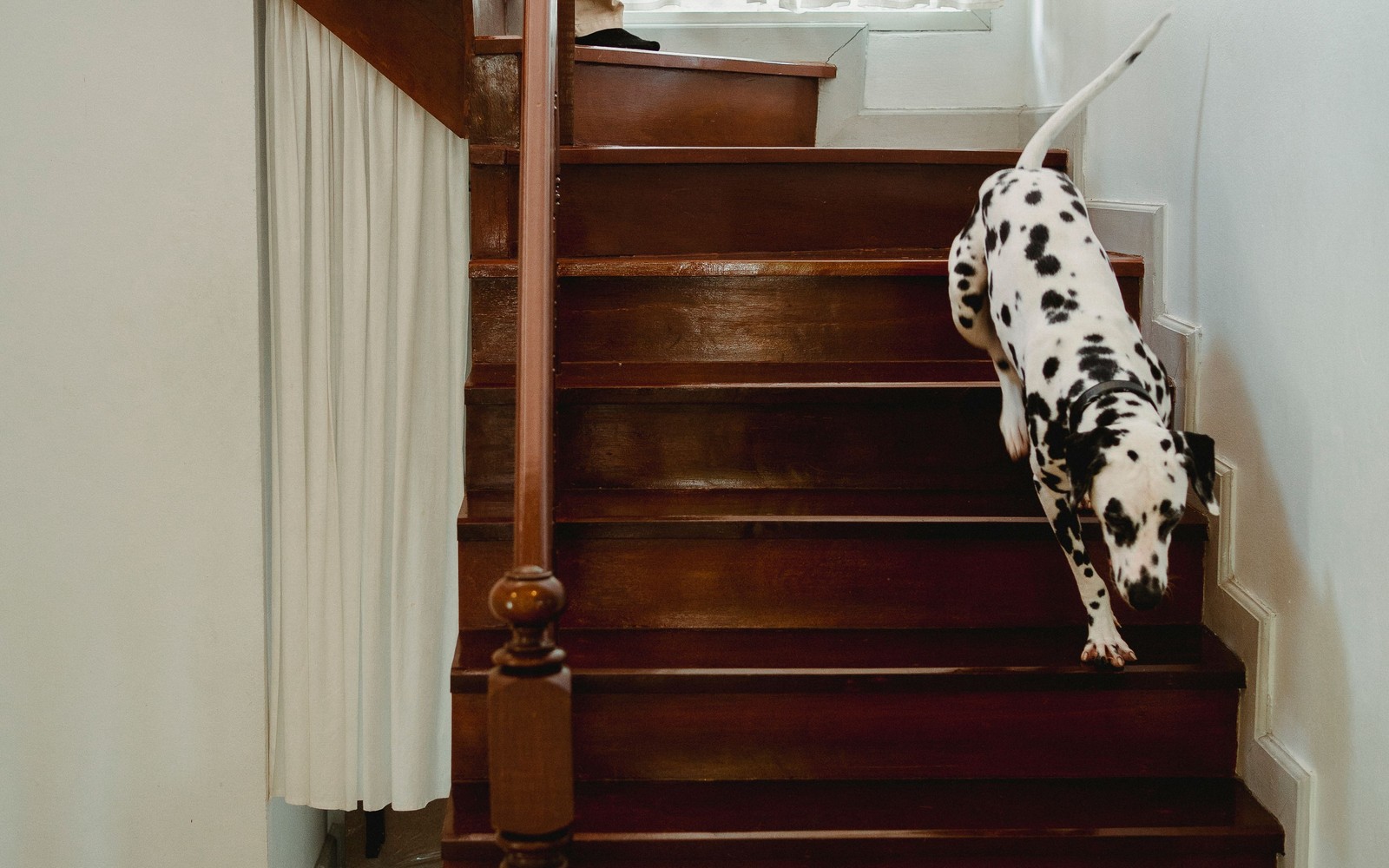
For most dogs, following you from room to room is not a problem at all — it is affection, curiosity, and a sensible strategy, since interesting things tend to happen wherever you are. It only becomes a concern if your dog panics when a door closes between you, cannot settle when left alone, or shows other signs of distress. A happy shadow who naps while you work and plays happily with others is simply a dog who likes you.
Why dogs shadow their people
Dogs are social animals bred over thousands of years to work and live alongside humans, so staying near the group is hardwired. Some breeds take it further: herding dogs monitor their flock, which includes you, and many companion breeds were selected specifically for closeness. Puppies follow because you are their whole world; senior dogs may follow more as vision, hearing, or confidence changes, which is worth mentioning at a routine vet visit.
There is also a practical motive. You open doors, produce meals, start walks, and drop interesting smells. From your dog's perspective, keeping an eye on you is simply good information gathering — the kitchen trips alone justify the effort.
The bathroom question, answered
Yes, it is normal that the audience includes bathroom trips. Dogs do not share our concept of privacy, and a closed door is, to them, a puzzling interruption in an otherwise sensible system. Most owners either allow a supervised nose under the door or teach a cheerful "wait" outside it with a chew. Either is fine, provided your dog can manage the closed door without escalating distress.
When following is worth a closer look
Pay attention if the shadowing comes with a cluster of harder signs:
- Whining, scratching, or barking the moment a door closes.
- Inability to rest unless touching you, plus frantic greetings.
- Accidents, drooling, or destruction that only happen when you are apart.
- A sudden increase in clinginess in a dog who was previously independent.
That pattern can point toward separation anxiety or, particularly in older dogs, a medical or cognitive change. That is a conversation for your veterinarian, ideally with notes or a short video of what happens when you do step away.
Gently build a little independence
You do not need to change a contented dog, but a bit of independence is healthy insurance for every dog. Scatter a few great chews and comfortable beds in rooms other than the one you occupy most. Play brief "settle" games where your dog relaxes on a mat while you move around, rewarded for staying put. Practice easy closed-door moments — seconds at first — with something good happening on his side. Keep it all cheerful and optional-feeling; the goal is confidence, not rejection.
You are part of a bigger circle of dog people
On KinsLe, Circle of Love is where members meet as fellow owners rather than as an audience: people share notes on bathroom-door negotiations, mat games that actually stuck, and small tricks that helped a clingy dog relax in another room. The conversation mixes humor with practical detail — what chew lasted, which bed placement worked, how a senior dog's following changed with age — and contributions tend to come from members living through a version of the same routine. Reading along, asking a question, or recognizing your hallway procession in someone else's account can make daily life feel shared, sociable, and far less puzzling.
Circle of Love on KinsLe connects you with owners who have lived with a shadow dog themselves, whose everyday stories can reassure you that constant company is usually just devotion.