
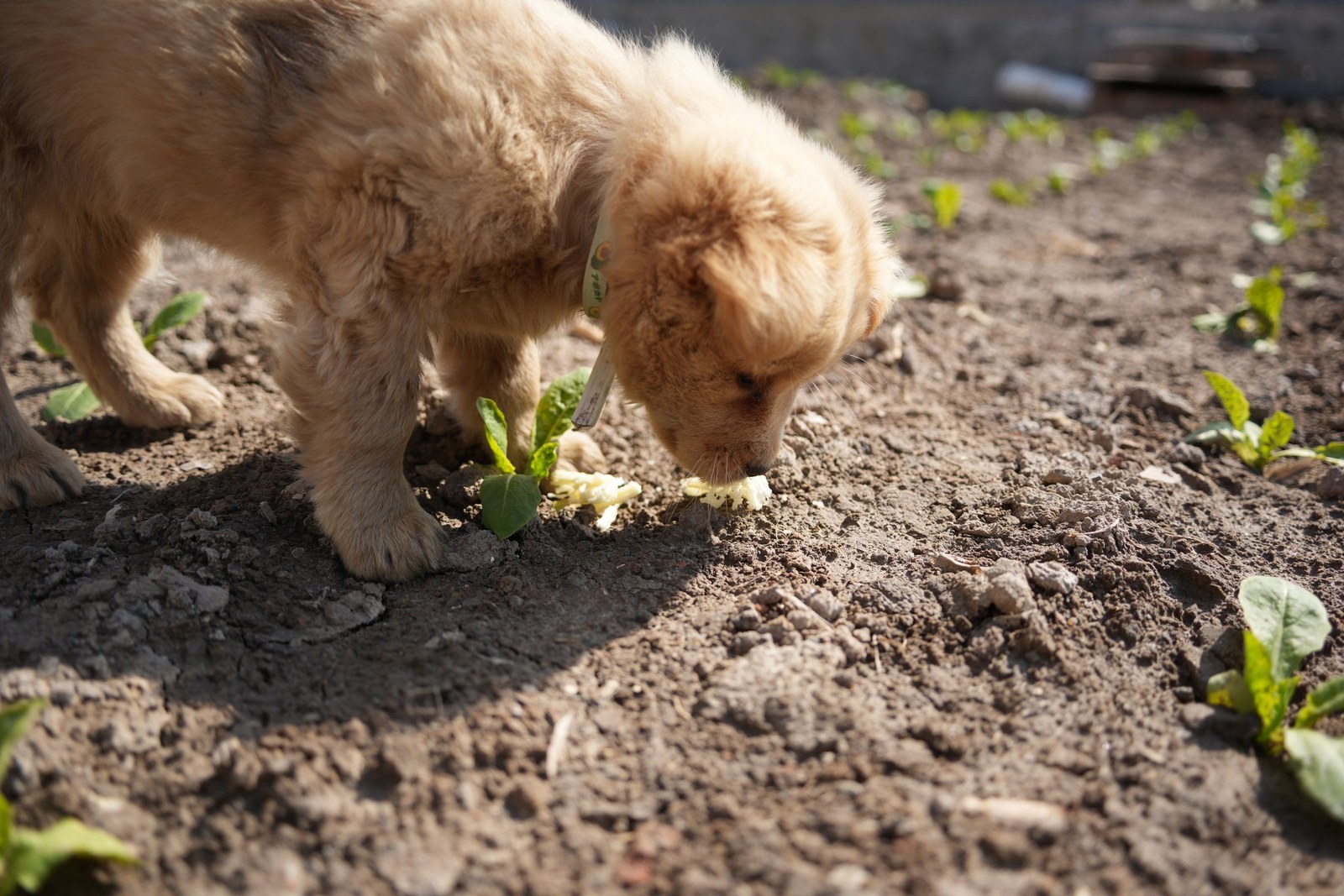
To stop a dog digging under the fence, block the tunneling at the fence base with buried barriers, make the favorite dig spots unrewarding, and offer a sanctioned digging spot instead — most diggers keep digging somewhere, so the winning move is to control where. Supervise yard time until the new habit sticks, because every successful escape teaches your dog to try again.
Fortify the Fence Line First
Walk the perimeter and find the worked-over spots: loose soil, paw-worn hollows, and gaps daylight shows through. Along those stretches, bury a barrier — options include chicken wire or hardware cloth bent in an L-shape and buried along the base, dig boards, concrete pavers set edge-down into the soil, or large rocks lined tightly against the fence. The barrier needs to extend far enough down and inward that your dog hits it, gets bored, and gives up rather than simply starting six inches deeper.
Fill existing holes before you defend them. Some owners refill a favorite hole with the dog's own droppings before covering it with soil — most dogs strongly avoid digging through that — and then add the physical barrier on top of the lesson. Check the line weekly, and after rain softens the ground, because tunneling season follows wet weather.
Give Digging a Legal Address
Many breeds were quite literally made to dig — terriers, dachshunds, and huskies especially — and asking them to stop entirely fights genetics. Build a digging pit instead: a sandbox or a defined corner of the yard with loose soil or sand, edged so it reads as a place. Bury toys and treats just under the surface, praise your dog enthusiastically for digging there, and refresh the buried treasure regularly so the pit stays more interesting than the fence line.
Redirect every time. When you catch digging at the fence, interrupt calmly, walk your dog to the pit, and reward digging in the right spot. Consistency across everyone in the household is what turns the redirect into a habit.
Drain the Energy Behind the Paws
Digging also spikes with heat, boredom, and pent-up energy. A dog digging near the fence on a hot day may be hunting cooler soil — provide shade, water, and a cool resting spot, and bring them in during the worst heat. A dog digging from boredom needs more walks, play, and mental work earlier in the day, not just barriers. And never leave a known digger unsupervised in the yard while you retrain; use a long line if you need hands-free time nearby.
If Your Digger Wins One Anyway
Even good plans have a bad afternoon, so keep a recent photo, current tag details, and your microchip record easy to reach before you ever need them. A clear description written while you are calm beats one assembled in a panic, and current contact details mean a finder is never chasing an old phone number.
Block the base, bless the sandbox, and burn off the energy. Should the fence work ever fail, KinsLe gives your dog cover through its Lost Pet Alert System — included at no cost in your dog's profile, visible in map view, with direct messaging back to you from whoever spots your dog.