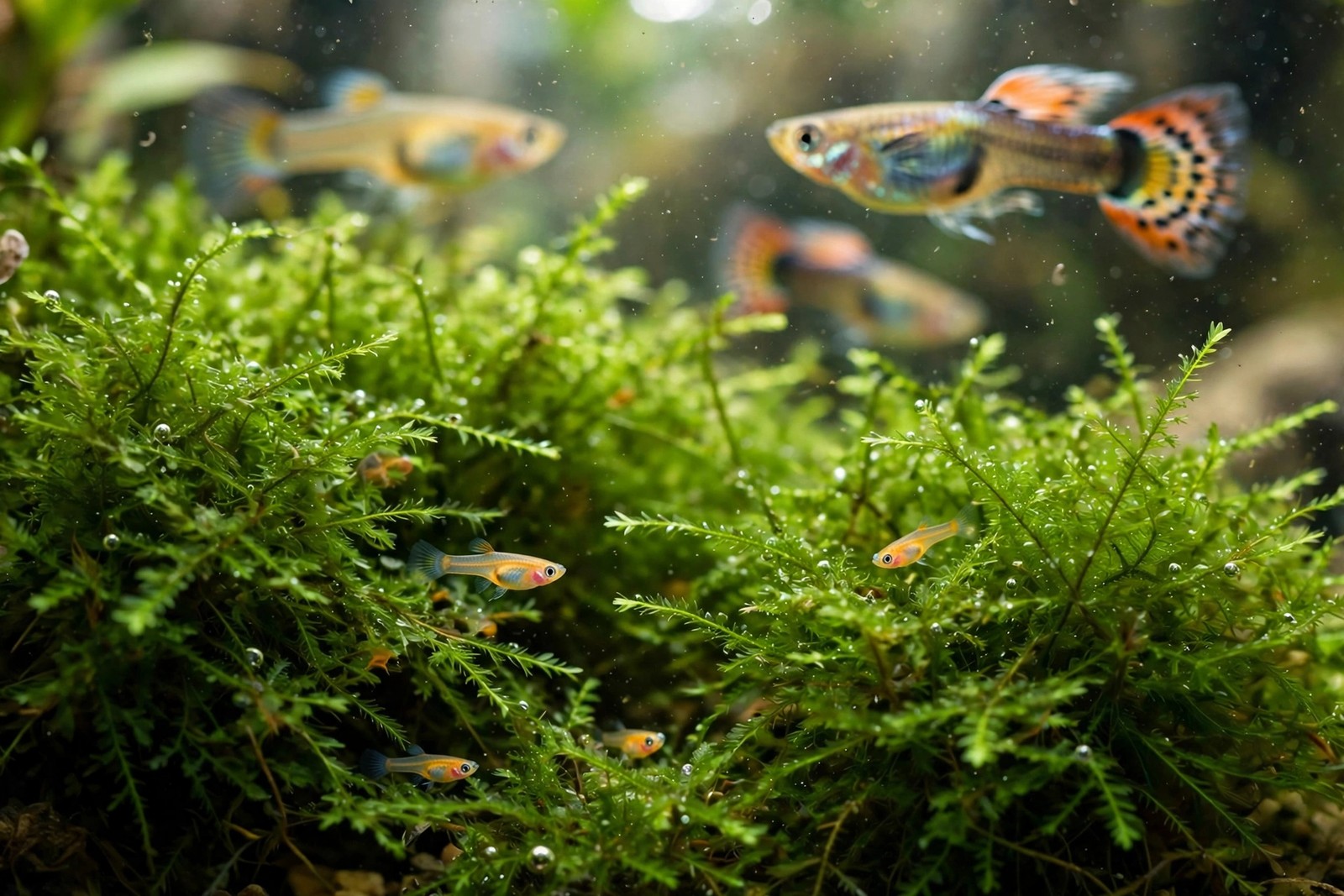
Congratulations and fair warning: guppies are livebearers, and a single female can drop a batch of fry every few weeks, including from stored sperm after one mating. The babies arrive fully formed and swimming, each about the size of an eyelash, and their first problem is the tank itself — nearly every adult fish in it, their mother included, sees newborn fry as food. What you do in the first day decides how many survive, and what you plan over the next month decides whether you end up with a pleasant grow-out project or a hopelessly crowded tank.
Give the Fry Cover Before Anything Else
The simplest save is planting: a thicket of fine-leaved plants, a floating mat of roots, or a moss ball cluster gives fry hiding places adults cannot push into, and many keepers raise decent numbers this way without moving anyone. A breeder box or net hanging inside the main tank works for the first couple of weeks and keeps fry in warm, cycled water, but it is a nursery, not a home — move growing youngsters out before they get cramped. The most controlled route is a small separate rearing tank filled with water from the main aquarium, a gentle sponge filter (strong intakes swallow fry, so cover any intake with fine mesh or a stocking), and the heater set to match the main tank. Scoop fry with a soft net or a cup rather than chasing them, and work slowly — at this size, rough handling kills as surely as hungry adults.
Feeding Tiny Mouths, Little and Often
Fry stomachs are minute and empty fast, so one big daily feed does far less than three or four tiny ones. Rub ordinary flake between your fingers to a dust, or use powdered fry food, freshly hatched baby brine shrimp, or microworms if you keep cultures — live foods trigger the strongest feeding response and growth. Offer only what disappears within a couple of minutes, because uneaten powder sinks and rots in the gravel where fry graze. By around two weeks the youngsters can manage finely crushed flake and larger foods, growth visibly speeds up, and colour starts to show on the young males.
Water Changes Do the Growing
Crowded, heavily fed fry tanks foul fast, and ammonia in a nursery is a silent batch-killer. Small, frequent partial water changes — a jug or two every day or two, replaced with dechlorinated water matched for temperature — keep conditions stable without shocking the babies; siphon gently through a covered hose, or use a cup, and always check the bucket for fry before it goes down the sink. Keep the main tank's routine going too, and resist adding any medication or treatment to a tank holding newborns unless a fish specialist advises it.
The Population Problem: Plan Homes Early
Here is the part new guppy keepers miss: those fry are the start of an expanding line, not a one-off event. Within a few months the young females can breed themselves, so separate the sexes young — males show colour and a pointed anal fin first — if you want the cycle to pause. Talk to local aquarium shops and hobby groups early about taking surplus youngsters; many shops accept healthy homegrown guppies, but they will not take hundreds at once. Never release aquarium fish into ponds or waterways: it harms wild ecosystems and is illegal in many places. Until homes are lined up, keep the extra feeds, water changes, and head-counts organised between everyone helping — KinsLe's Care Teams lets you assign those fry duties to family members with a timestamp on each completed task, so the babies get their four small meals without anyone accidentally feeding them twice.