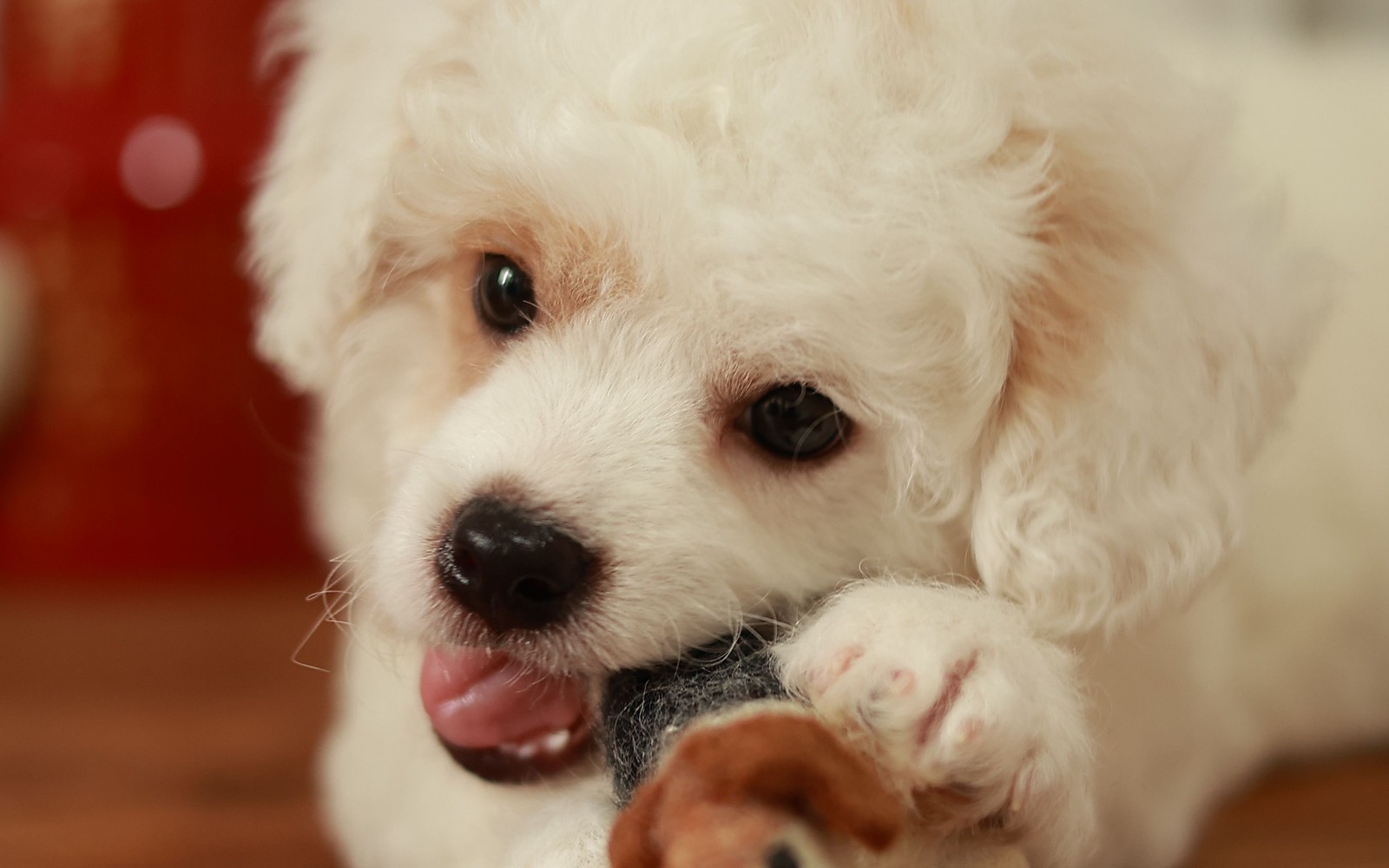
The intense mouthing and chewing phase peaks during teething in the first few months and usually eases as the adult teeth come in, but most young dogs stay enthusiastic chewers well into adolescence — think of it as a strong habit that fades gradually over the first year or more, rather than a switch that flips. Frozen wet washcloths, teething toys, and rotating chew options help sore gums now and protect your belongings while the phase runs its course.
A rough timeline of puppy chewing
Timelines vary by breed and individual, but the broad shape is predictable:
- First weeks at home: Everything goes in the mouth — this is exploration, how puppies learn what the world is made of.
- Around three to six months: Baby teeth fall out and adult teeth erupt. Gums are sore, chewing peaks, and you may find tiny teeth on the floor or notice mild gum bleeding, which is normal during teething.
- Six to twelve months: Adult teeth settle in the jaw, and many owners notice a second chewing surge as adolescent energy and confidence arrive.
- Beyond a year: Chewing settles into a normal adult pastime, heavy in power-chewing breeds, light in others.
Large breeds often mature more slowly than small ones, so a nine-month-old Labrador may still be firmly in the enthusiastic phase while a smaller dog has mellowed.
Soothe sore gums safely
Cold helps teething puppies the way it helps teething babies. A clean washcloth, soaked, twisted, and frozen, gives a puppy something chilled and chewable; supervise so pieces are not torn off and swallowed. Purpose-made teething toys that can be chilled work well too. Rotate three or four options so there is always something novel and appropriate within reach — puppies chew what is nearest, so "nearest" is a decision you control.
Avoid cooked bones, which can splinter, and anything hard enough to risk a tooth fracture. If a chew would not dent under your thumbnail, many veterinary dentists consider it too hard for developing teeth.
Puppy-proof like you mean it
Management carries you through the worst months. Cables get covered or lifted, shoes live behind doors, children's toys move up, and the puppy's world is an exercise pen or gated area stocked with legal chews whenever you cannot actively watch. Every item he cannot reach is a bad habit he never forms, and every appropriate chew he chooses instead builds the right one. Redirect calmly and without drama when he does grab something forbidden — trade, praise, move on.
When chewing is not just a phase
Book a veterinary check if chewing suddenly increases sharply, if you see a broken or discolored tooth, a baby tooth that refuses to fall out beside its adult replacement, bleeding that does not stop, or if your puppy stops eating. Retained baby teeth are common, especially in small breeds, and are usually dealt with simply — but they need a professional eye, not a wait-and-see. Excessive chewing paired with distress when alone can also be an early anxiety sign worth raising early.
Keep the teething chapter documented
Those first months generate a surprising paper trail: vaccination visits, weight checks, teething notes, and dental observations. The KinsLe Pet Passport keeps it together as your puppy's records packet — vaccines, medications, allergies, and documents — shareable with your veterinarian or sitter in one go. Noting "adult canines in, one retained baby tooth to check" in the same packet you hand the vet makes every appointment easier.
File those teething dates in the Pet Passport on KinsLe, beside vaccination visits and dental checks, so a retained baby tooth is easy to show your veterinarian at the next appointment.