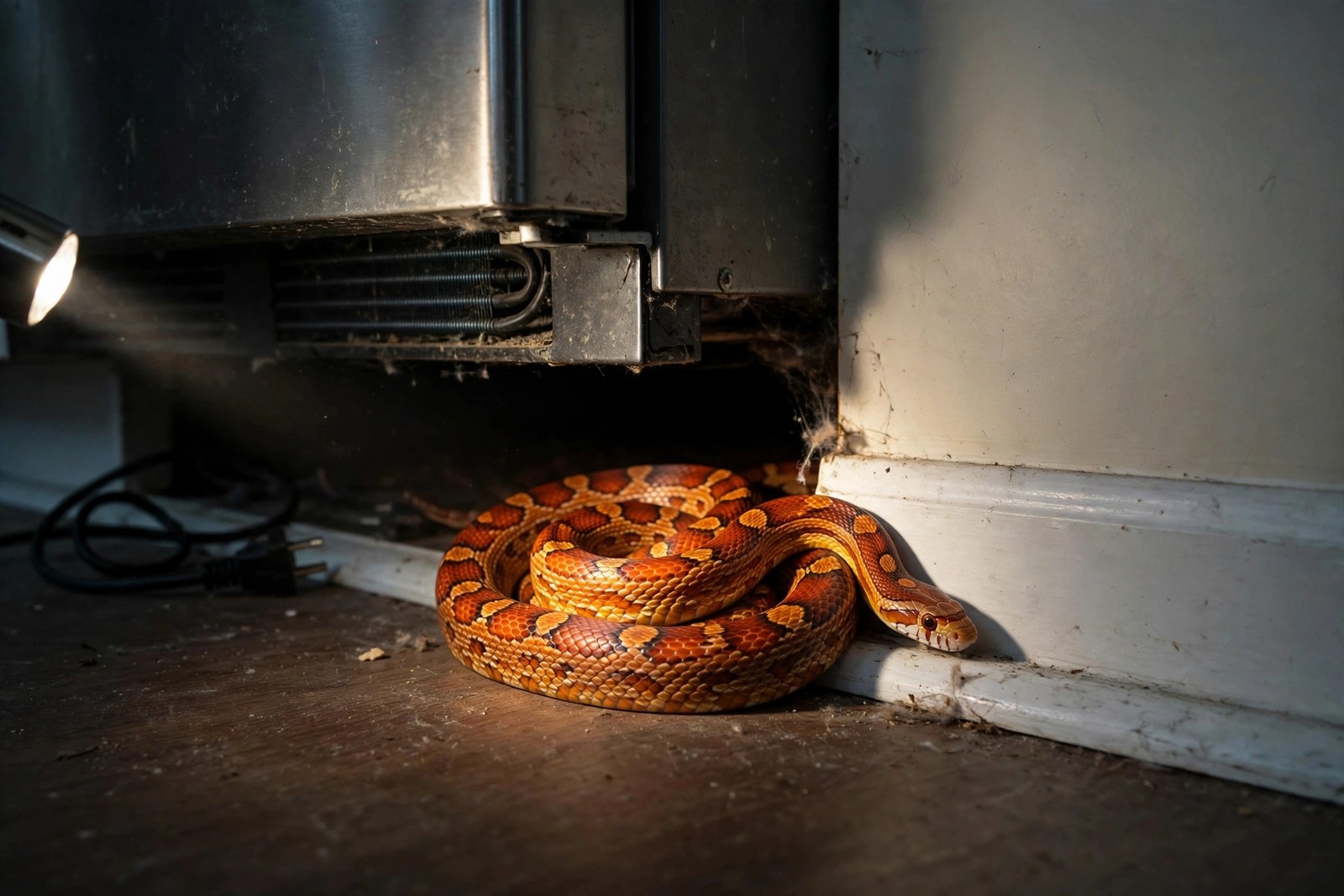
An escaped snake is almost always much closer than you fear, and the search works best when it follows how snakes actually move. Snakes hug walls and edges rather than crossing open floor, they seek warmth and tight pressure on their bodies, and they settle into the first suitable gap they find — often within the same room as the enclosure. Panic-searching the whole house at random mostly wastes the hours when the snake is still nearby, so work in rings: enclosure first, then its room, then the rooms beyond.
Start Where the Lid Failed
Begin at the enclosure itself. Check behind it, underneath it, inside any hollow decor or hide that came out with the snake, and within the stand or cabinet it sits on — keepers regularly find escapees coiled inside the furniture the tank stands on. Check how it got out as you go: a lid corner lifted, a cable gap, a door not fully latched. Knowing the exit point tells you the snake's starting direction, and securing the fault now matters because a found snake needs a tank it cannot leave twice. Block the gap under the room's door with a rolled towel so your search area stays sealed while you work.
Think Warm, Tight, and Low
Work along the walls of the room with a torch, moving slowly, and check every spot that offers warmth plus a squeeze. Behind and beneath fridges, freezers, washing machines, and boilers — the warm motor housings are classic finds. Inside sofa and armchair bases, behind bookcases, inside shoe racks and storage boxes, under kitchen units where the plinth meets the floor, and in the warm tangle behind entertainment units and computers. Lift cushions, open cupboards and drawers one at a time, and check inside boots and bags on the floor. Look up occasionally too — some species climb into curtain rails and the tops of wardrobes — but warm, dark, ground-level gaps beside a wall account for most recoveries. Empty each checked container fully rather than glancing in: a coiled snake in shadow is remarkably easy to miss.
Search Again at the Snake's Hours
Most pet snakes are most active from dusk through the night, and a snake hidden all day may move after dark in search of warmth or water. Repeat the room search in the evening with lights low, listening as much as looking. Two quiet tricks help locate a mover: lay crinkly plastic bags flat along the walls, so a travelling snake announces itself, and dust a thin line of flour across doorways and along skirting — a snake crossing it leaves a clear trail showing which room it entered. A shallow dish of water placed against a wall can also draw a thirsty snake out over a night or two.
If the Search Goes Wider
Extend room by room, sealing each finished room's door, and warn everyone in the house so nobody steps on a snake in the dark or opens an outside door carelessly. Check laundry piles before washing, and look inside any warm appliance before switching it on. If there is a real chance the snake got outdoors, tell neighbours directly — a snake in a shed or garage is usually recovered quickly once people know to look and who to call. That is also the moment KinsLe's Lost Pet Alert System earns its place: it sends a free alert to nearby Circle of Love members with your snake's description, so a neighbour who spots it under a deck can message you directly instead of the sighting being lost.