
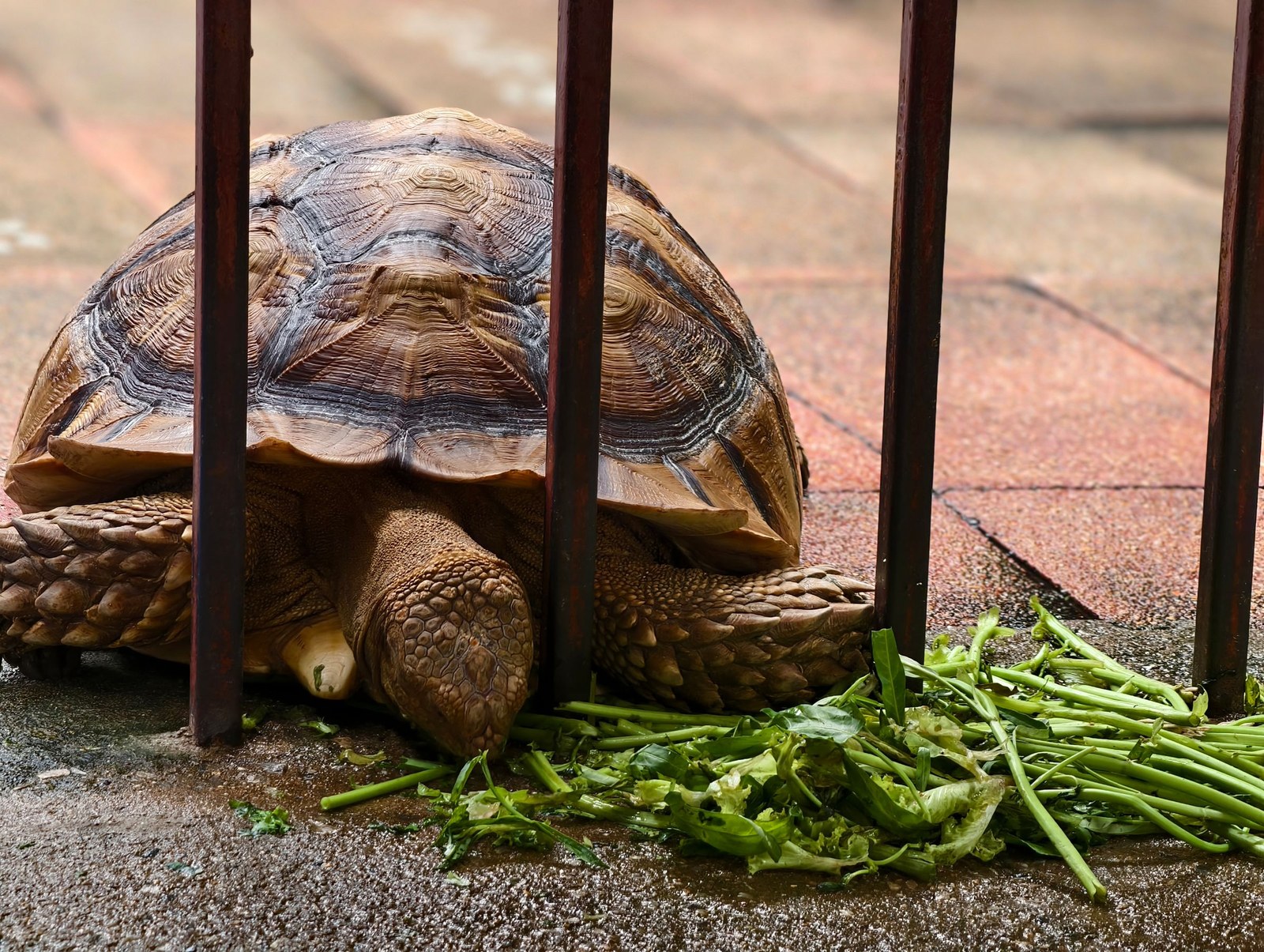
Search slowly and thoroughly close to home first — an escaped tortoise almost never goes far, and tortoises are masters of camouflage that can sit motionless in plain sight. Check under bushes, decks, and garden furniture, deep in leaf litter, along fence lines, and in any shaded hollow, then search again during the warm part of the day when your tortoise is most likely to be active and moving. Let nearby households know to watch their gardens, and set a favourite dish by the pen in case it finds its own way back.
Search Like a Tortoise, Not Like a Human
Tortoises think in straight lines and obstacles. Walk the perimeter of your yard and follow every fence, wall, and hedge — a tortoise traveling along a barrier often ends up wedged in the corner where two barriers meet. Get down low; from standing height, a tortoise under a shrub reads as a rock. Move plants aside gently and part long grass with your hands. Check:
- Under decks, steps, sheds, and stored items
- Inside compost heaps, mulch piles, and leaf litter — tortoises burrow in to feel secure
- Along the warm sides of walls and paving, where they pause to soak up heat
- Any gap under gates or fences, then the neighbor's side of that same gap
Search the same ground twice. Keepers routinely find a tortoise on the second or third pass through a spot they were sure was clear.
Timing and Lures That Actually Help
Tortoises move most in mid-morning and late afternoon warmth and hide during midday heat or cool evenings. Plan your serious searching for those active windows. Place irresistible food — a favorite fruit treat or flower your tortoise loves — near the pen and at gaps in the fence, and check those spots quietly and often. A shallow dish of water nearby can also draw a thirsty escapee.
Resist spreading the search too wide too soon. A healthy tortoise on foot covers modest ground, and escapees are often recovered within the home garden or the immediately adjoining yards.
Get More Eyes on It, Fast
Knock on doors the same day. Neighbors mowing, gardening, or walking dogs cover ground you cannot, and a tortoise spotted by someone who does not know it is missing often gets left alone as "wildlife." A photo and your phone number shared locally makes a sighting turn into a call instead. Post in local community groups too, with the street area (not your exact address) and when it went missing.
And If the Yard Search Comes Up Empty
KinsLe's Lost Pet Alerts exist for exactly this point, and they are free in every profile: the alert shows on the map, and anyone who spots your tortoise can reach you directly through the profile — no public phone number, no waiting on a group admin. Activate the alert from your tortoise's KinsLe profile while neighbors search, and cancel it the moment your escapee is home safe. Set up through KinsLe, the Lost Pet Alert System adds a map listing for your tortoise, and anyone who finds it can send you a direct message.