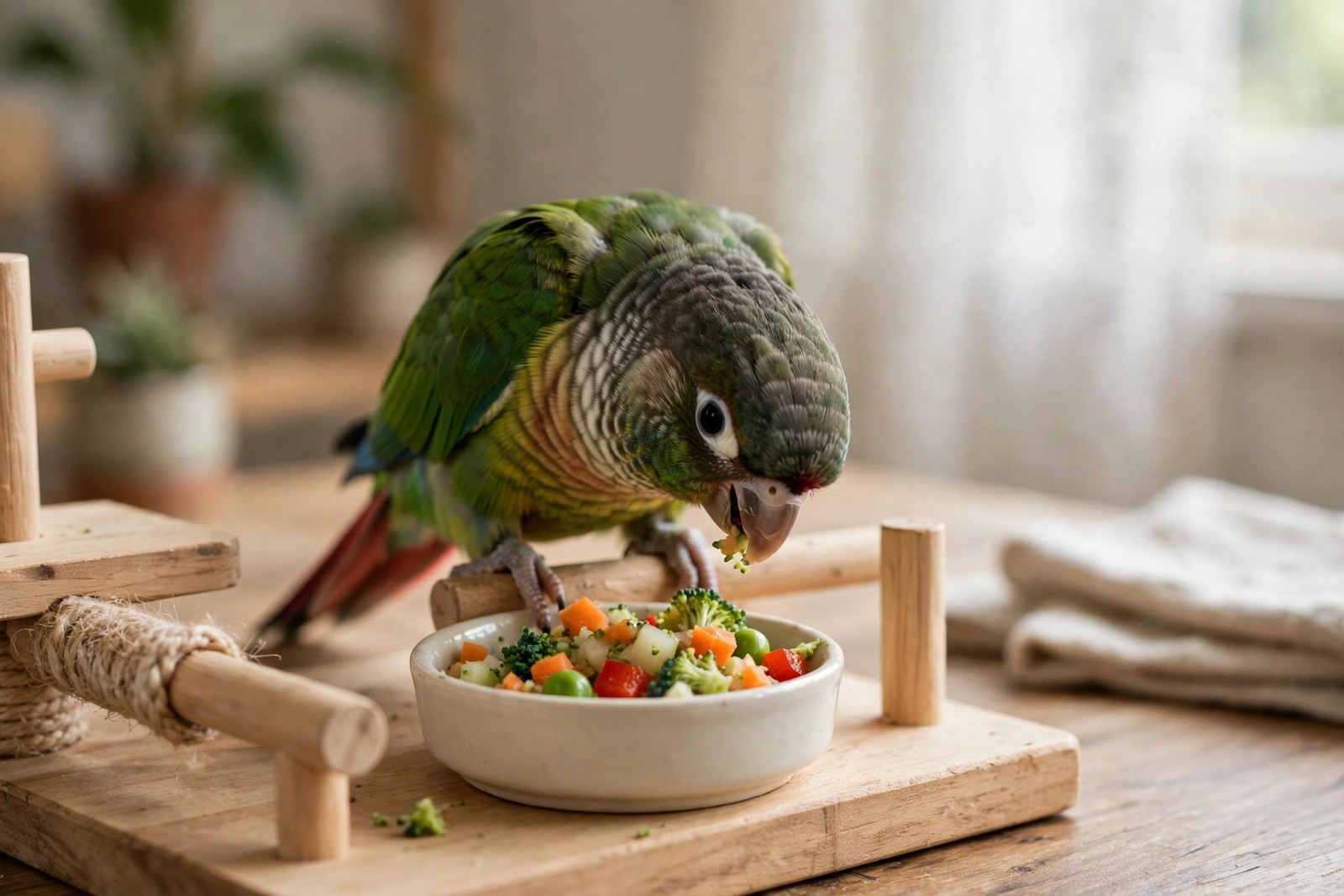
The honest answer is no. Hand-feeding a baby parrot looks gentle in videos — a syringe, a begging chick, a bonding moment — but breeders lose chicks to it even with experience, and the mistakes that kill are ones a beginner cannot yet see happening. A responsible breeder will not sell an unweaned chick to a first-time owner, and being offered one cheaply, with a bag of formula and good wishes, is a warning sign about the seller rather than an opportunity.
Why Hand-Feeding Is a Specialist Skill
A chick's crop — the pouch in its neck where food waits before digestion — must be filled to the right fullness, at the right temperature, at intervals that lengthen through the day and night as the chick grows. Formula served too hot scalds the crop wall, sometimes burning a hole through it; too cool or too thick, and it sits undigested. The feeding response matters just as much: formula must go over the tongue into the crop while the chick bobs and swallows, because food pushed in as the chick breathes can pass into the windpipe and lungs, causing aspiration pneumonia that often proves fatal. Every feed also means sterilising equipment, weighing the chick to track growth, and judging crop emptying by feel — a breeder's routine built over many clutches.
The Risks Are Invisible Until They Are Serious
The common disasters develop quietly. A crop that empties more slowly feed by feed — slow crop — lets food ferment, and the resulting infection can overwhelm a chick within a day or two. Slightly under-heated or under-measured feeds do not kill outright; they stunt, producing a smaller, weaker bird with catching-up to do that some never manage. Hygiene slips matter because a chick's immune system is still developing, and contaminated formula or a poorly cleaned syringe seeds bacteria straight into the crop. None of these announce themselves with obvious symptoms to an untrained eye until the chick is fluffed, quiet, and losing weight — by which point it needs an avian vet urgently, and even then the odds may be poor.
What 'Fully Weaned' Actually Looks Like
A properly weaned parrot chick eats on its own — pellets or chop, vegetables, and seed where appropriate for the species — and holds a stable weight for a good stretch of days without any syringe feeds, including through the excitement of a new home. Ask the breeder what the chick is eating, how long it has been fully independent, and expect the answer in specifics, not reassurance. A good breeder also weans onto a varied diet rather than a single food, handles the chicks daily so they are confident with people, and will keep a chick a little longer rather than rush a sale. That patience is exactly what you are paying for, and it gives you a bird whose difficult weeks were handled by someone equipped for them.
Bringing Your Weaned Chick Home
Bonding does not need a syringe. Hand-fed treats, target training, shared routines, and calm daily handling build a tame, trusting parrot in the weeks after weaning — and a bird that chooses to come to you is on firmer ground than one that was fed by you under pressure. Book an early check with an avian vet, weigh the bird weekly at first, and keep the breeder's notes: hatch date, weaning foods, parent details, and any health testing. Storing that history in KinsLe's Pet Passport means the record that starts with the breeder travels with your parrot for life, ready to hand to any vet, sitter, or future owner who needs the full picture.