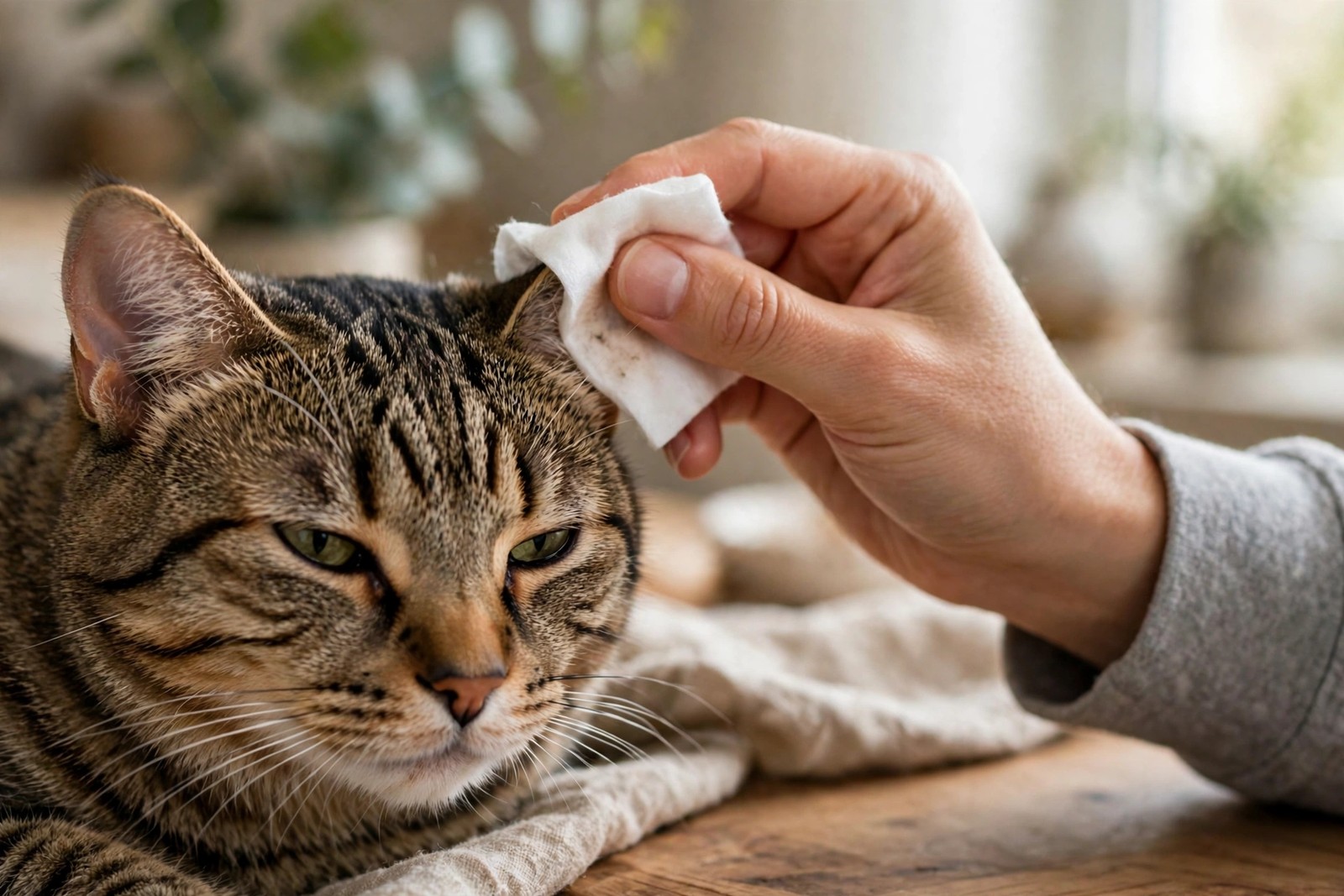
Ear cleaning is a task your cat needs rarely, if at all — a healthy feline ear largely looks after itself, and enthusiastic cleaning causes more sore canals than dirty ears ever do. The skill worth building is not the cleaning itself but the weekly look inside, so you learn your own cat's normal and spot the change that actually needs attention.
What Owners Need to Know
A healthy cat's ear is pale pink, mostly clean, and carries at most a little light-brown wax near the opening. Dark, gritty debris that looks like coffee grounds points toward ear mites; a yeasty or sweet smell, redness, or thick discharge points toward infection — and both are diagnoses for a veterinarian, not problems a cotton bud at home can settle. Head-shaking, scratching at one ear, tilting the head, or yelping when an ear is touched all move the ear from home care to a vet appointment.
When cleaning is genuinely needed — visible dirt at the outer ear on a calm cat — use only a cleaner your vet recommends, applied to cotton wool, and wipe what you can see. Nothing goes into the canal itself: the feline ear canal bends sharply, and probing it packs debris deeper and can damage the eardrum.
Practical Steps That Help
Work through these in order and give each one time to become routine before you judge it:
- Build a short weekly check: look inside both ears, note wax, smell, and any redness
- Pair the check with a calm moment and a treat, stopping before your cat gets stressed
- Clean only the visible outer ear, only when dirt is actually there
- Photograph anything unusual — a dated picture shows a vet whether it is spreading
- Note each check in a simple log — dates make vet conversations far easier
Keep the note specific: which ear, what you saw, and whether your cat objected. A two-week run of those notes turns a vague worry into a trend your veterinarian can act on.
Making It Part of Everyday Life
Tie the ear check to something that already happens — the evening wind-down or a weekly grooming session — so it survives busy weeks instead of depending on someone remembering a separate task. Ears are also a shared-household blind spot: one person assumes another looked, and a mite problem gets a fortnight's head start. Put that weekly check on a rota in KinsLe's Care Teams: whoever does it marks the task complete, the timestamp shows it happened, and a waxy ear never depends on one person's memory.