
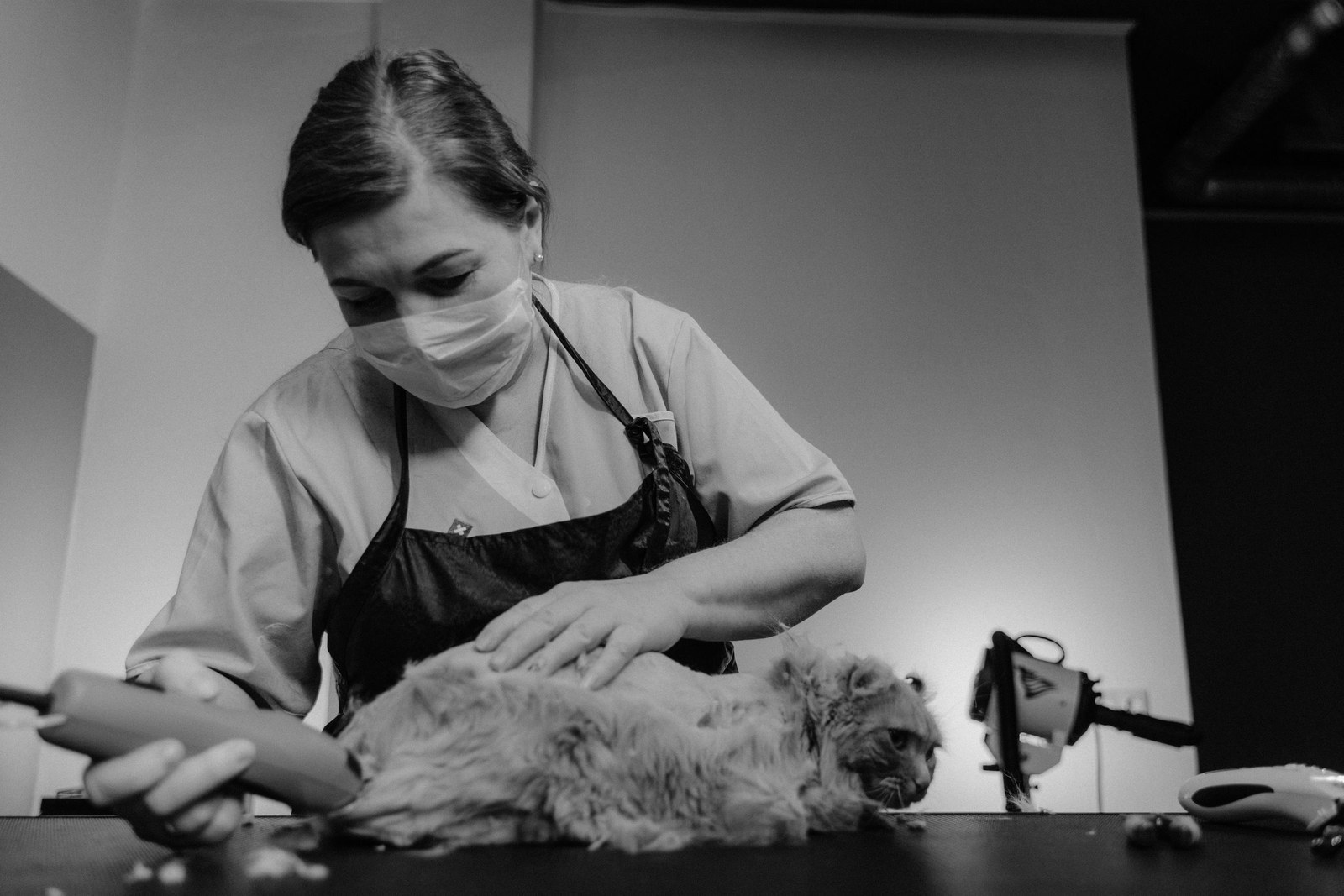
It is best not to shave a matted cat at home. Beneath a mat, a cat's skin is often pulled into thin folds you cannot see, home clippers catch and cut that delicate skin easily, and a frightened cat rarely holds still for the job — a combination that turns a grooming problem into an emergency vet visit. Professional groomers and vets remove heavy matting safely every day, and handing it over is the caring choice, not a defeat.
Why mats make shaving so risky
Cat skin is remarkably thin and loose — far more delicate than dog skin — and it does not lie flat under a mat. As a mat tightens, it tents the skin upward into the tangle, so the surface you think you are clipping over is actually fur with skin folded inside it. Clipper blades, especially on inexpensive home trimmers that heat up and pull, slide under that fold before you feel anything wrong.
Add the cat. Matting hurts — it pulls with every movement — so a matted cat is already sore and defensive before the clippers buzz. A sudden flinch mid-stroke is all it takes. What looked like a money-saving afternoon becomes sedation, stitches, and a much larger bill, plus a cat who now fears handling. Groomers describe these injuries so consistently that 'clipper nick under a mat' is practically its own category of DIY mishap.
The narrow exceptions
There are small jobs that are fine at home: trimming a single long strand, tidying sanitary areas on a cooperative long-haired cat with a blunt-tipped tool and clear visibility, or clipping a tiny tangle you can fully isolate with your fingers and see around. The line is visibility and control. If the mat is dense, tight, extensive, close to skin you cannot see, or on a cat who will not stay calm, you are past the line.
Also skip the home shave if the matting came on suddenly in an older or unwell cat. A coat that falls apart quickly can reflect pain, weight change, or illness that stops a cat from grooming — that cat needs a vet's exam, not just a haircut.
What a professional actually does
A groomer or veterinary team assesses the coat and the skin, then chooses between careful dematting for salvageable coats and a close clip — often called a lion cut when the body is clipped and the head, legs, and tail tip are left — for pelted ones. They work with sharp, cool blades, proper skin-tension technique, and help to keep the cat steady. Crucially, they inspect the skin underneath afterward: matting can hide bruising, sores, and infections that need treatment once the fur is off. If your cat is extremely stressed or the matting is severe, your vet may recommend sedation for everyone's safety — a legitimate, humane option.
After the coat comes off
Treat the weeks after as a fresh start. A clipped cat may feel chilly and oddly exposed, so offer warm resting spots and skip the jokes at her expense — many cats are subdued for a day or two. Then build the prevention habit while the coat regrows: brief daily combing of the friction zones so you never face a pelt again. If grooming fell behind because of schedule or mobility, that is worth solving too, humanely and without blame.
When you are ready to book, KinsLe's Pet Services Directory helps you find a professional groomer or vet near you with the right tools and experience to remove heavy matting safely. Look up a groomer or veterinary clinic equipped to clip her matted coat safely in the Pet Services Directory that KinsLe maintains — do not fall back on home clippers, where hidden skin folds turn a mat into a cut.