
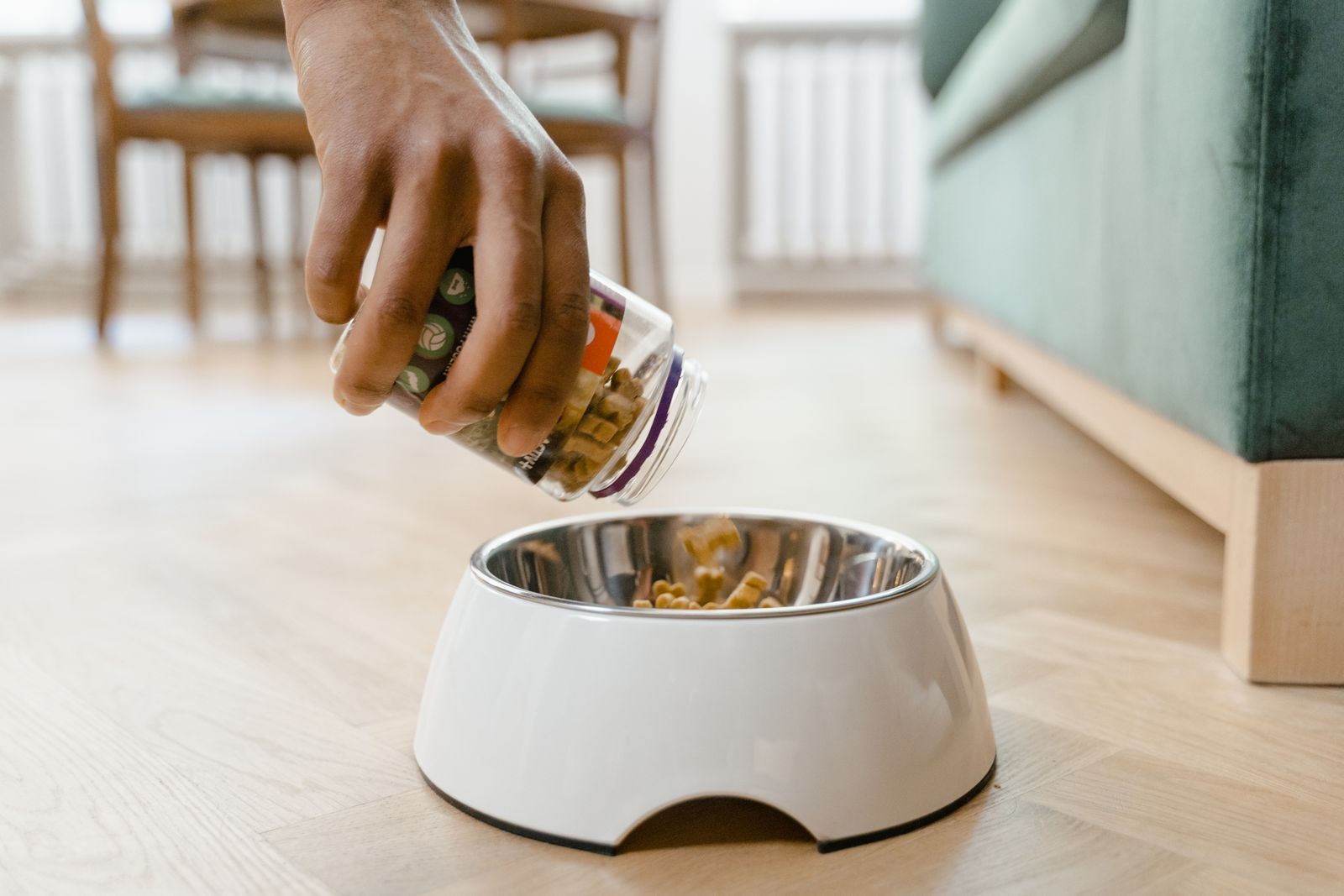
For most dogs, scheduled meals are the better choice: they make it far easier to monitor appetite, manage weight, predict toilet breaks, and spot a skipped meal early, while free-feeding — leaving food down all day — leads many dogs to graze, overeat, and turn mealtimes into a free-for-all. A set routine is not about being strict; it is about knowing your dog.
What free-feeding actually looks like day to day
Free-feeding sounds relaxed and kind: fill the bowl in the morning and let your dog help themselves. In practice, problems creep in. Dry food sitting out goes stale and attracts flies. In multi-dog homes, you rarely know who ate what — the bold Beagle may be eating for two while the shy rescue barely gets a look-in. Worst of all, you lose one of your best early-warning systems. A dog who suddenly ignores a freshly served meal stands out immediately; a dog who quietly eats less from an always-full bowl can go unnoticed for days.
The real advantages of a schedule
Feeding measured meals, typically twice a day for adult dogs, gives you:
- Appetite monitoring: a skipped or half-eaten meal is visible the day it happens.
- Weight control: you know exactly how much goes in, so adjustments are honest.
- Predictable toileting: dogs usually need to go out within a fairly reliable window after eating, which helps house training and walk planning.
- Training value: a dog who knows meals arrive at set times is often more engaged with food rewards during training.
- Medicine and supplements: anything that must be given with food lands reliably.
When free-feeding can still work
There are exceptions. Some self-regulating dogs — often lean, picky herding types — nibble lightly and hold a healthy weight on measured food left down. The key word is measured: weigh out the day's allowance in the morning so you still know what was eaten by evening. If your dog starts gaining, if a second pet joins the household, or if you need to give medication with food, that is usually the moment to move to proper set meals.
How to switch without drama
Pick two consistent times, put the bowl down, and lift whatever is uneaten after fifteen to twenty minutes, calmly and without alternatives. Most dogs learn the new pattern within a few days. Keep the same total amount, split across meals, use the same food, and avoid hovering or coaxing, which turns mealtime into a negotiation. Puppies, seniors, and dogs with medical needs may need three or more smaller scheduled meals — the principle is the same, just with more sittings.
A note on safety and appetite changes
Do not let a healthy adult dog go beyond about a day without eating without calling your vet — sooner for puppies, small breeds, and any dog who is vomiting, has diarrhea, or seems lethargic. Wash bowls daily and keep feeding areas calm.
Making the routine stick with Care Teams
A schedule only works if everyone follows it, including on the days you are stuck at work. KinsLe's Care Teams let you assign feeding, walks, medication, and grooming duties for your dog, and each task is checked off with a timestamp when it is done — so you can see at a glance that breakfast was served at seven, by whom, and that nobody accidentally served it twice. Breakfast and dinner stay measured and unmissed when you run both meals through the Care Teams plan on KinsLe, with each serving assigned to a feeder who marks it done at its set time.