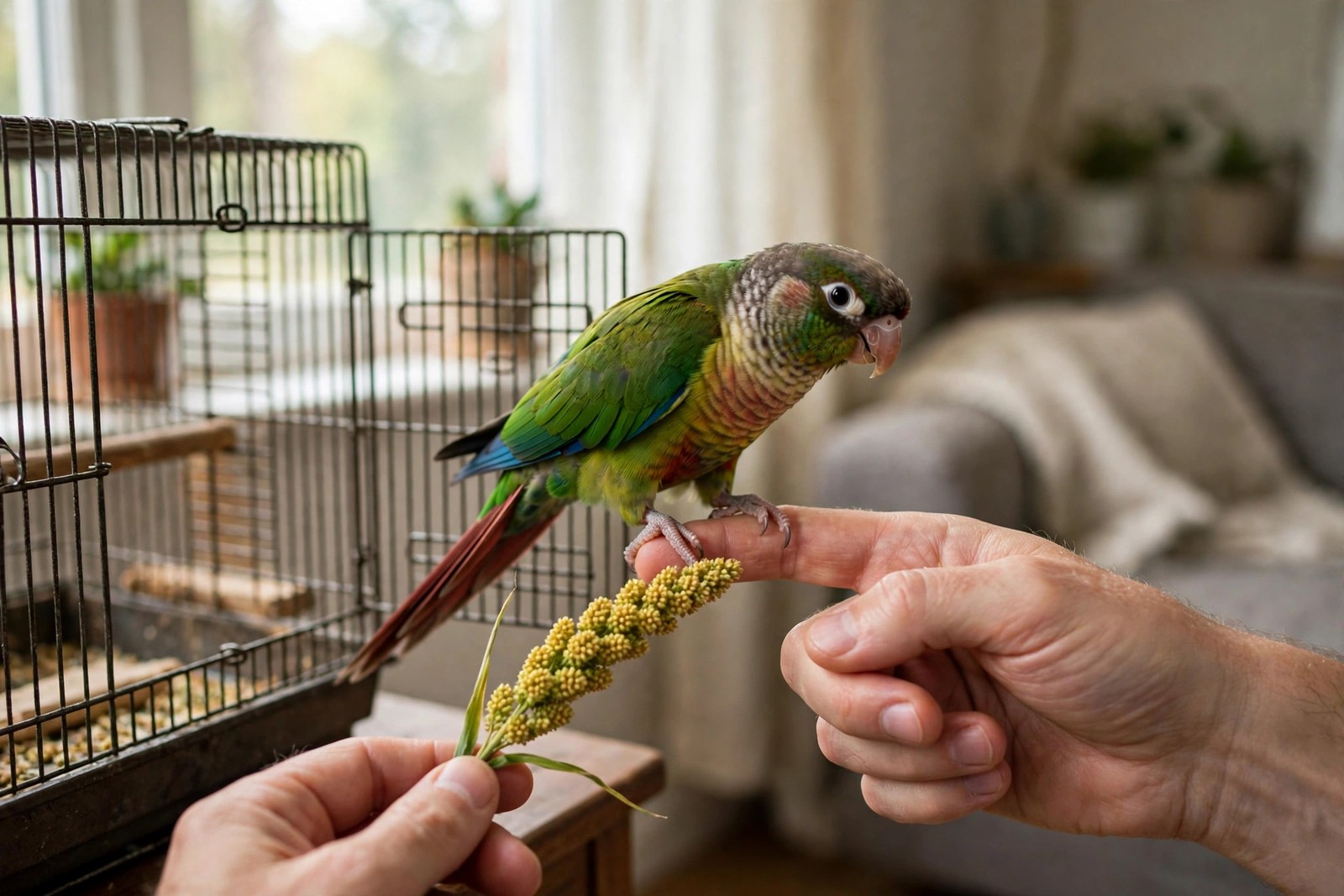
Neither option is automatically kinder or easier. Hand-raised and parent-raised birds simply had different teachers in their first weeks, and that difference shows up in how quickly they trust hands, how they play, and how much company they expect from you.
What Hand-Raised Usually Means
A hand-raised chick was taken from the nest and fed by people until weaning. Done well, that bird has learned that hands bring food and safety, so stepping up, taking treats, and tolerating a towel or travel cage often come more easily at first. That head start matters most for first-time owners of social species such as budgies, cockatiels, and many parrots.
The trade-offs deserve honesty. A bird raised mainly by people may not have learned normal flock signals — when to back off, how to play without nipping, or how to entertain itself. Some become very people-focused, calling loudly when left alone and struggling with independence if every waking hour was spent on a shoulder. Ask exactly how the chick was raised: co-parented birds, handled daily but left with parents or siblings for part of the day, often get human confidence plus bird manners.
Crucially, ask whether the bird is fully weaned and eating independently for at least a week or two. Never accept an unweaned chick to finish hand-feeding yourself unless you are genuinely experienced; crop burns, aspiration, and stunted weaning are real risks in untrained hands.
What Parent-Raised Usually Means
A parent-raised chick was fed and taught by its own parents, usually with varying amounts of human contact alongside. These birds have typically learned species-normal behaviour: foraging, flock calling, body language, and a healthy wariness of new things. Many become confident, independent pets who play happily on a stand and do not panic when the household is busy.
The work is taming time. A parent-raised bird with little handling may flutter away from hands at first and need weeks of calm, food-led trust building — sitting nearby, offering millet through the bars, then short step-up sessions with a clear way for the bird to leave. That slower start puts some beginners off, but it is not a welfare flaw; it is simply a different starting point, and many parent-raised birds become deeply bonded once trust is earned rather than assumed.
Questions That Reveal More Than the Label
- Was the bird co-parented, fully hand-fed, or parent-raised with daily handling?
- Is it fully weaned onto seed, pellets, or fresh food, and for how long?
- How does this individual bird react to a stranger's hand today — curious, indifferent, or frightened?
- What sounds, foods, and routines is it already used to?
Watch the individual, not the marketing. A gentle, well-socialised parent-raised cockatiel can be a far easier pet than a rushed, poorly weaned hand-raised one.
Matching the Choice to Your Household
If you have limited daily time and want a bird that amuses itself, lean parent-raised or co-parented. If you dream of close handling and training from day one and can offer several hours of company daily, a well-weaned hand-raised bird may suit you — provided you deliberately teach independent play from the start. Whichever you choose, keep the breeder's notes on hatch date, weaning foods, and favourite treats, because that early record explains behaviour for months. Keeping that history attached to the bird in KinsLe through Transferrable Profiles means a future vet, sitter, or owner starts with the full story of how this bird was raised, not a guess.