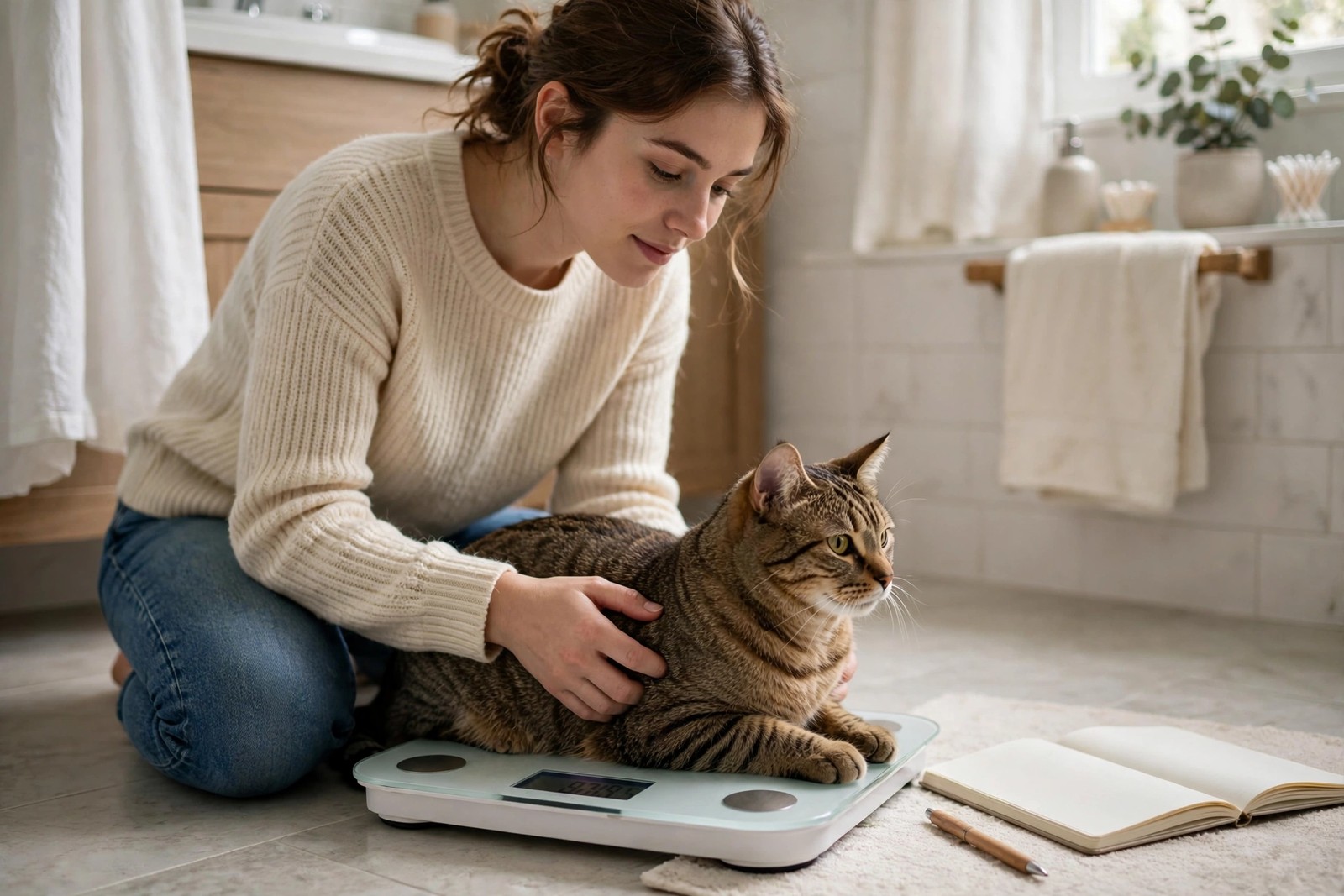
Yes, keep a health diary for your cat — especially because cats are specialists at hiding illness. A cat rarely announces a problem; instead, weight drifts down over months, water intake creeps up, or jumping becomes slightly less fluent, and none of it registers day to day. A diary converts those invisible drifts into dated facts. It takes two minutes a week, and at a vet appointment it answers the questions owners usually guess at: when did this start, how fast has it changed, and what else changed around the same time?
What a Useful Diary Actually Tracks
Weight is the anchor entry. Weigh your cat monthly — stepping on the scales while holding her, then subtracting your own weight, works well — and record the number every time. A slow loss in an older cat, or steady gain in a young indoor cat, is one of the earliest clues to thyroid, kidney, dental, and metabolic problems, and it is almost impossible to detect by eye under a fluffy coat.
Alongside weight, note appetite and water intake in plain words: eating normally, leaving the wet food, drinking from the tap more often. Log litter tray habits too — frequency, straining, accidents outside the tray, and any change in stool — because urinary and digestive changes are among the most common reasons cats see a vet. Add a line for energy, grooming, and behaviour: hiding more, sleeping in a new place, jumping less, or becoming unusually clingy or irritable. Finally, record medications with start and stop dates, flea and worm treatments, vaccinations, and every vet visit with its outcome, so the diary doubles as a treatment history.
How the Diary Changes a Vet Visit
Vets reason from patterns, and a diary hands them the pattern. Observations like drinking more over recent months, with weight down half a kilo across the same period, point an examination in a way that a vague sense of being off cannot. Symptom timing matters too: noting that vomiting happens after one particular food, or that stiffness is worst on cold mornings, can shorten the path to an answer considerably. Bring the diary — or a photo of the recent pages — to every appointment, and use it during telephone triage as well, where precise dates and changes help the practice judge urgency.
The diary earns its keep most with chronic conditions. For a cat on long-term medication, a simple daily score for appetite, comfort, and activity shows whether treatment is holding, improving, or slipping, and it gives you objective evidence for the quality-of-life conversations that senior care sometimes requires.
Keeping It Simple Enough to Last
Diaries die when they are elaborate. One notebook by the food cupboard, one page per month, or a simple note on your phone all work — the format matters far less than the habit. Tie entries to an existing routine: weigh on the first Sunday of the month, jot a line whenever you notice something, and summarise before each vet visit. Anyone else who feeds or medicates your cat should add entries too, in the same place, because a sitter's observation about appetite can be the missing piece.
Store the diary alongside vaccination records, microchip details, and insurance papers rather than in a drawer of its own, and KinsLe's Pet Passport brings those records and your health notes together in one portable packet, ready for routine checks, new vets, travel, and boarding alike.