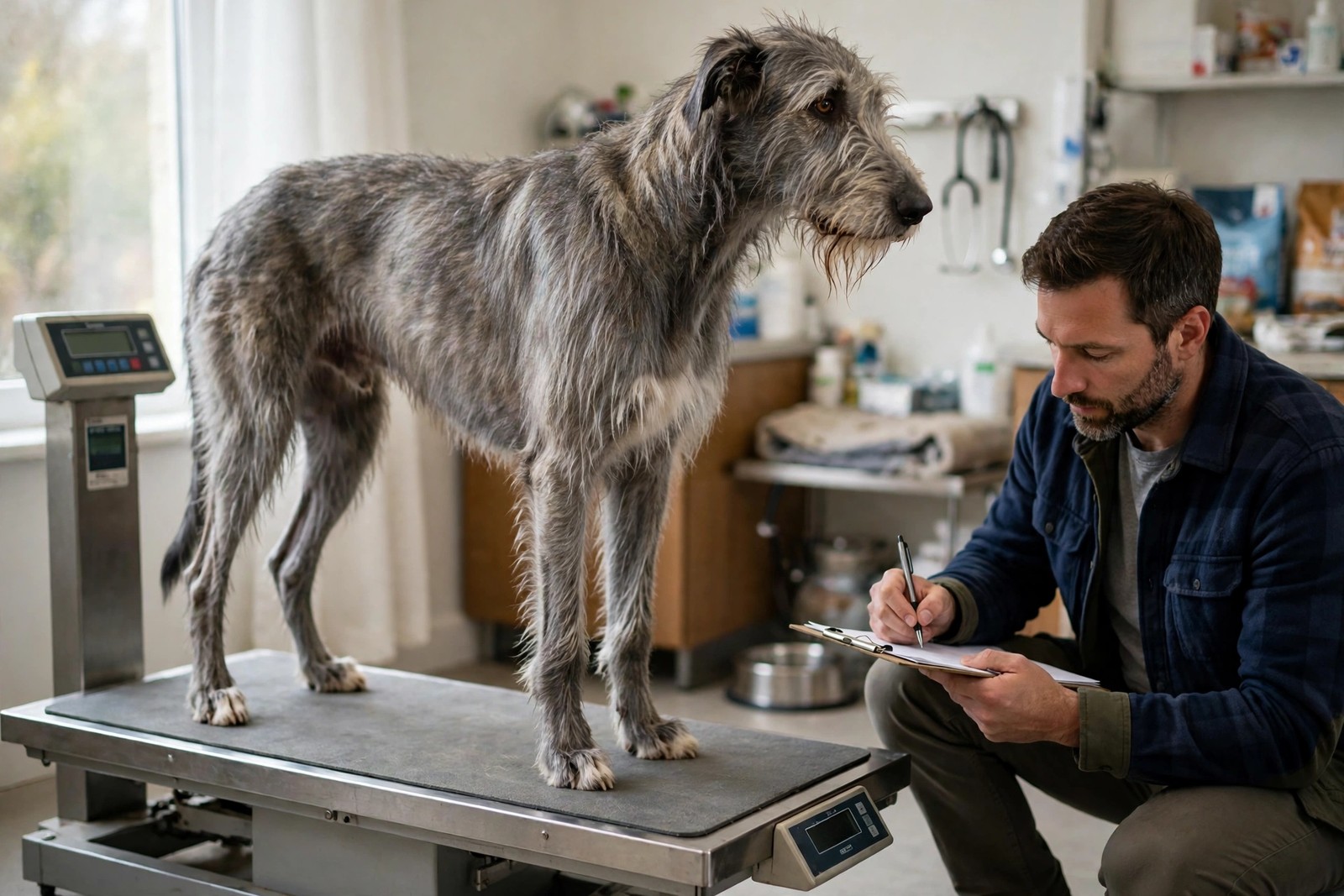
Why a Wolfhound's Growth Is Worth Writing Down
An Irish Wolfhound puppy does not grow so much as erupt. In a relatively short puppyhood he goes from a bundle you can carry in two arms to the tallest of all dog breeds, with long bones, deep chest, and a frame that puts real load on still-developing joints. Your eyes adapt to the change because you see him daily, which is exactly why a written log matters: the numbers notice what familiarity hides. A week of unusually fast gain, or a fortnight where growth stalls while appetite stays strong, means something different written down than it does as a vague feeling at the food bowl.
What to Record for This Breed
Weigh your wolfhound regularly through puppyhood and note height at the shoulder alongside the weight, because for this breed upward growth and outward growth tell different stories. Add a short body-condition note each time: ribs felt easily under a thin covering, waist visible from above and from the side, or ribs starting to disappear. Record food type and amount whenever you change either, plus any limping, reluctance on stairs, or tiredness after ordinary exercise. Those side notes turn a column of weights into something a vet can actually reason from, especially with a breed where steady, even growth matters far more than maximum size.
How a Log Protects Growing Joints
The practical value of the log is in the adjustments it prompts early. Rapid gain in a giant-breed puppy often traces to generous portions or rich food rather than healthy development, and catching that trend after two entries is kinder than discovering it when a young dog is already carrying extra weight on immature joints. Keep exercise age-appropriate while the log is filling up: free play on forgiving ground suits a wolfhound puppy better than forced distance running or repeated stair climbing, whatever his enthusiasm suggests. If the log shows gain racing ahead while height plateaus, or appetite and energy dropping off, that is the point to call your veterinarian and bring the record with you.
Reading the Adult Wolfhound's Numbers
Growth slows as your wolfhound approaches maturity, but the log should not stop, because adult wolfhounds can drift lean or heavy under that long, rough coat without the change being obvious in the mirror. A monthly weight in adulthood gives you a baseline, so an unexplained loss is flagged as the health clue it can be in a giant breed rather than dismissed as a finicky week. Weigh after the same routine each time, ideally on a large-animal or vet-clinic scale that reads accurately at his size, and keep the method consistent so entries stay comparable.
Keeping the Record Where It Travels
A log only helps if it survives the notebook it started in. Keep the wolfhound's weights, heights, food changes, and vet comments together as one continuous record, and review the shape of the whole curve before each check-up rather than just the latest figure. KinsLe helps here because the Pet Passport gathers a dog's records into one portable packet, so your wolfhound's growth history rides along to vet visits, boarding stays, and any handoff without hunting through paper.