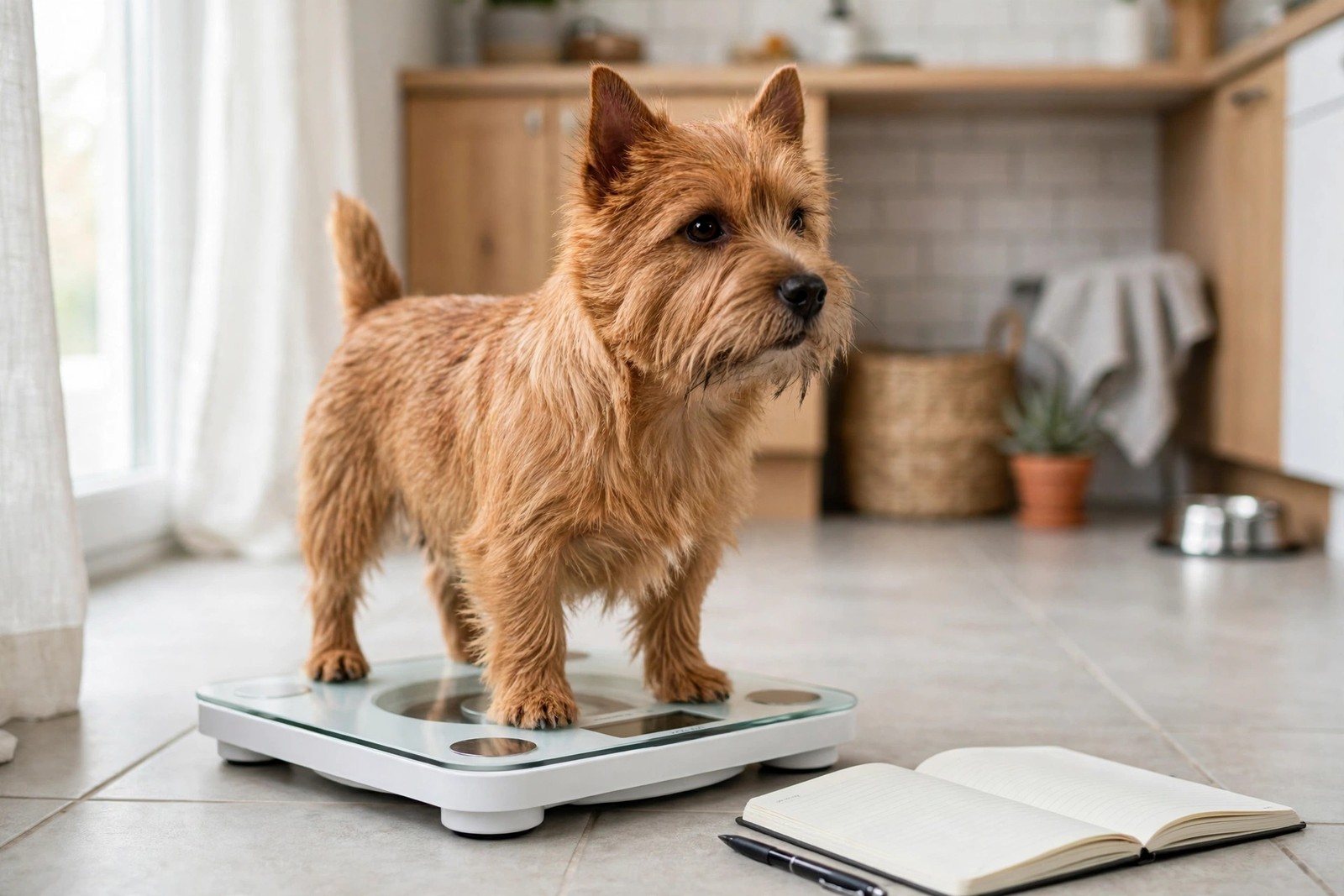
Why a Norwich hides weight gain so well
Yes, a log is well worth keeping for a Norwich Terrier, and the reason is built into the breed itself. A Norwich is one of the smallest working terriers — short-legged, broad for his height, and wrapped in a hard, wiry double coat that stands out from the body. That coat is a disguise. A Norwich who has quietly gained a noticeable share of his body weight can look exactly like a Norwich who has not, because the jacket hides the ribs, the waist, and the tuck that would give him away on a smooth-coated dog. Your eyes will forgive the gain; a scale will not, and a written log turns a single weigh-in into a trend you can actually act on.
Weighing a short-legged terrier without the wobble
Norwich Terriers are sturdy but small enough that technique matters. A bathroom scale works if you weigh yourself holding him, then weigh yourself alone and subtract — but do it the same way every time, because a wriggling terrier shifts the reading. A flat pet scale is calmer for a puppy who is still learning to stand still. Weigh before breakfast, after a toilet break, with the collar off, and write the number down immediately rather than trusting memory. For a growing Norwich puppy, weigh every two weeks through the fast early months, then monthly once growth slows toward his adult frame, which for this breed settles relatively early compared with larger dogs.
What to write beside the number
A useful Norwich log records more than weight. Note his body condition as you feel it: ribs easy to feel under a thin fat cover when you run flat hands along his sides, a visible waist from above once the coat is pressed down, and no pad of fat where the tail meets the back. Add his measured food amount, any change of food, and how much walking he is actually getting — Norwich Terriers are cheerful, people-oriented dogs who will happily trade exercise for company, and a log entry that says the weight rose during a rainy month of short walks explains itself. Note neutering too, since appetite and metabolism often shift afterward and the log will show you by how much.
Reading the trend across puppyhood and adult life
A single reading means little; the shape of the line is the information. A Norwich puppy should climb steadily, with no long flat stretches during his main growth months and no sudden jumps that suggest overfeeding a frame that is still building bone. As an adult, the line should flatten into a narrow band. Slow upward drift across three or four monthly entries — easy to dismiss reading by reading — is exactly what a log exists to catch, because catching it then means a modest food adjustment rather than a long slimming campaign for a small dog whose joints and breathing have less margin for extra load.
When a Norwich's log entry becomes a vet call
Show the trend to your veterinarian if the weight falls without a food change, if he stops gaining during puppyhood, if his appetite, thirst, or energy changes alongside the number, or if you can suddenly feel — or suddenly cannot feel — his ribs. A log makes that conversation precise: instead of saying he seems heavier lately, you can show when the change began and what else changed with it. Keeping the running record inside his KinsLe Pet Passport keeps that history bundled with his other documents, ready to hand over whenever a new clinic, sitter, or trip needs the full picture.