
Yes — searching at night is often the single most effective thing you can do. A frightened cat who stays silent and frozen through the noise of the day will often move, meow, or hunt for food once the streets empty and the world goes quiet. The hours between roughly 10 p.m. and dawn are when lost indoor cats are most likely to reveal themselves.
Why Cats Hide by Day and Move by Night
Cats are crepuscular by nature, most active at dawn and dusk, and a scared cat takes that instinct to an extreme. Traffic, dogs, children, and delivery trucks all tell a hiding cat to stay put. At night those threats fade, hunger builds, and the cat starts to explore — usually staying surprisingly close to home. Most lost indoor cats are found within a few houses of where they escaped, tucked under a porch, inside a shed, or behind a woodpile. Night searching works because you are finally looking when the cat is finally willing to be found.
How to Search After Dark
Bring a strong flashlight and sweep it low and slowly across yards, under decks, beneath cars, and into bushes. A cat's eyes reflect the beam with a bright green-gold shine called eyeshine, visible from much farther away than the cat itself. Crouch down to cat height as you scan — hiding spots that look empty from standing height often hold a curled-up cat.
- Walk slowly and stop often to listen for faint meows or rustling.
- Call your cat's name in a calm, normal voice, then be quiet and wait.
- Shake a treat bag or open a can of familiar food and pause.
- Check garages, sheds, and crawl spaces — and ask neighbors to check theirs.
- Repeat the same route several nights in a row; cats often surface on night two or three.
Avoid chasing a cat you spot. Sit down, let her come to you, and speak softly. A panicked grab can send her running farther from home.
Stay Safe and Be Considerate
Wear reflective clothing, carry your phone, and let someone know your route. Stick to sidewalks and your own property unless neighbors have given permission to search their yards — a quick knock earlier in the evening usually earns a warm yes. Bring a pillowcase or carrier rather than planning to carry a frightened cat in your arms, since even a loving cat may bolt when held outdoors.
What to Do During the Day
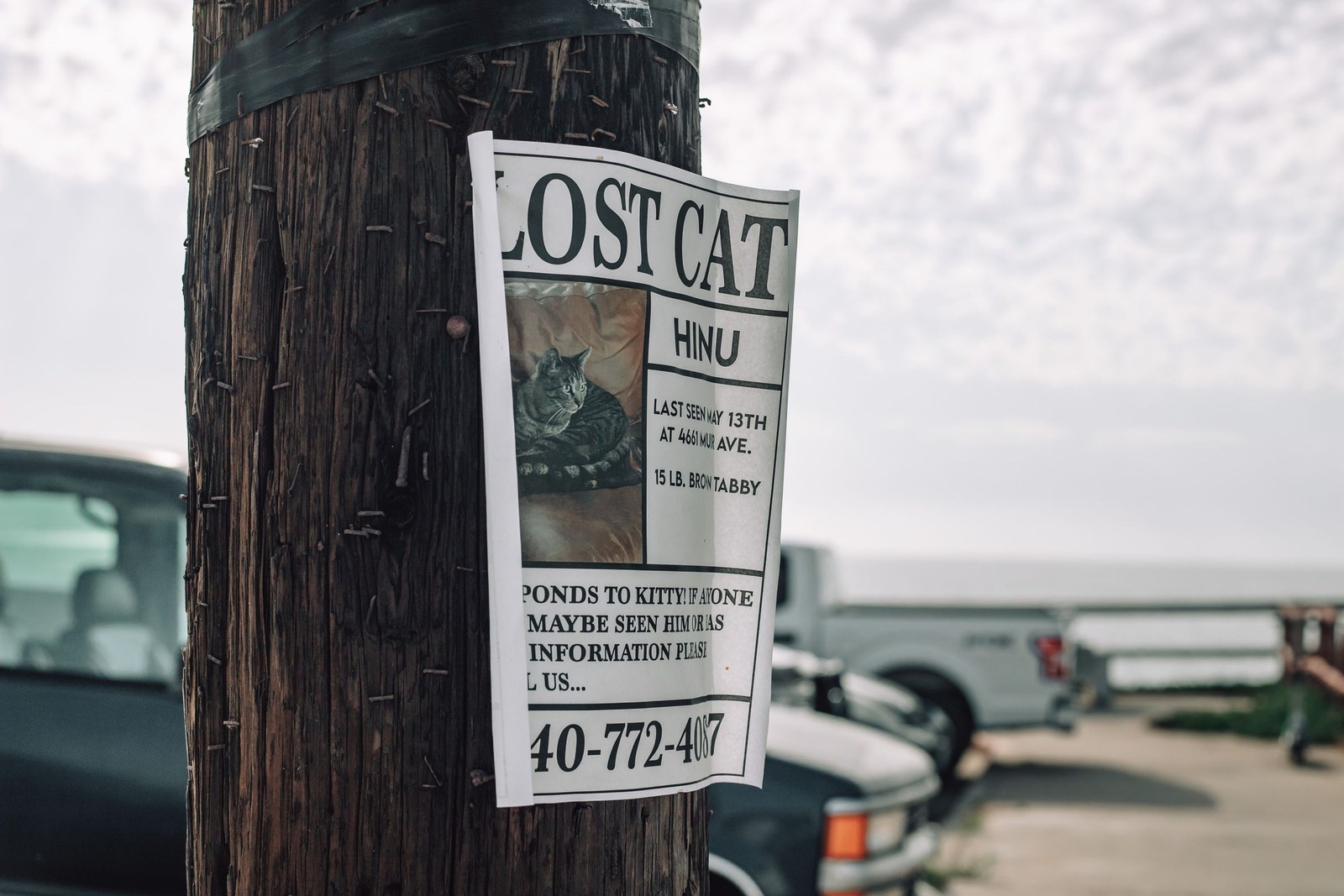
Daylight hours are for the work that supports the night search: put up clear flyers with a big photo, check local shelters in person, leave your cat's bedding and a water bowl near the door she escaped from, and talk to every neighbor on the block. Keep a log of where you have searched and when, so the same hiding spots get rechecked rather than forgotten.
How KinsLe Helps, Day and Night
A night search covers a few streets; an alert covers the neighborhood. KinsLe's Lost Pet Alert System is free in every profile and shows your cat's alert on the map when she goes missing, so other pet lovers checking the map can watch their porches and yards while you search yours. When someone spots her, they can message you directly through the alert. While you walk those quiet streets tonight, the Lost Pet Alert System in KinsLe keeps her alert visible on the map and lets a finder message you directly the moment she is spotted.