
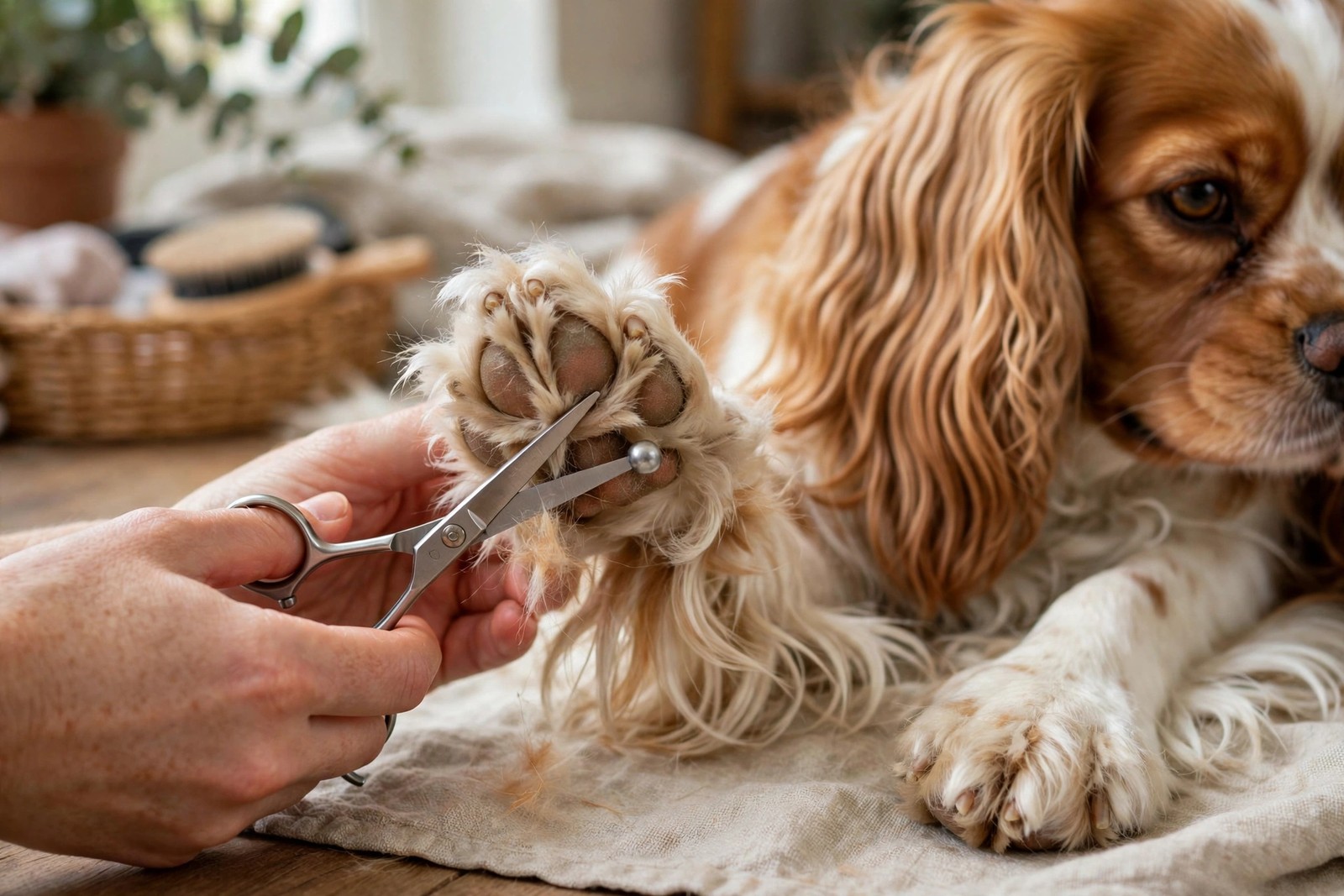
Yes — keep the hair between your dog's paw pads trimmed roughly flush with the pads, because overgrown hair mats easily, traps debris and moisture, and makes dogs slip on smooth floors like a sock on polished wood.
Why That Hidden Hair Causes Trouble
The fur between the pads grows continuously in many breeds, especially Spaniels, Golden Retrievers, Shih Tzus, and other long or medium-coated dogs. When it grows long, it collects mud, burrs, small stones, ice balls in winter, and foxtails in summer, then packs them against sensitive skin between the toes. Mats in that tight space pull with every step and can hide redness or a small cut until your dog starts licking or limping.
Long pad hair also reduces traction. Instead of the pad gripping the floor, hair skids across tile, laminate, and hardwood. Senior dogs and breeds prone to joint issues, such as Labradors and German Shepherds, are at particular risk from repeated slips that strain hips and knees.
How to Trim Safely at Home
Work when your dog is calm, ideally after a walk, and reward cooperation throughout. You need small blunt-tipped scissors made for pets or a small, quiet clipper — never sharp pointed scissors near wiggling paws.
Follow these steps:
- Gently spread the toes and brush out any loose debris first.
- Trim only the hair that pokes out beyond the pads, keeping it flush — do not dig down between the toes.
- With clippers, use light, short strokes and check the blade temperature often so it never feels hot.
- Stop for breaks, treats, and praise; four paws do not have to happen in one session.
If you find a tight mat, do not yank or cut blindly against the skin, because pad-area skin is thin and easy to nick. Tease loose mats apart gently with your fingers, or leave stubborn mats for a professional groomer.
How Often and Who Else Can Help
Check pad hair every two to three weeks, and trim as needed — many owners pair it with nail trim day so both jobs happen together. Dogs who walk mostly on pavement may wear hair down a little naturally, while indoor dogs on carpet and smooth floors usually need more frequent attention.
If your dog is extremely ticklish, anxious, or has very matted feet, a groomer can do this quickly and safely as part of a regular appointment. There is no prize for struggling through a task your dog hates when a professional can finish it calmly in minutes.
Making Sure Every Carer Knows the Detail
Little care details are the ones that get lost between family members, dog walkers, and sitters. Write notes like paw trims, sensitivities, and routines down in one place rather than relying on memory or a missed text, and tell the people who help with your dog where to find them. For relatives you choose, KinsLe Family Sharing opens access to that profile.