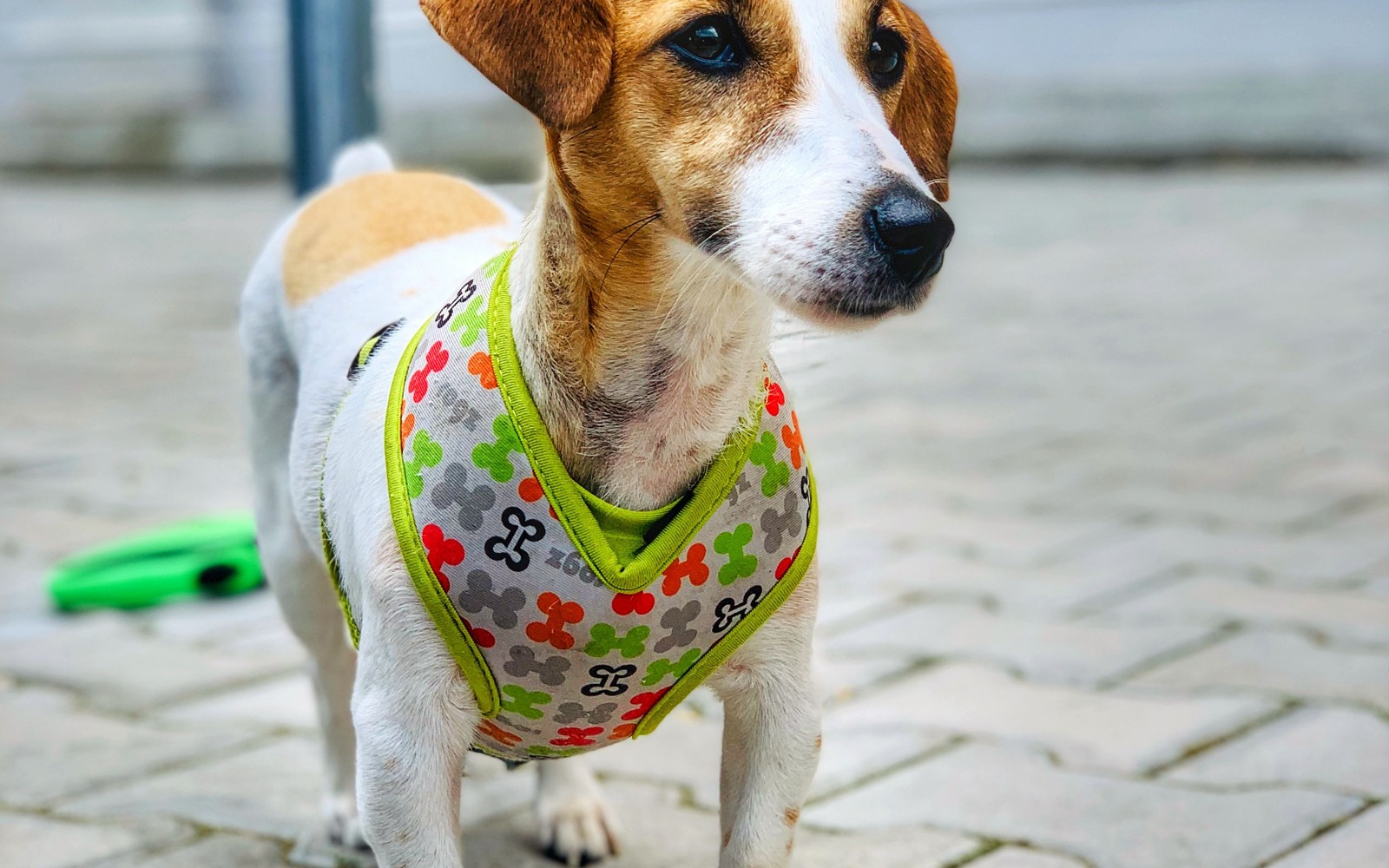
For most dogs that pull, a well-fitted front-clip harness is the safer, more manageable starting point: it gives you steering control and takes pressure off the neck when your dog lunges. A flat collar is fine for a dog who already walks politely, but it is a poor tool for a strong puller. In the end, fit and training matter more than the label on the gear.
How Each Option Works
A front-clip harness has its leash attachment at the chest. When your dog surges forward, the pressure gently turns his front end toward you, which reduces forward power without choking. A back-clip harness is comfortable and great for small, calm dogs or for hiking on a long line, but for a determined puller it can work like a sled-dog harness — comfortable to lean into, and therefore comfortable to pull in.
A flat collar keeps things simple for polite walkers and is a good everyday place for ID. But repeated pulling against a collar concentrates force on the throat and neck, which is a particular concern for small breeds prone to delicate tracheas, dogs with neck or spine problems, and brachycephalic dogs who already work harder to breathe. Head halters suit some dogs and handlers, though they need a careful, gradual introduction so the dog accepts the strap across the muzzle.
Tools to Avoid
Choke chains, prong collars, and shock settings rely on discomfort to suppress pulling. They can increase anxiety and reactivity, especially in a dog who pulls because he is excited or worried by other dogs, and they carry a real risk of injury when a dog hits the end of the leash at speed. Modern reward-based training paired with sensible gear achieves the same goal without that fallout, and most owners find it easier to apply consistently.
Fit Is the Part Owners Skip
- You should be able to slip two fingers under any strap or collar — snug, not loose, not tight.
- A harness should not ride up into the armpits, rub behind the elbows, or restrict shoulder movement.
- Dogs should not be able to back out of it; escape-prone dogs may need a harness with an extra belly strap.
- Recheck fit after weight changes, haircuts, and as puppies grow — sometimes within weeks.
Try gear on at home first, with treats, before heading out. A dog pawing, freezing, or rolling to remove a new harness is telling you the fit or the introduction needs work.
Gear Supports Training, It Does Not Replace It
Even the best front-clip harness will only manage pulling while you teach the underlying skill: reward your dog beside you, stop when the leash tightens, and practice in low-distraction places first. If pulling is stubborn, if your dog is much stronger than you, or if lunging at other dogs is part of the picture, in-person coaching on gear fit and handling technique is worth it.
That is a good use for the Pet Services Directory on KinsLe, which helps you find local trainers — along with groomers, vets, and sitters — so you can get hands-on help choosing and fitting equipment for your dog's size and build.
The Pet Services Directory listings on KinsLe can lead you toward a trainer nearby who will assess harness fit and leash handling with your dog present.