
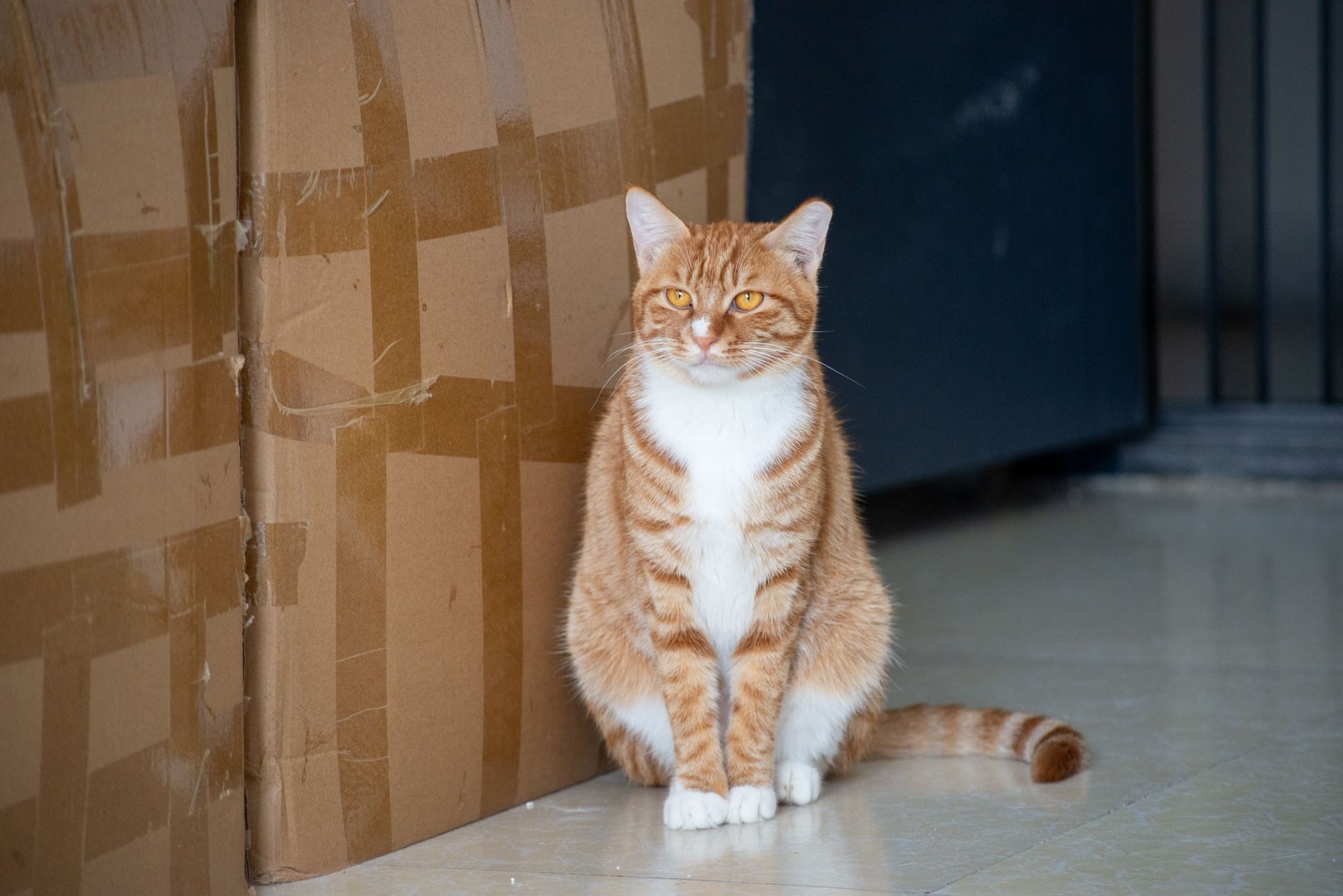
The easiest indoor enrichment for cats comes from thinking like a hunter: give her things to stalk, chase, pounce on, scratch, hide in, and figure out. You do not need a cart full of expensive toys — a wand toy, a few crinkle balls, a treat puzzle, a handle-free paper bag, and a cardboard box with holes cut in the sides will cover most cats' favorites for weeks.
Start with the hunt
Interactive play is the foundation. A feather wand or a toy on a string lets you mimic prey — skittering along baseboards, freezing, darting behind furniture. Most cats lose interest in toys that just sit there, but anything that moves like it is trying to escape becomes irresistible. Keep sessions short and frequent: five to ten minutes, a few times a day, beats one long marathon. Let her catch the "prey" regularly, and finish with a small meal or treat so the hunt ends the way nature intended — with food.
Puzzle her meals
Food enrichment stretches her brain between play sessions. Start easy: a muffin tin with kibble in the cups, covered loosely with balls she must nose aside. Commercial puzzle feeders and lick mats work well too, and you can graduate to harder ones as she masters each level. Even scattering part of breakfast in a box of crumpled paper turns a two-minute meal into a fifteen-minute foraging project.
Boxes, bags, and vertical space
Cats think in three dimensions and love an ambush spot. A cardboard box with two holes cut in opposite sides becomes a fort, a hiding place, and a scratching surface in one. Paper bags are a classic — just remove the handles first so her head cannot get caught. Then look up: a cleared bookshelf, the top of a wardrobe with a safe route up, or a cat tree near a window multiplies her territory without adding floor space.
Rotate, don't accumulate
A toy that lives on the floor forever becomes furniture. Keep most toys in a drawer and rotate a few out every couple of days; the returning toys feel new again. A sprinkle of catnip or silver vine can revive interest in an older toy — though note that not every cat responds to catnip, and kittens usually ignore it until they are a few months old.
Safety checks for homemade fun
- Cut off bag handles, strings, and ribbons she could swallow, and put wand toys away after play — string is dangerous unsupervised.
- Skip small parts that can break off, and check boxes for staples.
- Offer one new thing at a time to shy cats; a room full of novelties can overwhelm rather than delight.
Swap ideas with the Circle of Love
Every cat has a quirky favorite — one adores bottle caps, another only plays at midnight. KinsLe's Circle of Love brings pet lovers together, and it is a genuinely useful place to swap enrichment ideas that worked for cats like yours and hear what flopped. Share your box-fort success, borrow someone else's puzzle idea, and keep your cat's rotation fresh. Within the Circle of Love on KinsLe, owners swap accounts of the midnight bottle-cap game and the box fort that finally held her attention, adding fresh options when her usual toys go stale.