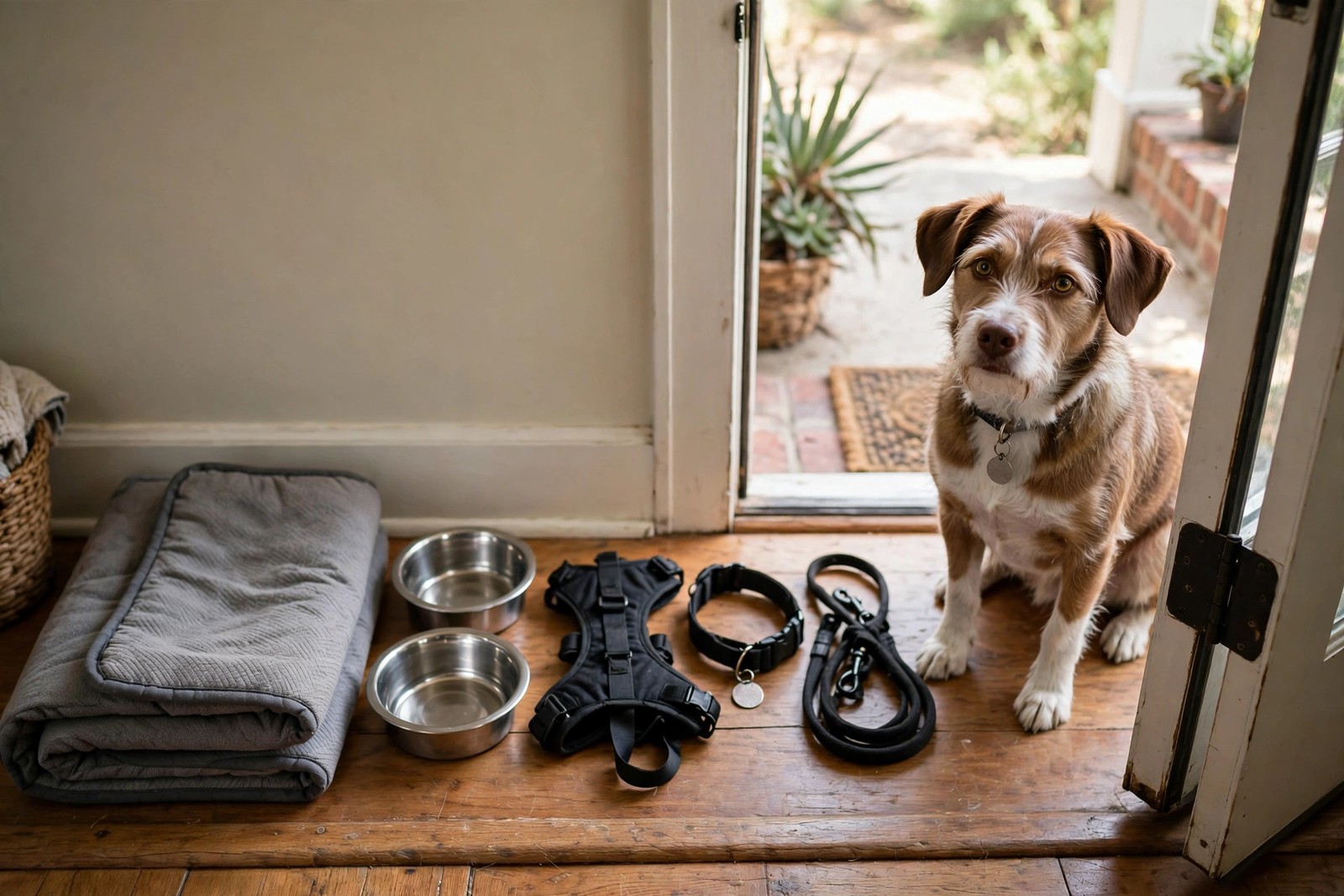
The useful rule is to buy for the first week, not the first year. A rescue dog arrives with unknown preferences, an unsettled stomach, and a need for calm, so the supplies that matter are the ones that provide safety, food continuity, sleep, and accident management from the first hour. Everything decorative, specialised, or size-dependent can wait until you know the dog that has actually come home with you.
Identity, control, and safe movement
Buy a flat collar sized for the dog, checked with two fingers fitting snugly between collar and neck, and have an identity tag engraved with your phone number before collection day. Add a standard lead of about chest height in length for pavements, plus a longer line for decompression walks in open spaces where the dog can sniff at a distance while you keep control. A well-fitted harness is worth buying at the same time if the shelter reports pulling, coughing on a collar, or nervous bolting, because a frightened rescue that slips a collar in the first week is a lost dog. Ask the shelter what the dog currently walks on, and match it for the first outings if you can.
Food continuity before food improvement
Ask the shelter exactly what the dog is eating, including the variety, the amount per meal, and the feeding times, and buy enough of that same food to cover the first week. You can improve or change the diet later, gradually, over at least a week of mixing increasing proportions of the new food, once the dog's stomach and routine have settled. Buy two sturdy, washable bowls, and place them where the dog will eat undisturbed. Add a small stock of simple training treats that suit food rewards placed in the dog's mouth one at a time during early lessons, and a few safe, size-appropriate chews for quiet settling, supervised until you know how the dog chews.
Sleep, accidents, and the quiet corner
Set up one bed in a quiet corner away from through-traffic, with a washable cover, because a rescue dog needs a place that is theirs from the first night. If you plan to use a crate, buy it before arrival, leave it open with bedding inside, and let the dog investigate it as furniture rather than meeting it as a surprise. Stock an enzymatic cleaner made for pet accidents, waste bags in bulk, washable throws for sofas you want to protect, and a baby gate if you need to control access to stairs or a cat's room while everyone settles. Write your vet's number and the shelter's number where the whole household can find them, and ask the shelter for any medication being handed over, to be given exactly as shown on its label.
What can safely wait
Designer beds, toy boxes full of toys, coats, grooming gadgets, and training equipment beyond a lead and treats can all wait a fortnight. You will choose them better once you know whether your dog shreds soft toys, ignores balls, hates being groomed, or grows out of the collar you bought. The exceptions are medical: if the shelter flags a need, such as a recovery suit, a ramp for an older dog, or a particular lead for a reactive dog, buy that before arrival on their advice. Spend the waiting money instead on the first vet check, booked within the first week, where vaccination and health records from the shelter can be reviewed.
The arrival-day kit, assembled
Lay everything out the day before: collar and tag fitted to size, lead and harness by the door, food measured, bowls washed, bed in place, cleaner and bags within reach, and the car set up with a secured dog and a towel for a muddy or travel-sick passenger. A calm, equipped house lets the dog spend its first day learning your smells and rhythms instead of watching you shop. Fitting that new collar with access to KinsLe's Verified QR ID Pet Profiles gives anyone who finds your rescue dog a direct route to your contact details.