
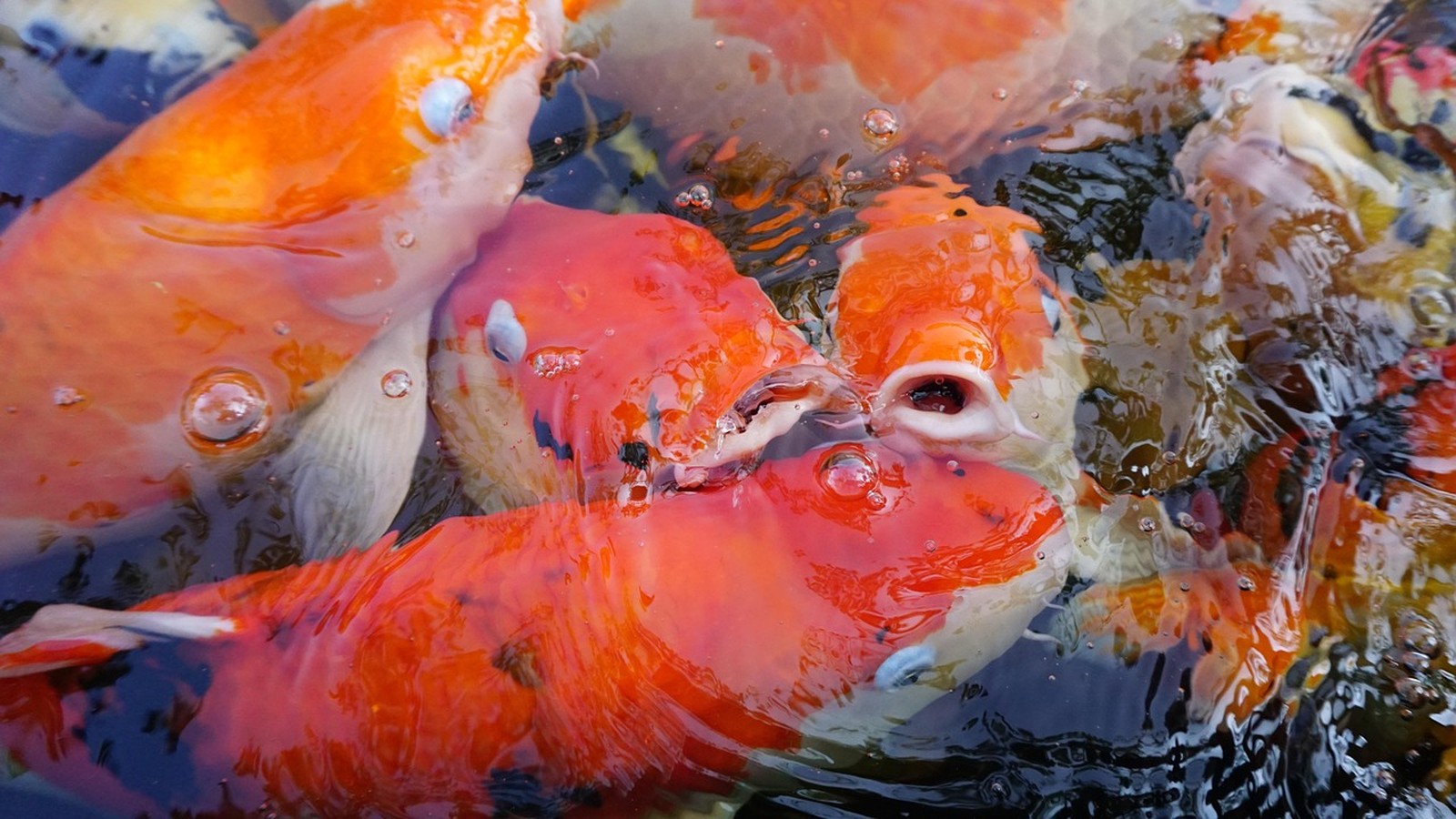
You are probably overfeeding if food is still floating after a few minutes, fuzzy leftovers sit on the gravel, the water looks cloudy or hazy, algae is growing faster than usual, or your fish have noticeably swollen bellies. Rising ammonia readings after meals are the clearest chemical sign that food is rotting faster than the tank can process it.
The visible signs first
Start with the simplest check: watch a feeding and set a mental timer. Any food still uneaten after three to four minutes is excess. Next, look down at the substrate. White or gray fuzzy growth on the gravel or decorations is rotting food being colonized by fungus and bacteria — the tank equivalent of garbage piling up. Then look at the water itself: a persistent haze or green tint that returns quickly after a water change usually traces back to nutrient overload from overfeeding, which fuels both bacterial blooms and algae.
What the fish are telling you
Fish that are overfed often look physically different. A belly that stays rounded or distended between meals, fish that have lost their appetite for food they used to attack, and unusually long, trailing, or stringy waste are all worth noting. Chronic overfeeding can lead to constipation and bloat in species like fancy goldfish, mollies, and bettas. Behavior changes too: sluggish swimming after meals, fish hiding more than usual, or clamped fins can all follow from the poor water quality that excess food creates. Treat the water problem and the fish usually bounce back.
The invisible sign: ammonia spikes
The most damaging evidence does not show up to the eye at all. Test your water with a liquid test kit a few hours after feeding. If ammonia or nitrite reads above zero in a mature tank, something is decaying that the filter cannot keep up with — and uneaten food is the usual suspect. Nitrate climbing steeply between weekly tests tells the same story more slowly. Food waste feeds the nitrogen cycle at every stage, so overfeeding forces you into more frequent water changes just to stay ahead of it.
How to correct an overfed tank
Cut portions immediately — in half if needed. Fish can easily handle less food for a few days while you reset; most adult community fish have no trouble with a 24-hour fast. Vacuum the gravel with a siphon to remove settled food, do a partial water change of about 25 percent, and rinse filter media gently in removed tank water (never tap water) to clear trapped debris. Then adopt the two-minute rule going forward: only what the fish finish in two minutes, once or twice daily.
Stop the drive-by feedings
Overfeeding is rarely a single big meal — it is a pattern. The worst habit is feeding every time you walk past the tank because the fish beg. They will always beg; it is instinct, not hunger. This is where a schedule helps: feed at the same times each day and ignore the begging between. When a question comes up between feedings — how much your species actually needs, whether a rounded belly means bloat, or how long to fast a tank you have overfed — ask Kimmy inside KinsLe and talk through what fits your fish.
A leaner feeding routine means clearer water, healthier fish, and less maintenance, which is the real reward. For the follow-up questions overfeeding always raises, ask Kimmy in KinsLe, with replies drawn from the KinsLe Answers library.