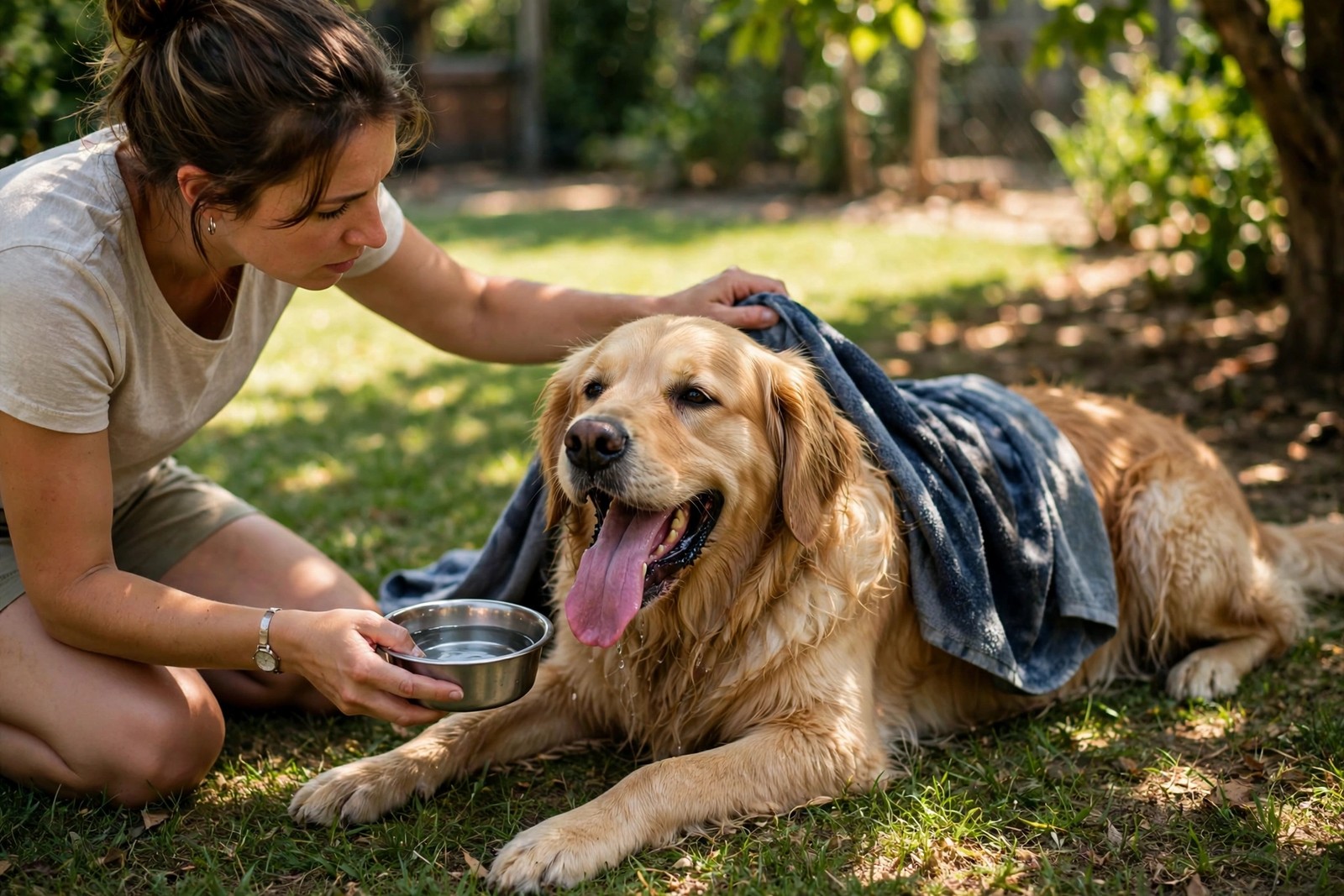
With heatstroke, minutes matter and the first moves are yours. The early signs are heavy, noisy panting that does not settle with rest, drooling thick saliva, bright red gums, restlessness, and a hot body; as it worsens: vomiting or diarrhoea, wobbliness, glassy eyes, collapse, and seizures. Get her out of the heat at once — into shade or an air-conditioned room — stop all exercise, and begin cooling with cool water poured over the body, especially the neck, armpits, and groin, or with wet towels you keep re-wetting; then head for a vet while cooling continues if someone else can drive.
Cooling Done Right — and the Mistakes to Avoid
Use cool water and airflow (a fan or car air-conditioning); do not use ice or ice water, which constricts blood vessels and can slow cooling where it counts. Offer small drinks of cool water but never force water into the mouth of a drowsy or collapsed dog. Even if your dog appears to recover, a vet check is essential the same day — organ damage from overheating can declare itself hours later. Dogs at highest risk are flat-faced breeds, thick-coated and overweight dogs, puppies, seniors, and any dog exercised in midday heat or left in a warm room or car; a parked car can reach dangerous temperatures in minutes, even with windows cracked.
Handing Over to the Vet Team
Treat suspected heatstroke as an emergency visit, not a wait-and-see. Call ahead so the clinic can prepare, keep cooling during transport if you can do so safely, and hand over a short timeline when you arrive: when the exercise or heat exposure happened, which signs you saw first, when cooling started, and whether your dog drank, vomited, or seemed to recover on the way. Those details help the team judge how serious the episode is and what to check first, because the examination and any diagnosis are theirs to make — your job is cooling, transport, and an accurate account of the order things happened in. Note anything else that changed that day, such as appetite or energy beforehand, in case it becomes relevant once the immediate danger has passed.
When you arrive, her history tells the team what is normal for her and which medicines she already takes. A packet assembled before summer — vaccination record, visit history, current health notes — travels better than loose papers, and the Pet Passport in KinsLe is where that packet lives for your dog.