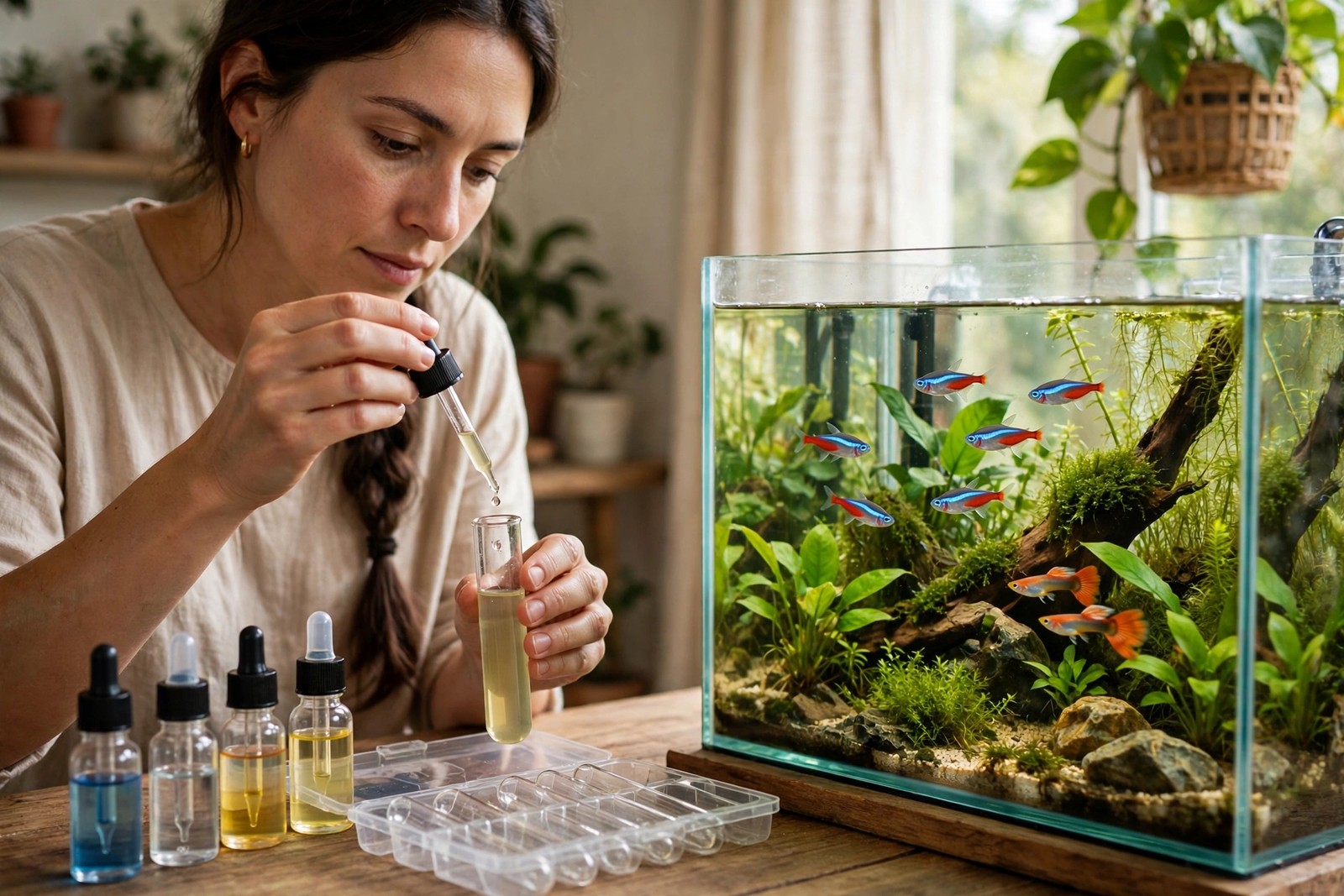
Fish gasping at the surface, clamped fins held tight against the body, sudden loss of appetite, red or swollen gills, lethargy, erratic darting, or unexplained deaths are all classic warnings that your water quality has slipped. The tank water itself may look cloudy, smell off, or carry an oily film. Fish live in their water the way we live in air — they can't leave the room, so when something is wrong with it, their behavior changes first, sometimes days before any test kit reading jumps into the red. The first paragraph rule of fishkeeping: when several fish change behavior at once, test the water immediately — it's almost always the water.
The readings that matter most
Start with ammonia and nitrite — both should be zero in a cycled tank, and any detectable level is an emergency. Then check nitrate (keep it low with water changes), pH (stable matters more than a perfect number), and temperature. A liquid test kit beats test strips for accuracy, and testing weekly — not just when things look wrong — teaches you your tank's normal rhythm so you can spot trouble early. Keep a log: readings, water changes, and anything you added or moved.
What to do right now
If ammonia or nitrite show up, do a partial water change — about 25 to 40 percent — with dechlorinated water matched to tank temperature. Repeat daily until readings return to zero. Increase aeration: point the filter outlet to ripple the surface or add an air stone. Cut feeding back sharply for a day or two, since uneaten food and extra waste feed the problem. Clean the filter only gently in old tank water — never replace all filter media at once, because that wipes out the beneficial bacteria doing your nitrogen cycle. If fish are gasping hard or dying, bigger emergency changes and an immediate call to an aquatic vet are warranted.
Why water quality crashes happen
Common causes: adding too many fish at once, overfeeding, a filter that was cleaned too aggressively or with tap water, a dead fish or snail hidden behind decor, a crashed cycle after medication, or a heater malfunction. New tanks under eight weeks old are the most vulnerable. Overstocking a small tank means waste builds faster than bacteria can process it. Recognizing your own pattern matters — if crashes follow every filter "deep clean," the cleaning routine is the cause, not the cure.
Building a crash-proof routine
Feed what fish finish in two to three minutes, once or twice daily. Change 20–30 percent of the water weekly like clockwork. Vacuum the substrate gently, rinse filter media in removed tank water, and test monthly at minimum. Quarantine newcomers and rinse plants, since new arrivals bring bioload. And stock gradually — patience is the most underrated water-quality tool in the hobby.
How KinsLe helps
When a tank emergency hits, everyone who cares for the fish needs to know fast — KinsLe Messenger is the per-pet communications hub where your care circle can message about a specific fish or tank instantly, so nobody feeds the tank again while ammonia is spiking. You can also log test readings in each pet's profile for a running history. Post the household's tank observations for the vet — gasping, appetite, and readings with ammonia and nitrite each noted in words, such as zero — inside the KinsLe Messenger thread on KinsLe, where everyone caring for the fish reads the same update.