
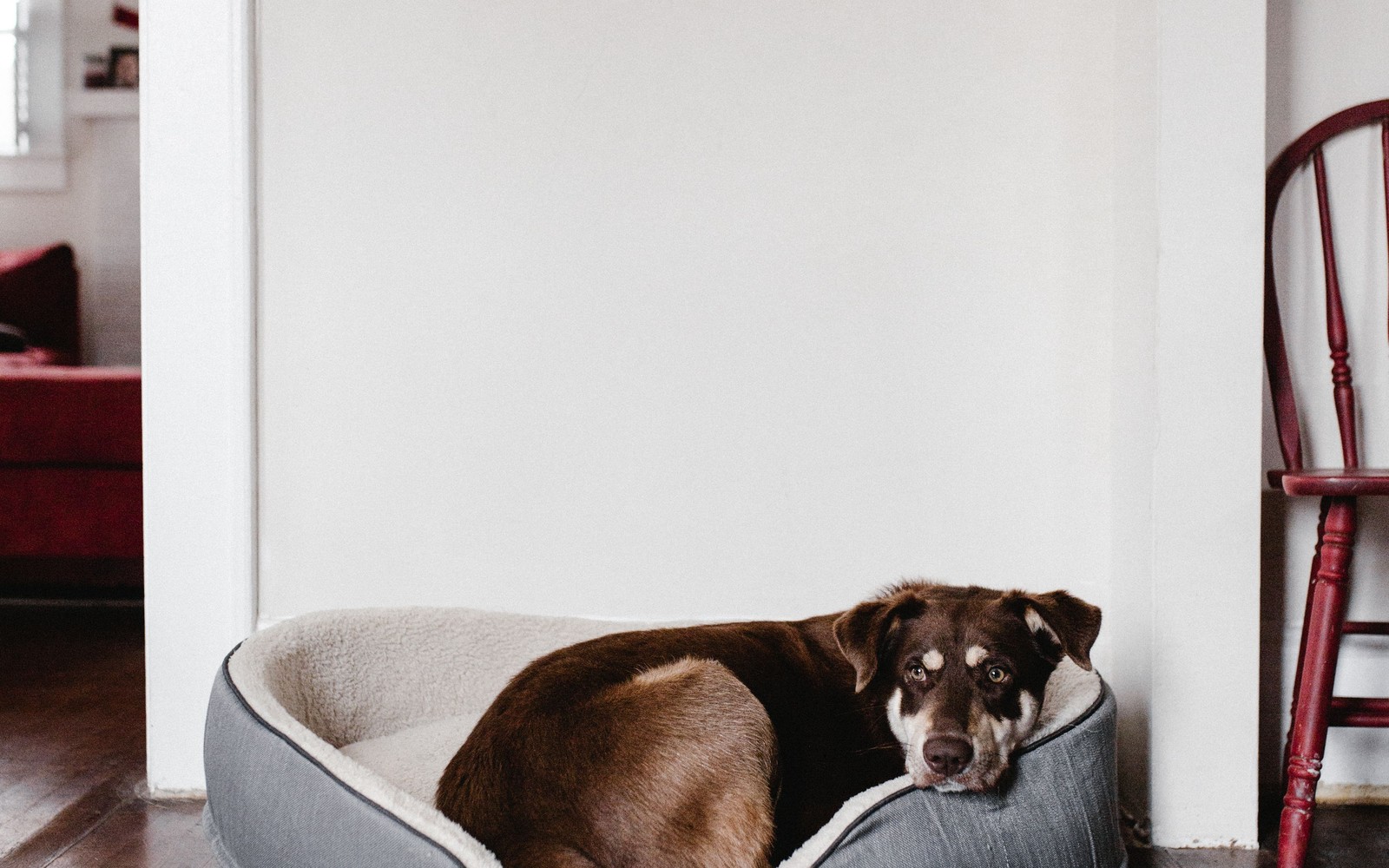
Start with three changes: keep arrivals and departures low-key, practice very short absences that gradually grow longer, and leave a food puzzle or safe chew that only appears when you go out. Exercise before you leave helps take the edge off, but the real progress comes from teaching your dog, in tiny successful steps, that alone time is safe and boring. Most dogs do not need a dramatic intervention — they need repetition at a level they can handle.
Make leaving and returning unremarkable
If you fuss over your dog before leaving and throw a celebration when you return, you teach him that departures are emotional events. Instead, keep the last ten minutes before you go calm and ordinary, and when you come home, say a quiet hello and save playtime for a few minutes later once he has settled. None of this means ignoring him — it means removing the emotional spike around the door so the door itself stops being the main event of his day.
It also helps to decouple your routine. Pick up your keys and put them down again. Put on your coat and make tea. Dogs read these cues precisely, and blurring them during the day lowers the anticipatory tension that builds before you even leave.
Practice absences so short they are boring
This is the engine of the whole process. Step outside for ten seconds, return before any stress builds, and repeat. Then thirty seconds, a minute, two minutes — increasing only while your dog stays relaxed, and dropping back a level if he struggles. Sessions of many tiny reps beat one heroic attempt at an hour. A camera check helps you confirm he is genuinely calm rather than just quiet.
Build in easy wins at random times, not only before real departures, so the practice never predicts a long absence. For many dogs, a few weeks of this patient ladder changes the emotional picture noticeably.
Give alone time its own good things
Reserve something special that appears only when you leave: a stuffed frozen food toy, a lick mat, or a safe long-lasting chew suited to your dog's size and chewing style. Pick it up when you return. Over time the special item becomes a cue that your leaving predicts good things. Always supervise new chews first, choose sizes that cannot be swallowed in chunks, and skip anything your veterinarian has advised against for your dog's teeth.
Background sound — a radio or television left on at normal volume — helps some dogs, mostly by making the house feel less abruptly empty. Comfort items carrying your scent can help mild cases too.
Tire the body, then settle the mind
A walk or play session before departure is genuinely useful, especially for young, athletic dogs, but timing matters: give him twenty or thirty minutes to wind down afterward so you leave a drowsy dog rather than a wired one. A sniff-heavy walk, where he chooses the pace and investigates, often settles dogs better than the same distance marched quickly.
Bridge the gap with a trusted visit
While you are building up longer absences, a midday visit from a neighbor, friend, or sitter can break a long day into manageable pieces. That is where a KinsLe Care Pass helps: it is a temporary scoped link you share with a trusted person, and the recipient needs no account or app to use it. You can arrange a pop-in for a toilet break, fresh water, and a few calm minutes of company while your own training ladder climbs toward full workdays.
Care Pass in KinsLe gives the sitter you name access only during the single midday visit you arrange, and only to the departure-practice routine notes, feeding amounts, and comfort items that settle your dog.