
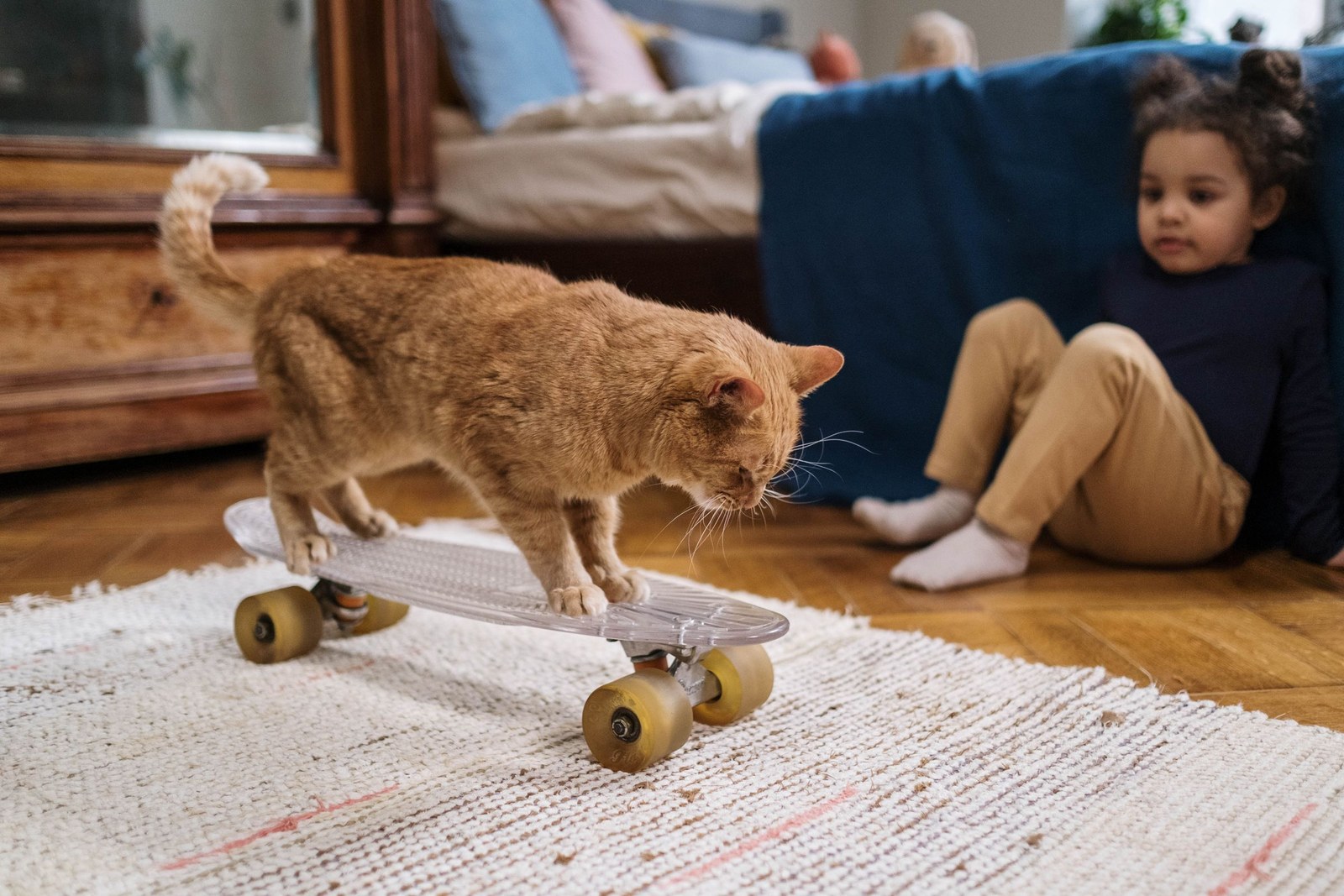
Teach your kids these four stop signals first: a flicking or thumping tail, ears flattened back or sideways, a low crouch with a tense body, and any growl, hiss, or swat mean "give space now." The welcome signals are just as important: slow blinks, a soft head bump, purring while choosing to stay nearby, and a cat who walks over on her own is saying she is happy to visit.
Start With the Tail, Ears, and Whole Body
Kids often look only at a cat's face, but cats speak with their whole body. A tail held high with a gentle curve usually means confidence and friendliness. A tail lashing side to side, puffed up like a bottle brush, or tucked tight against the belly points to arousal, fear, or frustration. Ears tell the same story quickly: forward ears are curious, flattened "airplane ears" are annoyed, and ears pinned flat are a clear warning.
Posture pulls it together. A loose, rolling cat showing her belly is relaxed, though that is not always an invitation to rub the belly — many cats grab the hand that tries. A crouched cat with wide pupils, weight shifted back, and skin twitching along the back is overstimulated or scared, even if she was purring a minute ago. Teach children to read the combination, not one signal alone.
Make It a Game Kids Actually Remember
Abstract rules fade fast, so turn spotting signals into practice at home. Try these simple habits:
- Play "traffic light" — green for slow blink and head bump, yellow for a flicking tail tip, red for flat ears or a growl, where everyone freezes and steps back.
- Narrate out loud during calm moments: "See her soft eyes and tail up? She chose to sit with us."
- Practice gentle touch on a stuffed cat first: one finger for a chin scratch, no hugging, no picking up without an adult.
- Praise the step-back as much as the cuddle. A child who notices "she wants a break" is doing it right.
Short, repeated moments work better than one big lecture. Point out signals during feeding, play, and quiet time, and correct kindly in the moment rather than after a scratch has already happened.
What to Do When a Signal Is Missed
Even careful kids will misread a cat sometimes. If your cat moves away, hides, or gives a warning swat, do not punish the cat and do not scold the child into tears — calmly separate them and name what happened. "Her tail was thumping and she walked off, so we let her go." That language builds empathy and keeps the next interaction safer.
Watch especially around high-arousal moments: a new toy, treats, a cat cornered under a bed, or a cat picked up and carried. Supervise young children, teach them never to chase, corner, pull a tail, or disturb a sleeping or eating cat, and give the cat an escape route in every room. If a bite or scratch breaks skin, clean it promptly and check with your pediatrician or doctor if you have any concern.
Put the Signals Where Everyone Can See Them
Household know-how only helps if babysitters, grandparents, and visiting cousins see it too. That is where a clear profile helps: each pet on KinsLe has a unique QR ID linked to her Verified QR ID Pet Profile, so the notes that matter — how she likes to be approached, what her stop signals are, and who to contact — travel with her in one scannable place. Adding a short "how to say hello to our cat" note to that profile means a new sitter does not have to guess.
Teaching kids to read a cat is really teaching them consent and patience, and those lessons stick for every animal they meet. Verified QR ID Pet Profiles on KinsLe mean a person who comes across your cat can point a phone at the collar tag and land on her profile page, where your contact details appear.