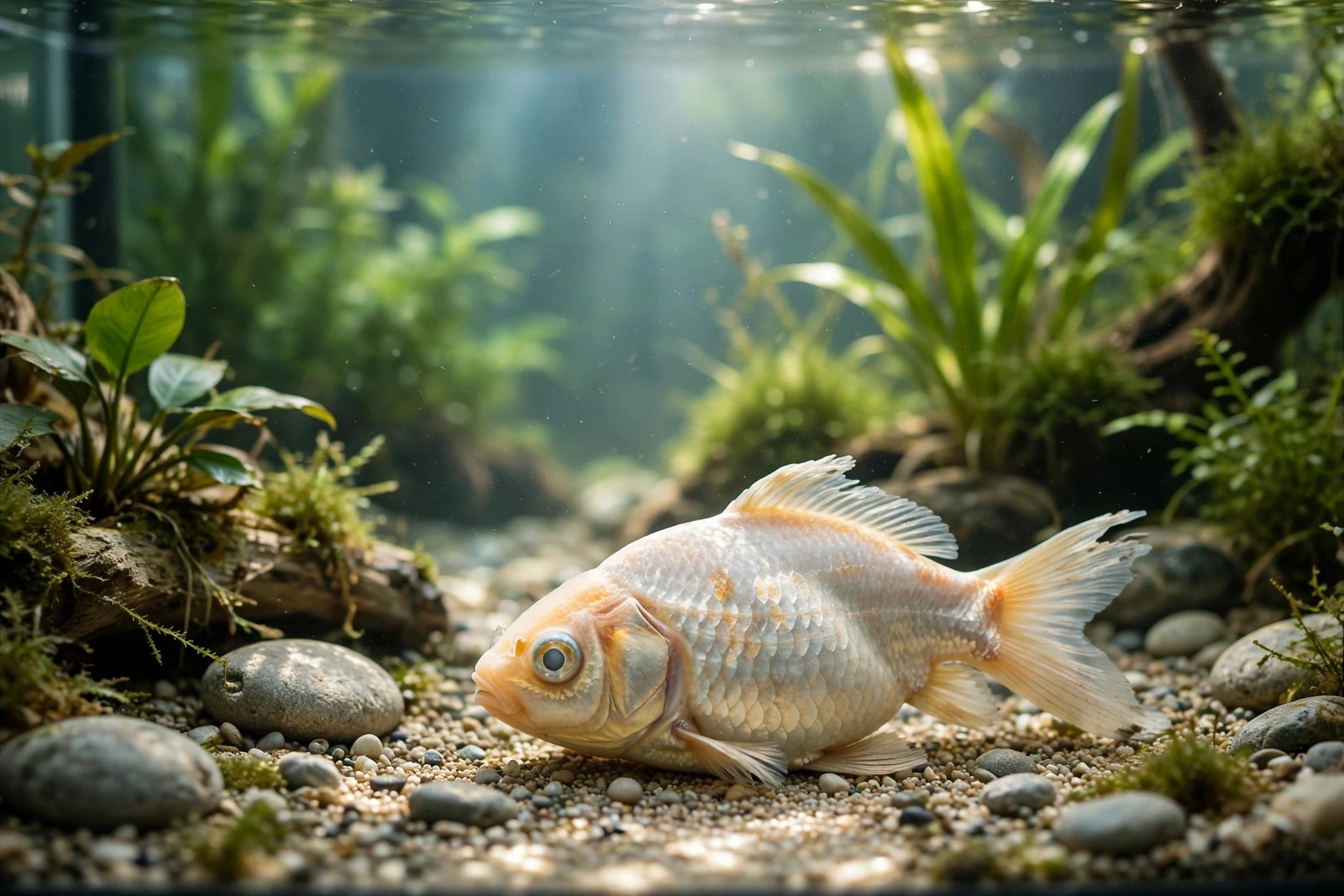
Goldfish are long-lived fish — kept in a properly sized, filtered tank, commons and comets can live well into their teens and beyond, and fancy varieties commonly reach double figures too — so many owners do eventually keep a genuinely old fish. Ageing in a goldfish is a slow dimming rather than a sudden decline, and the changes are easiest to spot in swimming, colour, and feeding behaviour if you know that fish's normal well.
Swimming, Colour, and Body Changes
An old goldfish typically cruises less and rests more, holding station in a quiet area of the tank, often near the bottom or behind decor, and taking longer to stir when the lights come on. Its swimming loses strength and precision: turns are wider, currents from the filter push it around more, and mild buoyancy problems are common, with the fish hovering slightly head-down, tail-up, or putting visible effort into staying level — fancy varieties, whose deep bodies already strain their swim bladder, show this earliest. Colour is the most visible change. Rich orange and red pigmentation often fades with age, and many old goldfish turn progressively paler or partly white, starting around the head and belly; this gradual whitening over months or years is a normal ageing pattern, not a disease in itself. Growth stops entirely, fins may look a little more ragged despite good water, and an elderly fish often looks slimmer through the back even when it is feeding.
Appetite and Behaviour at Feeding Time
Old goldfish usually eat less and compete worse. A fish that once barged to the surface may now arrive late, take a few mouthfuls, and drift away, and in a mixed-age tank it can quietly lose condition simply because younger fish reach everything first. Senses dull as well, so food is located more by luck than by the eager homing you saw in a young fish. Smaller, more frequent meals of easily found food — sinking pellets softened in tank water, offered near where the fish rests — suit an old goldfish far better than one large surface feed it has to race for.
Ageing Versus Illness, and Senior Tank Care
The dividing line is speed. Ageing changes arrive over months and the fish otherwise looks clean and breathes calmly; illness and water problems arrive over days. Sudden buoyancy loss, clamped fins, white spots, fluffy patches, red streaks, gasping at the surface, or complete refusal of food should trigger an immediate water test and a search for aquatic veterinary advice, not a shrug about old age. For a healthy senior, keep conditions boringly stable: gentle filtration flow the fish does not have to fight, no new boisterous tankmates, decor arranged so resting spots are sheltered, and the same partial water-change routine the fish has always had, since stability matters more to an old fish than any supplement. Test the water on schedule and write the results down with appetite and behaviour notes, because KinsLe's Pet Passport keeps those dated records together in one packet, turning years of small observations into evidence a vet can actually use.