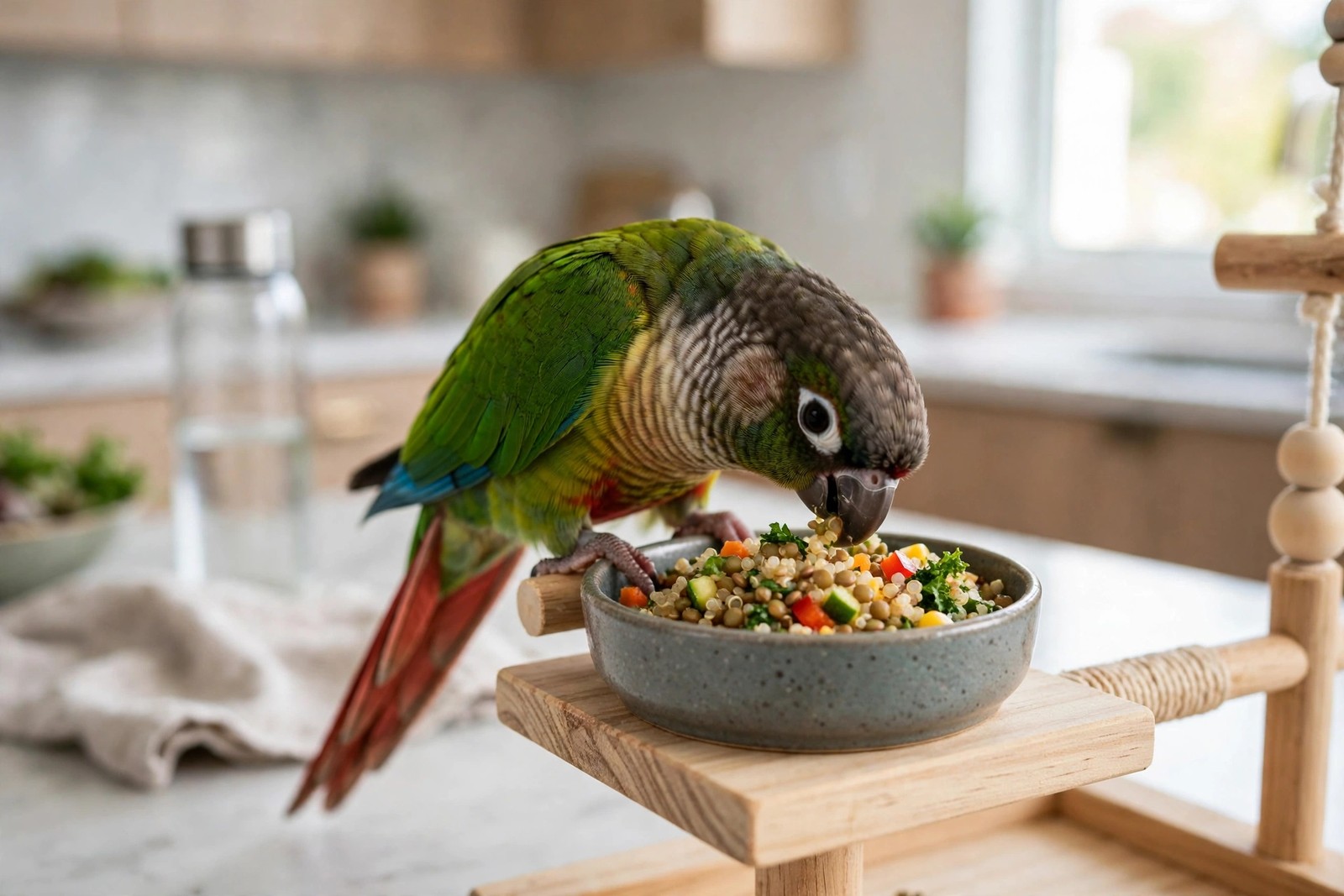
Chop is a finely cut mixture of vegetables, grains, and legumes served fresh, and it works because a parrot cannot easily pick out only the sweet pieces the way it can in a seed bowl. The proportions below suit most medium parrots — conures, cockatiels at the smaller end, African greys and Amazons at the larger — and you scale the batch, not the ratios, to your bird.
The Proportions to Work From
Aim for about half the mix as vegetables, roughly a quarter as cooked whole grains, around 15 percent as cooked legumes, and the final small share as fruit, a sprinkle of seed, or finely chopped nuts. For a medium batch that means about 4 cups (roughly 500 grams) of chopped vegetables, 2 cups (about 300 grams) of cooked grains, 1 generous cup (about 180 grams) of cooked legumes, and a small handful of fruit and toppings. Treat these as a starting balance, then adjust toward whatever your bird consistently leaves: a mix it eats fully beats a theoretically perfect mix on the cage floor.
Choosing the Ingredients
For vegetables, combine a leafy green (kale, bok choy, or broccoli tops), something orange (carrots or cooked sweet potato, which supplies vitamin A parrots commonly run short on), and colour and crunch from bell peppers, zucchini, green beans, peas, and corn. Grains can be quinoa, brown rice, whole oats, or cooked wholegrain pasta, cooked plain with no salt, oil, or seasoning. Legumes — lentils, chickpeas, black beans, or mung beans — must be cooked until soft; never serve dried beans raw or undercooked. Keep avocado, onion, and garlic out completely, as all three are poisonous to parrots, and keep fruit modest because its sugar crowds out the vegetables.
Preparation, Portion Size, and Storage
Wash everything, chop the raw vegetables fairly fine — pea-sized pieces suit a conure, slightly larger chunks suit a grey that likes to hold food — then stir through the warm grains and legumes so the mixture clings together. A medium parrot typically eats about 2 to 4 tablespoons of chop a day alongside its main diet, offered fresh in the morning when appetite is strongest. Freeze the rest flat in ice-cube trays or small pots, one portion per container, thaw one overnight in the fridge, and never refreeze a thawed portion. Remove uneaten chop from the cage after about four hours, sooner in hot weather, because a warm vegetable mix spoils and grows bacteria through the day.
Getting a Seed-Fussy Bird to Eat It
Sprinkle a little familiar seed over the top for the first week, stir it in rather than layering it so beakfuls include vegetables, and eat a similar-looking salad yourself nearby — parrots copy flock behaviour. Offer chop before the main bowl on hungry mornings and weigh your bird weekly during the changeover to confirm weight holds steady. KinsLe's Care Teams keeps the routine from drifting: the morning thaw, serve, and four-hour removal can be assigned to whoever is home, each step marked complete with a timestamp, so your parrot gets the same fresh chop on the same rhythm every day.