
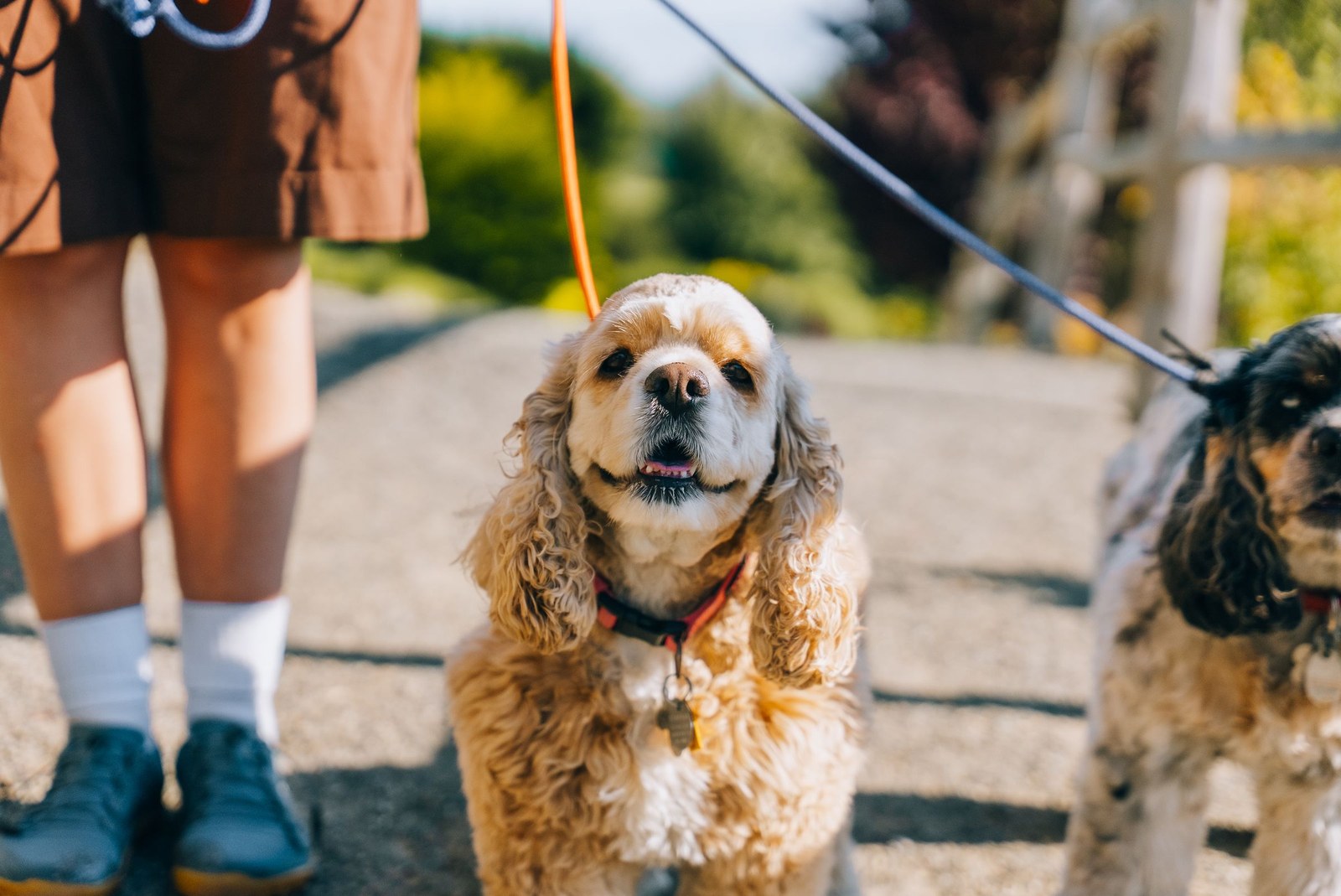
For most dogs, the safest everyday collar is a flat collar that fits snugly enough that you can slide two fingers underneath — secure enough not to slip over the head, loose enough to breathe and swallow comfortably. Fit and supervision matter more than brand, so check both regularly.
Get the Fit Right, Then Keep Checking It
Measure around the middle of your dog's neck and choose a collar in that range, then use the two-finger test once it is on. Too loose, and a dog can back out of it at the worst moment or catch a jaw or paw in the slack. Too tight, and you risk rubbing, hair loss, and pressure on the throat, especially for dogs who pull.
Recheck the fit often. Puppies can outgrow a collar setting in a couple of weeks during growth spurts, thick-coated breeds like huskies and chows hide looseness under fluff, and weight gain or loss in adult dogs changes neck size quietly. A quick two-finger check whenever you clip the collar on builds the habit.
Choose Materials and Hardware That Hold Up
For daily ID wear, a sturdy nylon or well-made leather flat collar with a solid buckle or a quality snap closure is hard to beat. Inspect the hardware: a weak plastic snap or a thin D-ring is where collars fail, and the ring is what your tag and leash depend on. Stitching should be tight, edges smooth, and the whole thing washable, because everyday collars get muddy, wet, and gloriously gross.
Breakaway collars, designed to release under pressure, are worth considering for dogs who spend unsupervised time with other dogs or near fencing where a snag could happen — though note they can also release on a walk if a dog lunges, so many owners use them for home and yard wear and a standard flat collar with a leash outdoors. Whatever you choose, training collars like choke chains and prong collars are not everyday ID collars and should never be left on an unsupervised dog.
When to Take the Collar Off
Even a well-fitted collar carries snag risk in specific moments. Remove it or directly supervise during rough multi-dog play, when teeth and paws get tangled in each other's collars, and during crate time if your crate has bars or hooks a tag could catch on. Dogs who swim, wrestle at daycare, or squeeze through brush may each need slightly different routines — the principle is the same: collar on for identification in the world, thoughtful breaks where snagging is likely.
If your dog is naked at home by routine, keep ID close anyway — most escapes happen from home, through doors and yards, exactly where an off collar does no good. Many owners compromise with a lightweight house collar carrying ID only.
Pair the Collar With a QR ID
An everyday collar is the perfect carrier for identification that goes beyond a tag. KinsLe's Verified QR ID Pet Profiles pair with your dog's daily collar because the QR can be printed for the collar itself — a finder scans it and lands on your dog's profile, with a way to reach you even if a traditional tag is worn or missing.
Fit the collar, clip on the ID, and you have done the simplest safety job in dog ownership. Anyone who finds your dog can scan the code on the collar and reach you through your dog's Verified QR ID Pet Profiles page on KinsLe.