
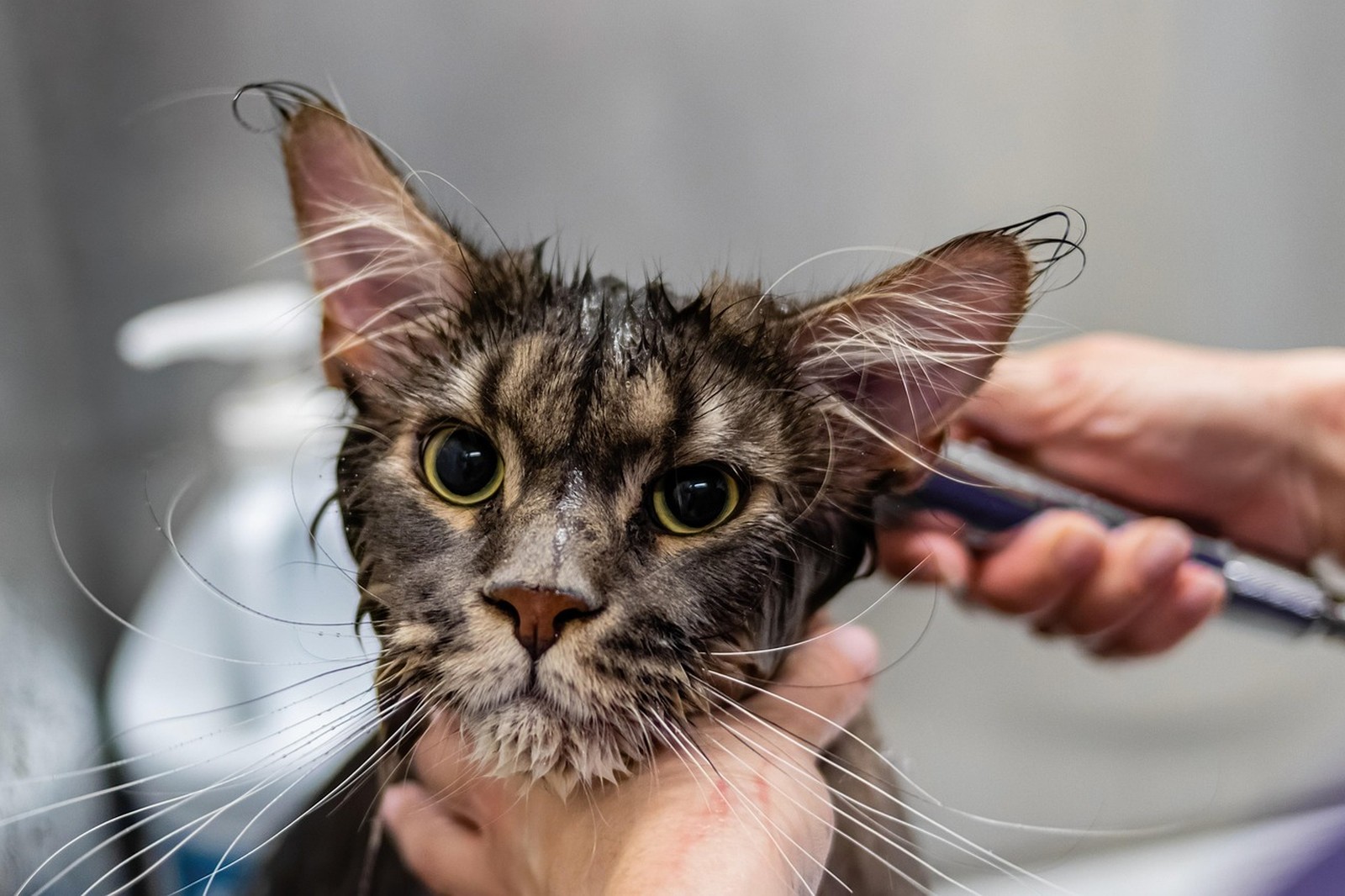
A first grooming appointment for a long-haired cat goes well or badly largely on information. The groomer has skill, tools, and technique, but only you know this cat: where the coat actually tangles, which patch of skin flares up, how long handling is welcome before it is not, and which warning signs mean a break is overdue. A written, honest handover lets the groomer schedule enough time and pace the appointment around the cat.
Be Exact, and Honest, About the Coat
Start with the truth about the mats, because minimizing them helps nobody. Say where they are, in the detail a groomer can plan from: the dense tangles behind the ears, the felted patch in one armpit, the knots building in the trousers and under the tail, the belly fur that cords if it is not combed weekly. Distinguish light tangles that comb out from tight mats sitting against the skin, since the two need different time and different tools. Note when the coat was last professionally groomed and what was done — a bath and tidy, a sanitary trim, mat removal — so the new groomer inherits a history rather than guessing at one.
Skin, Handling Tolerance, and Stress Signs
Describe any skin sensitivities as you have observed them at home: areas that redden easily, places the cat guards when brushed, a history of irritation after bathing, or skin that seems dry and flaky in winter. Frame these as your observations, not diagnoses; the groomer's job is to adjust products and handling around them and to flag anything that looks like it needs a veterinarian's eyes. Handling tolerance deserves the same precision. How long does the cat accept combing at home before objecting? Which areas are tolerated happily and which — belly, feet, tail — shorten the fuse? What do this cat's stress signs actually look like in sequence: going quiet, skin twitching, tail thumping, turning the head toward the brush, attempting to leave? A groomer who knows the sequence can insert breaks before the limit instead of after, which is what keeps a first appointment from becoming the appointment the cat dreads repeating.
Health Notes That Change Handling
Flag anything in the cat's history that changes how the cat should be lifted, held, or positioned. If you have noticed stiffness — a cat slower to jump, reluctant on stairs, stiff after long sleeps — say so plainly as something you have observed: a groomer who knows may support the hips differently, avoid asking for awkward stretched positions, and keep the cat on lower surfaces. Mention recent veterinary visits, ongoing conditions the veterinarian is monitoring, and anything the veterinarian has said about handling, in the plain terms you were given, without adding your own interpretations. Provide your veterinarian's name and number and an emergency contact who can actually be reached during the appointment.
The Routine You Keep Between Visits
Finally, hand over the home routine the groomer is being asked to slot into: how often you comb the cat and with what kind of comb, which areas you manage yourself and which you deliberately leave to professionals, how the cat is rewarded for cooperating, and what style you are hoping to maintain — full coat kept long, a tidy trim, or something between. Pet Passport is the packet that carries all of this to the appointment: the handover note with the mat map and handling notes, the health history as you have reported it, and the veterinary and emergency contacts, held together as one portable record the cat travels with. Instead of reconstructing the story in a doorway while the cat waits in its carrier, you hand over the packet and the groomer reads the cat before meeting it. Bring your cat's Pet Passport file on KinsLe to that first visit, and the new groomer starts with the whole story already in hand.